

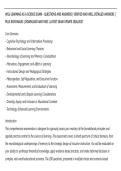
WGU LEARNING AS A SCIENCE EXAM – QUESTIONS AND ANSWERS | VERIFIED AND WELL DETAILED ANSWERS |
PLUS RATIONALES | DOWNLOAD AND PASS | LATEST EXAM UPDATE 2026/2027
Core Domains
- Cognitive Psychology and Information Processing
- Behavioral and Social Learning Theories
- Neurobiology of Learning and Memory Consolidation
- Motivation, Engagement, and Affect in Learning
- Instructional Design and Pedagogical Strategies
- Metacognition, Self-Regulation, and Executive Function
- Assessment, Measurement, and Evaluation of Learning
- Developmental and Lifespan Learning Considerations
- Diversity, Equity, and Inclusion in Educational Contexts
- Technology-Enhanced Learning Environments
Introduction
This comprehensive examination is designed to rigorously assess your mastery of the foundational principles and
applied practices central to the science of learning. The assessment covers a broad spectrum of critical domains, from
the neurobiological underpinnings of memory to the strategic design of inclusive instruction. You will be evaluated on
your ability to synthesize theoretical knowledge, apply evidence-based practices, and make informed decisions in
complex, real-world educational scenarios. The 200 questions, presented in multiple-choice and scenario-based
,formats, demand not only recall but also the higher-order thinking necessary to navigate the multifaceted challenges of
modern learning environments. This instrument is intended to serve as a definitive measure of your readiness and
professional acumen.
Section One: Questions 1–50
1. In the context of cognitive load theory, which instructional strategy is most effective for reducing extraneous
load and facilitating schema acquisition in novice learners?
A. Encouraging learners to solve complex, multi-step problems independently from the start.
B. Providing worked examples that demonstrate the steps required to solve a problem.
C. Minimizing the use of visual aids and focusing exclusively on auditory instruction.
D. Presenting all information simultaneously to help learners see the big picture.
🟢 Correct Answer: B. Providing worked examples that demonstrate the steps required to solve a problem.
🔴 Explanation: Worked examples are a cornerstone of cognitive load theory, as they reduce extraneous load by
providing a clear model of problem-solving steps, allowing novices to focus on building a schema for the solution
process without being overwhelmed by problem-solving searches.
,2. A professional development program is designed to enhance teachers' use of culturally responsive pedagogy.
According to research, which element is most critical for the program's success?
A. A singular focus on curriculum materials that represent diverse cultures.
B. Explicit opportunities for teachers to reflect on their own cultural biases and assumptions.
C. Mandating the use of specific teaching scripts to ensure fidelity to the model.
D. Ensuring all students are treated identically to promote fairness and equality.
🟢 Correct Answer: B. Explicit opportunities for teachers to reflect on their own cultural biases and assumptions.
🔴 Explanation: Effective culturally responsive pedagogy requires self-reflection and critical examination of one's
own biases. This deep, reflective work is fundamental to changing teacher mindsets and practices, which is more
critical than surface-level curriculum changes or rigid mandates.
3. A student consistently struggles to apply mathematical formulas to new word problems, despite being able to
recite the formulas perfectly. This indicates a deficit in which type of knowledge?
A. Declarative knowledge
B. Procedural knowledge
C. Conditional knowledge
D. Metacognitive knowledge
🟢 Correct Answer: C. Conditional knowledge
, 🔴 Explanation: Conditional knowledge is knowing when and why to apply specific procedures or declarative
information. The student's inability to apply formulas appropriately in new contexts points to a gap in this
conditional understanding, not in the declarative (what) or procedural (how) knowledge.
4. According to the principles of Universal Design for Learning (UDL), which practice best supports the principle
of "Multiple Means of Engagement"?
A. Providing all learners with the same text at the same reading level.
B. Offering learners choices in the tools they use to demonstrate their learning.
C. Allowing learners to select a topic of personal interest for a research project.
D. Ensuring all assignments are submitted in written format for consistency.
🟢 Correct Answer: C. Allowing learners to select a topic of personal interest for a research project.
🔴 Explanation: The UDL principle of Engagement is about optimizing motivation and interest. Offering learners a
choice in their topic directly addresses this by tapping into their interests and providing autonomy, which is a key
component of intrinsic motivation.
5. In the context of the Information Processing Model, what is the primary function of the central executive?
A. To temporarily store visual and spatial information.
B. To manage attention, coordinate cognitive processes, and retrieve information from long-term memory.
PLUS RATIONALES | DOWNLOAD AND PASS | LATEST EXAM UPDATE 2026/2027
Core Domains
- Cognitive Psychology and Information Processing
- Behavioral and Social Learning Theories
- Neurobiology of Learning and Memory Consolidation
- Motivation, Engagement, and Affect in Learning
- Instructional Design and Pedagogical Strategies
- Metacognition, Self-Regulation, and Executive Function
- Assessment, Measurement, and Evaluation of Learning
- Developmental and Lifespan Learning Considerations
- Diversity, Equity, and Inclusion in Educational Contexts
- Technology-Enhanced Learning Environments
Introduction
This comprehensive examination is designed to rigorously assess your mastery of the foundational principles and
applied practices central to the science of learning. The assessment covers a broad spectrum of critical domains, from
the neurobiological underpinnings of memory to the strategic design of inclusive instruction. You will be evaluated on
your ability to synthesize theoretical knowledge, apply evidence-based practices, and make informed decisions in
complex, real-world educational scenarios. The 200 questions, presented in multiple-choice and scenario-based
,formats, demand not only recall but also the higher-order thinking necessary to navigate the multifaceted challenges of
modern learning environments. This instrument is intended to serve as a definitive measure of your readiness and
professional acumen.
Section One: Questions 1–50
1. In the context of cognitive load theory, which instructional strategy is most effective for reducing extraneous
load and facilitating schema acquisition in novice learners?
A. Encouraging learners to solve complex, multi-step problems independently from the start.
B. Providing worked examples that demonstrate the steps required to solve a problem.
C. Minimizing the use of visual aids and focusing exclusively on auditory instruction.
D. Presenting all information simultaneously to help learners see the big picture.
🟢 Correct Answer: B. Providing worked examples that demonstrate the steps required to solve a problem.
🔴 Explanation: Worked examples are a cornerstone of cognitive load theory, as they reduce extraneous load by
providing a clear model of problem-solving steps, allowing novices to focus on building a schema for the solution
process without being overwhelmed by problem-solving searches.
,2. A professional development program is designed to enhance teachers' use of culturally responsive pedagogy.
According to research, which element is most critical for the program's success?
A. A singular focus on curriculum materials that represent diverse cultures.
B. Explicit opportunities for teachers to reflect on their own cultural biases and assumptions.
C. Mandating the use of specific teaching scripts to ensure fidelity to the model.
D. Ensuring all students are treated identically to promote fairness and equality.
🟢 Correct Answer: B. Explicit opportunities for teachers to reflect on their own cultural biases and assumptions.
🔴 Explanation: Effective culturally responsive pedagogy requires self-reflection and critical examination of one's
own biases. This deep, reflective work is fundamental to changing teacher mindsets and practices, which is more
critical than surface-level curriculum changes or rigid mandates.
3. A student consistently struggles to apply mathematical formulas to new word problems, despite being able to
recite the formulas perfectly. This indicates a deficit in which type of knowledge?
A. Declarative knowledge
B. Procedural knowledge
C. Conditional knowledge
D. Metacognitive knowledge
🟢 Correct Answer: C. Conditional knowledge
, 🔴 Explanation: Conditional knowledge is knowing when and why to apply specific procedures or declarative
information. The student's inability to apply formulas appropriately in new contexts points to a gap in this
conditional understanding, not in the declarative (what) or procedural (how) knowledge.
4. According to the principles of Universal Design for Learning (UDL), which practice best supports the principle
of "Multiple Means of Engagement"?
A. Providing all learners with the same text at the same reading level.
B. Offering learners choices in the tools they use to demonstrate their learning.
C. Allowing learners to select a topic of personal interest for a research project.
D. Ensuring all assignments are submitted in written format for consistency.
🟢 Correct Answer: C. Allowing learners to select a topic of personal interest for a research project.
🔴 Explanation: The UDL principle of Engagement is about optimizing motivation and interest. Offering learners a
choice in their topic directly addresses this by tapping into their interests and providing autonomy, which is a key
component of intrinsic motivation.
5. In the context of the Information Processing Model, what is the primary function of the central executive?
A. To temporarily store visual and spatial information.
B. To manage attention, coordinate cognitive processes, and retrieve information from long-term memory.


