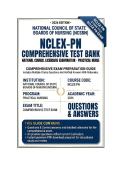
,NCLEX PN Exam 2026 Comprehensive Test Bank | Questions And
Answers | NCSBN
CASE STUDY 1 — ACUTE HEART FAILURE
A 74-year-old client with a history of heart failure reports worsening
shortness of breath. The client is restless and sits upright to breathe.
Assessment findings include respiratory rate 30/min, oxygen saturation 84%
on room air, heart rate 118/min, blood pressure 168/94 mm Hg, bilateral
crackles, and pink-tinged frothy sputum.
Q1. Which findings are most important for the nurse to recognize as
cues of acute deterioration? Select all that apply.
A) Oxygen saturation 84%
B) Respiratory rate 30/min
C) Pink-tinged frothy sputum
D) Bilateral crackles
E) Restlessness
F) Sitting upright to breathe
G) Heart rate 118/min
H) Blood pressure 168/94 mm Hg
Correct Answers: A) Oxygen saturation 84%; B) Respiratory rate 30/min; C)
Pink-tinged frothy sputum; D) Bilateral crackles; E) Restlessness; F) Sitting
upright to breathe; G) Heart rate 118/min; H) Blood pressure 168/94 mm Hg
Rationale: Hypoxemia, tachypnea, crackles, frothy sputum, restlessness,
tachycardia, and orthopnea-type positioning indicate acute respiratory
compromise associated with pulmonary fluid accumulation.
Q2. Which problem should the nurse prioritize?
A) Acute impairment of oxygenation
B) Activity intolerance
C) Chronic fatigue
D) Knowledge deficit
Correct Answer: A) Acute impairment of oxygenation
Rationale: The client has severe hypoxemia and respiratory distress.
Oxygenation is an immediate physiologic priority because untreated
hypoxemia can rapidly progress to respiratory failure.
,Q3. Which condition best explains the client's presentation?
A) Pneumothorax
B) Acute pulmonary edema
C) Gastroesophageal reflux
D) Stable chronic heart failure
Correct Answer: B) Acute pulmonary edema
Rationale: Severe dyspnea, crackles, hypoxemia, orthopnea, and pink-
tinged frothy sputum are consistent with fluid accumulation in the alveoli.
Q4. Which actions should the nurse take? Select all that apply.
A) Position the client upright
B) Apply supplemental oxygen as prescribed
C) Prepare for prescribed diuretic therapy
D) Place the client flat
E) Monitor respiratory status frequently
F) Encourage unrestricted oral fluids
Correct Answers: A) Position the client upright; B) Apply supplemental
oxygen as prescribed; C) Prepare for prescribed diuretic therapy; E) Monitor
respiratory status frequently
Rationale: Upright positioning improves lung expansion, oxygen supports
gas exchange, diuretics reduce excess volume when prescribed, and
frequent reassessment detects worsening respiratory compromise.
Q5. Complete the bow-tie item by selecting the most likely
condition, two priority actions, and two parameters to monitor.
Condition:
A) Acute pulmonary edema
B) Hypoglycemia
C) Gastrointestinal bleeding
D) Urinary retention
Priority Actions:
A) Position upright
B) Administer prescribed oxygen
C) Encourage large oral fluid intake
D) Place the client flat
, Parameters:
A) Oxygen saturation
B) Respiratory effort
C) Hair growth
D) Bowel frequency
Correct Answer: Condition — A) Acute pulmonary edema; Actions — A)
Position upright and B) Administer prescribed oxygen; Parameters — A)
Oxygen saturation and B) Respiratory effort
Rationale: The client has acute pulmonary fluid accumulation with impaired
gas exchange. Upright positioning, oxygenation support, and respiratory
monitoring directly address the immediate problem.
Q6. After treatment, which findings indicate improvement? Select all
that apply.
A) Oxygen saturation rises to 94%
B) Respiratory rate decreases to 20/min
C) Crackles become less extensive
D) Frothy sputum increases
E) Work of breathing decreases
Correct Answers: A) Oxygen saturation rises to 94%; B) Respiratory rate
decreases to 20/min; C) Crackles become less extensive; E) Work of
breathing decreases
Rationale: Improved oxygen saturation, reduced respiratory rate and effort,
and decreasing pulmonary congestion indicate improving gas exchange and
response to treatment.
CASE STUDY 2 — DIABETIC KETOACIDOSIS
A 19-year-old client with type 1 diabetes presents with vomiting, abdominal
pain, intense thirst, polyuria, and deep respirations. Glucose is 525 mg/dL,
pH is 7.18, bicarbonate is 11 mEq/L, potassium is 5.8 mEq/L, and serum
ketones are positive.
Q7. Which findings should the nurse identify as clinically significant
cues? Select all that apply.
A) Glucose 525 mg/dL
B) pH 7.18
Answers | NCSBN
CASE STUDY 1 — ACUTE HEART FAILURE
A 74-year-old client with a history of heart failure reports worsening
shortness of breath. The client is restless and sits upright to breathe.
Assessment findings include respiratory rate 30/min, oxygen saturation 84%
on room air, heart rate 118/min, blood pressure 168/94 mm Hg, bilateral
crackles, and pink-tinged frothy sputum.
Q1. Which findings are most important for the nurse to recognize as
cues of acute deterioration? Select all that apply.
A) Oxygen saturation 84%
B) Respiratory rate 30/min
C) Pink-tinged frothy sputum
D) Bilateral crackles
E) Restlessness
F) Sitting upright to breathe
G) Heart rate 118/min
H) Blood pressure 168/94 mm Hg
Correct Answers: A) Oxygen saturation 84%; B) Respiratory rate 30/min; C)
Pink-tinged frothy sputum; D) Bilateral crackles; E) Restlessness; F) Sitting
upright to breathe; G) Heart rate 118/min; H) Blood pressure 168/94 mm Hg
Rationale: Hypoxemia, tachypnea, crackles, frothy sputum, restlessness,
tachycardia, and orthopnea-type positioning indicate acute respiratory
compromise associated with pulmonary fluid accumulation.
Q2. Which problem should the nurse prioritize?
A) Acute impairment of oxygenation
B) Activity intolerance
C) Chronic fatigue
D) Knowledge deficit
Correct Answer: A) Acute impairment of oxygenation
Rationale: The client has severe hypoxemia and respiratory distress.
Oxygenation is an immediate physiologic priority because untreated
hypoxemia can rapidly progress to respiratory failure.
,Q3. Which condition best explains the client's presentation?
A) Pneumothorax
B) Acute pulmonary edema
C) Gastroesophageal reflux
D) Stable chronic heart failure
Correct Answer: B) Acute pulmonary edema
Rationale: Severe dyspnea, crackles, hypoxemia, orthopnea, and pink-
tinged frothy sputum are consistent with fluid accumulation in the alveoli.
Q4. Which actions should the nurse take? Select all that apply.
A) Position the client upright
B) Apply supplemental oxygen as prescribed
C) Prepare for prescribed diuretic therapy
D) Place the client flat
E) Monitor respiratory status frequently
F) Encourage unrestricted oral fluids
Correct Answers: A) Position the client upright; B) Apply supplemental
oxygen as prescribed; C) Prepare for prescribed diuretic therapy; E) Monitor
respiratory status frequently
Rationale: Upright positioning improves lung expansion, oxygen supports
gas exchange, diuretics reduce excess volume when prescribed, and
frequent reassessment detects worsening respiratory compromise.
Q5. Complete the bow-tie item by selecting the most likely
condition, two priority actions, and two parameters to monitor.
Condition:
A) Acute pulmonary edema
B) Hypoglycemia
C) Gastrointestinal bleeding
D) Urinary retention
Priority Actions:
A) Position upright
B) Administer prescribed oxygen
C) Encourage large oral fluid intake
D) Place the client flat
, Parameters:
A) Oxygen saturation
B) Respiratory effort
C) Hair growth
D) Bowel frequency
Correct Answer: Condition — A) Acute pulmonary edema; Actions — A)
Position upright and B) Administer prescribed oxygen; Parameters — A)
Oxygen saturation and B) Respiratory effort
Rationale: The client has acute pulmonary fluid accumulation with impaired
gas exchange. Upright positioning, oxygenation support, and respiratory
monitoring directly address the immediate problem.
Q6. After treatment, which findings indicate improvement? Select all
that apply.
A) Oxygen saturation rises to 94%
B) Respiratory rate decreases to 20/min
C) Crackles become less extensive
D) Frothy sputum increases
E) Work of breathing decreases
Correct Answers: A) Oxygen saturation rises to 94%; B) Respiratory rate
decreases to 20/min; C) Crackles become less extensive; E) Work of
breathing decreases
Rationale: Improved oxygen saturation, reduced respiratory rate and effort,
and decreasing pulmonary congestion indicate improving gas exchange and
response to treatment.
CASE STUDY 2 — DIABETIC KETOACIDOSIS
A 19-year-old client with type 1 diabetes presents with vomiting, abdominal
pain, intense thirst, polyuria, and deep respirations. Glucose is 525 mg/dL,
pH is 7.18, bicarbonate is 11 mEq/L, potassium is 5.8 mEq/L, and serum
ketones are positive.
Q7. Which findings should the nurse identify as clinically significant
cues? Select all that apply.
A) Glucose 525 mg/dL
B) pH 7.18