

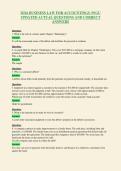
D216 BUSINESS LAW FOR ACCOUNTINGS (WGU
UPDATED ACTUAL QUESTIONS AND CORRECT
ANSWERS
Question:
1. What is the role of a trustee under Chapter 7 Bankruptcy?
Answer:
To sell the nonexempt assets of the debtor and distribute the proceeds to creditors
Question:
2. A couple filed for Chapter 7 Bankruptcy. They owe $115,000 to a mortgage company on their main
residence, $34,000 to an auto financer on their car, and $22,000 to a bank on credit cards.
Who is the petitioner?
Answer:
The couple
Question:
3. Who is a consumer-debtor?
Answer:
A debtor whose debts result primarily from the purchase of goods for personal, family, or household use
Question:
4. Judgment was entered against a customer in the amount of $15,000 for unpaid debt. The customer does
not have assets to pay the judgment in full. The customer owns a house with approximately $3,000 of
equity, owns a car worth $12,000, and has approximately $7,000 in a bank account.
Which type of relief would allow the creditor to seize the money in the customer's bank account?
Answer:
Order for garnishment
Question:
5. What is the function of an order for writ of execution?
Answer:
A court order issued post-judgment to seize the debtor's property in the debtor's possession.
Question:
6. A company contracts to make improvements to a family home. The total price, including labor and
materials, is $150,000. The family home was on an installment payment agreement but did not make all
payments under the agreement. The family paid the company a total of $50,000. Two years later, the
family put the house on the market to be sold.
Can the company take action to collect the debt?
Answer:
Yes, they can recover payment when the family home is sold because it is entitled to a mechanic's lien
against the home
, Question:
7. What does a surety's right of subrogation do?
Answer:
Entitles the surety to the rights a creditor would have in bankruptcy
Question:
8. What is a bad faith bankruptcy filing under Chapter 7?
Answer:
Filing for Chapter 7 Liquidation after dismissal of two or more bankruptcy petitions during the prior year
Question:
9. A debtor owes $124,000 on a home mortgage, $4,300 on a credit card, $11,500 in medical debt, and
$6,100 domestic-support to the debtor's former spouse.
Which debt is an exception to the automatic stay?
Answer:
Domestic-support debt
Question:
10. A debtor owes $5,000 on a home mortgage, $2,000 on a car note, and $500 on a credit card. The debtor
is having financial difficulties and is late by 60 days in making payments on the debt as it becomes due.
Which bankruptcy filing is appropriate for the debtor?
Answer:
The debtor is eligible to declare bankruptcy because the debtor is obligated to creditors.
Question:
11. Which statement describes cyberlaw?
Answer:
It modifies traditional laws in relation to the online environment.
Question:
12. Which statement accurately describes common law?
Answer:
It is a body of law established by court decisions.
Question:
13. A buyer enters a contract to buy a new house. The seller breaches the agreement after the buyer made a
deposit. The seller offers to return the deposit, but the buyer wants to buy the house.
Which type of remedy will this buyer seek?
Answer:
Equitable
Question:
14. What happens when a state law is in conflict with a federal law?
Answer:
The federal law displaces state law.
UPDATED ACTUAL QUESTIONS AND CORRECT
ANSWERS
Question:
1. What is the role of a trustee under Chapter 7 Bankruptcy?
Answer:
To sell the nonexempt assets of the debtor and distribute the proceeds to creditors
Question:
2. A couple filed for Chapter 7 Bankruptcy. They owe $115,000 to a mortgage company on their main
residence, $34,000 to an auto financer on their car, and $22,000 to a bank on credit cards.
Who is the petitioner?
Answer:
The couple
Question:
3. Who is a consumer-debtor?
Answer:
A debtor whose debts result primarily from the purchase of goods for personal, family, or household use
Question:
4. Judgment was entered against a customer in the amount of $15,000 for unpaid debt. The customer does
not have assets to pay the judgment in full. The customer owns a house with approximately $3,000 of
equity, owns a car worth $12,000, and has approximately $7,000 in a bank account.
Which type of relief would allow the creditor to seize the money in the customer's bank account?
Answer:
Order for garnishment
Question:
5. What is the function of an order for writ of execution?
Answer:
A court order issued post-judgment to seize the debtor's property in the debtor's possession.
Question:
6. A company contracts to make improvements to a family home. The total price, including labor and
materials, is $150,000. The family home was on an installment payment agreement but did not make all
payments under the agreement. The family paid the company a total of $50,000. Two years later, the
family put the house on the market to be sold.
Can the company take action to collect the debt?
Answer:
Yes, they can recover payment when the family home is sold because it is entitled to a mechanic's lien
against the home
, Question:
7. What does a surety's right of subrogation do?
Answer:
Entitles the surety to the rights a creditor would have in bankruptcy
Question:
8. What is a bad faith bankruptcy filing under Chapter 7?
Answer:
Filing for Chapter 7 Liquidation after dismissal of two or more bankruptcy petitions during the prior year
Question:
9. A debtor owes $124,000 on a home mortgage, $4,300 on a credit card, $11,500 in medical debt, and
$6,100 domestic-support to the debtor's former spouse.
Which debt is an exception to the automatic stay?
Answer:
Domestic-support debt
Question:
10. A debtor owes $5,000 on a home mortgage, $2,000 on a car note, and $500 on a credit card. The debtor
is having financial difficulties and is late by 60 days in making payments on the debt as it becomes due.
Which bankruptcy filing is appropriate for the debtor?
Answer:
The debtor is eligible to declare bankruptcy because the debtor is obligated to creditors.
Question:
11. Which statement describes cyberlaw?
Answer:
It modifies traditional laws in relation to the online environment.
Question:
12. Which statement accurately describes common law?
Answer:
It is a body of law established by court decisions.
Question:
13. A buyer enters a contract to buy a new house. The seller breaches the agreement after the buyer made a
deposit. The seller offers to return the deposit, but the buyer wants to buy the house.
Which type of remedy will this buyer seek?
Answer:
Equitable
Question:
14. What happens when a state law is in conflict with a federal law?
Answer:
The federal law displaces state law.


