
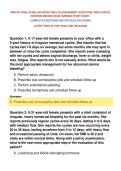
MSN 621 FINAL EXAM, ADVANCED HEALTH ASSESSMENT QUESTIONS, MSN CLINICAL
DECISION MAKING EXAM, NURSING STUDY GUIDE -
COMPLETE QUESTIONS AND DETAILED SOLUTIONS
LATEST UPDATE THIS YEAR JUST RELEASED
Question 1: A 17-year-old female presents to your office with a
2-year history of irregular menstrual cycles. She reports that her
cycles last 7-8 days on average, but some months she may spot in
between or miss her cycle completely. She reports some cramping
with her cycles and denies vaginal discharge, fever or chills, weight
loss, fatigue. She reports she is not sexually active. What would be
the most appropriate management for her abnormal uterine
bleeding?
A. Perform pelvic ultrasound
B. Prescribe oral contraceptive pills and schedule follow up
C. Perform endometrial sampling
D. Prescribe clomiphene and schedule follow up
Answer:
B. Prescribe oral contraceptive pills and schedule follow up
Question 2: A 51-year-old female presents with a chief complaint of
irregular, heavy menstrual bleeding for the past six months. She
reports previously regular cycles every 30 days, lasting 4 to 6 days,
with medium flow. She reports her cycles are now occurring every
30 to 45 days, lasting anywhere from 5 to 12 days, with heavy flow
and occasional passing of clots. On exam, her BMI is 30.2 and
vitals are within normal limits. Along with a pelvic examination,
what is the next most appropriate step in the evaluation of this
patient?
A. Luteinizing and follicle stimulating hormones
, B. Sonohysterography
C. Endometrial sampling
D. Gonorrhea and chlamydia testing
Answer:
C. Endometrial sampling
Question 3: An 18-year-old white female presents for a wellness
examination. After some questioning, she admits to heavy
menstrual cycles that are 28 days apart and last 7-8 days. She
reports the passage of clots and on her heaviest days, having to
change her pads every 1-2 hours. She is not sexually active and
denies any significant past medical history. She does admit to an
episode of heavy bleeding after tooth extraction for braces when
she was 13 years old. The physical examination is unremarkable
except for scattered ecchymoses on her bilateral shins. Which of
the following is the most appropriate step in the diagnosis of this
patient?
A. Endometrial biopsy
B. Thyroid function studies
C. Pelvic ultrasound
D. Coagulopathy studies
Answer:
D. Coagulopathy studies
Question 4: A 65-year-old woman with a BMI of 32 kg/m2 comes to
the clinician with a complaint of two episodes of vaginal bleeding in
the past 40 days. She has a past medical history of hypertension
and diabetes mellitus type 2. On both occasions, light spotting
lasted for three days. She experienced menopause at the age of 56
years. Currently, she is afebrile and hemodynamically stable with
,an unremarkable physical examination. She takes metformin and
lisinopril. What is the first-line imaging study to evaluate a patient
with this complaint?
A. MRI
B. Transvaginal ultrasound
C. Sonohysterography
D. Hysteroscopy
Answer:
B. Transvaginal ultrasound
Question 5: A 16-year-old girl presents to the clinic with moderately
severe vaginal bleeding with lower abdominal cramping going for
the past two months. She is not sexually active and her last
menstrual period was 3 weeks ago. Per FIGO terminology, which of
the following best identifies the patient's presentation?
A. Menorrhagia
B. Menometorrhagia
C. Dysfunctional uterine bleeding
D. Abnormal uterine bleeding
Answer:
D. Abnormal uterine bleeding
Question 6: A 25-year-old G0P0 female presents with intermittent
abdominal pain. She states that the pain starts before her period, is
"crampy" in nature, and lasts for a few days after, and has been
occurring intermittently since menarche. Her periods have been
regular, with no spotting or pain in between periods. Her last period
was a week ago. She has no other health issues and takes no
medications. She has had no previous surgeries in the past. She is
currently sexually active with her husband and is interested in
, starting a family shortly. What is the first line of treatment for this
patient?
A. Morphine
B. Selective serotonin reuptake inhibitor
C. Oral contraceptives
D. NSAIDs
Answer:
D. NSAIDs
Question 7: A 22-year-old woman presents to the clinic with a
history of lower abdominal pain for the past six months. There is no
history of dysuria and dyspareunia. There is no relevant family
history of cancer. The patient noticed that the pain increases
during the first two days of her period. The periods are regular and
slightly heavier than usual. She has to change 6 to 7 pads per day.
The patient's blood pressure is 120/80 mmHg, pulse 63/minute, and
the temperature is 36.1 C. She denies any loss of weight. The pelvic
examination shows a globularly enlarged and retroverted uterus.
The pregnancy test is negative. She has a recent pelvic ultrasound,
which showed some evidence of endometriosis. What is the most
likely diagnosis for this patient?
A. Primary dysmenorrhea
B. Secondary dysmenorrhoea
C. Cervical stenosis
D. Endometrial polyp
Answer:
B. Secondary dysmenorrhoea
Question 8: A 31-year-old female attends the clinics with a
complaint of being unable to conceive. She has been having
DECISION MAKING EXAM, NURSING STUDY GUIDE -
COMPLETE QUESTIONS AND DETAILED SOLUTIONS
LATEST UPDATE THIS YEAR JUST RELEASED
Question 1: A 17-year-old female presents to your office with a
2-year history of irregular menstrual cycles. She reports that her
cycles last 7-8 days on average, but some months she may spot in
between or miss her cycle completely. She reports some cramping
with her cycles and denies vaginal discharge, fever or chills, weight
loss, fatigue. She reports she is not sexually active. What would be
the most appropriate management for her abnormal uterine
bleeding?
A. Perform pelvic ultrasound
B. Prescribe oral contraceptive pills and schedule follow up
C. Perform endometrial sampling
D. Prescribe clomiphene and schedule follow up
Answer:
B. Prescribe oral contraceptive pills and schedule follow up
Question 2: A 51-year-old female presents with a chief complaint of
irregular, heavy menstrual bleeding for the past six months. She
reports previously regular cycles every 30 days, lasting 4 to 6 days,
with medium flow. She reports her cycles are now occurring every
30 to 45 days, lasting anywhere from 5 to 12 days, with heavy flow
and occasional passing of clots. On exam, her BMI is 30.2 and
vitals are within normal limits. Along with a pelvic examination,
what is the next most appropriate step in the evaluation of this
patient?
A. Luteinizing and follicle stimulating hormones
, B. Sonohysterography
C. Endometrial sampling
D. Gonorrhea and chlamydia testing
Answer:
C. Endometrial sampling
Question 3: An 18-year-old white female presents for a wellness
examination. After some questioning, she admits to heavy
menstrual cycles that are 28 days apart and last 7-8 days. She
reports the passage of clots and on her heaviest days, having to
change her pads every 1-2 hours. She is not sexually active and
denies any significant past medical history. She does admit to an
episode of heavy bleeding after tooth extraction for braces when
she was 13 years old. The physical examination is unremarkable
except for scattered ecchymoses on her bilateral shins. Which of
the following is the most appropriate step in the diagnosis of this
patient?
A. Endometrial biopsy
B. Thyroid function studies
C. Pelvic ultrasound
D. Coagulopathy studies
Answer:
D. Coagulopathy studies
Question 4: A 65-year-old woman with a BMI of 32 kg/m2 comes to
the clinician with a complaint of two episodes of vaginal bleeding in
the past 40 days. She has a past medical history of hypertension
and diabetes mellitus type 2. On both occasions, light spotting
lasted for three days. She experienced menopause at the age of 56
years. Currently, she is afebrile and hemodynamically stable with
,an unremarkable physical examination. She takes metformin and
lisinopril. What is the first-line imaging study to evaluate a patient
with this complaint?
A. MRI
B. Transvaginal ultrasound
C. Sonohysterography
D. Hysteroscopy
Answer:
B. Transvaginal ultrasound
Question 5: A 16-year-old girl presents to the clinic with moderately
severe vaginal bleeding with lower abdominal cramping going for
the past two months. She is not sexually active and her last
menstrual period was 3 weeks ago. Per FIGO terminology, which of
the following best identifies the patient's presentation?
A. Menorrhagia
B. Menometorrhagia
C. Dysfunctional uterine bleeding
D. Abnormal uterine bleeding
Answer:
D. Abnormal uterine bleeding
Question 6: A 25-year-old G0P0 female presents with intermittent
abdominal pain. She states that the pain starts before her period, is
"crampy" in nature, and lasts for a few days after, and has been
occurring intermittently since menarche. Her periods have been
regular, with no spotting or pain in between periods. Her last period
was a week ago. She has no other health issues and takes no
medications. She has had no previous surgeries in the past. She is
currently sexually active with her husband and is interested in
, starting a family shortly. What is the first line of treatment for this
patient?
A. Morphine
B. Selective serotonin reuptake inhibitor
C. Oral contraceptives
D. NSAIDs
Answer:
D. NSAIDs
Question 7: A 22-year-old woman presents to the clinic with a
history of lower abdominal pain for the past six months. There is no
history of dysuria and dyspareunia. There is no relevant family
history of cancer. The patient noticed that the pain increases
during the first two days of her period. The periods are regular and
slightly heavier than usual. She has to change 6 to 7 pads per day.
The patient's blood pressure is 120/80 mmHg, pulse 63/minute, and
the temperature is 36.1 C. She denies any loss of weight. The pelvic
examination shows a globularly enlarged and retroverted uterus.
The pregnancy test is negative. She has a recent pelvic ultrasound,
which showed some evidence of endometriosis. What is the most
likely diagnosis for this patient?
A. Primary dysmenorrhea
B. Secondary dysmenorrhoea
C. Cervical stenosis
D. Endometrial polyp
Answer:
B. Secondary dysmenorrhoea
Question 8: A 31-year-old female attends the clinics with a
complaint of being unable to conceive. She has been having


