

9A- Understand how concepts in taphonomy and entomology contribute
to forensic investigation:
Taphonomy is looking into what happens to the body after death. This is very useful
regarding criminal investigation as it can not only help in determining the time of
death, but also many other factors to develop possible theories for the investigation,
like for example, if the body has been moved. There are 4 main stages of the
decomposition of the body, and these are known as autolysis, bloating, active decay,
and dry or skeletonization.
Forensic entomology refers to the study of insects in respect to criminal investigation.
This is useful to investigations as we can identify the types of insects at various stages
of decomposition, and this can help in estimating the post-mortem interval (the time
between the death and finding the body). This can also help in finding out if the
corpse has been moved at all, for example, if there are insects in areas where they
usually aren’t present. Can help in identifying the cause of death, and toxins, drugs
and even DNA can be detected.
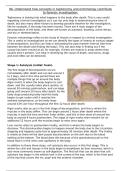
Stage 1: Autolysis (initial/ fresh)-
The first stage of decomposition occurs
immediately after death and can last around 1
to 2 days, and in this time period there are
multiple things that go on around the body.
Algor mortis is when the body begins to cool
down, and this usually takes place quickly, at
around 30 minutes postmortem, and can keep
going until around 20 hours after death. As the
body stops producing body heat the body
begins to get cooler until it reaches the
ambient temperature, so the body loses
around 0.8oc per hour throughout the first 12 hours after death.
Rigor mortis also occurs in the first stage of decomposition, and this is where the
muscles in the body stiffen. This can begin around 2 hours after death where the
muscles in both the face and then limbs stiffen, and this is then done all around the
body at around 8 hours postmortem. The stage of rigor mortis then remains for an
additional 12 hours until the muscles begin to relax once again.
Livor mortis refers to postmortem lividity, and this is where the body begins to
discolour. This discolouration begins to happen around the body due to the circulation
stopping and happens quite fast at approximately 30 minutes after death. The lividity
is visible as there will be dark purple discolouration on the skin due to the blood
settling at the bottom. The blood does this because of the gravitational pull on the
blood that is in the veins and capillaries in the body.
In addition to these three steps, cell autolysis also occurs in this first stage. This is
where the cells and tissues in the body begin to breakdown by their enzymes, which is
also more commonly known as self-digestion. The first tell that can be seen that cell
autolysis has begun is the whitish look in the cornea of the eye, which is the front part
of the eye that covers the iris, pupil and the anterior chamber.
, This stage also results in the pH levels in the body to lower. This is because the body
can no longer get any oxygen, and the carbon dioxide that the cells produce cannot
leave the body, and carbon dioxide is a very acidic molecule.
There are many insects that migrate towards the body after death, and this is usually
predictable and has an expected pattern it follows. In the initial stage, blow flies
(Calliphoridae), flesh flies (Sarcophagidae), yellow jackets (Dolichovespula spp), and
house flies (Musca domestica Linnaeus) are present.
The first insect to arrive at the body is the blow fly, and these have an extremely keen
sense of smell, meaning that they get there within minutes after death. These flies lay
eggs on the body mostly in areas where wounds and openings like the nose, ears,
eyes, anus etc are present in order to enter the dead body. These eggs are laid within
48 hours after death.
These eggs then hatch quite quickly into larva, or maggots with 12 to 24 hours after
death. And now the three stages of instar begin. This is where the larvae grow and
malt, which is the shedding of the skin/ their exoskeletons. At the first instar stage,
the larvae are around 5mm long, and this happens in around 1.8 days. The larvae
then grow to approximately 10mm at the second stage and this is after around 2.5
days. At the third stage of instar, the larvae grow to around 14 to 16mm, and this is
usually after 4 to 5 days.
Once the three stages of instar have been carried out, the larvae are typically up to
17mm long, and they then develop into pupa after having burrowed in the soil around
the area. Up to 6 to 8 days after this pupa has been made, adult flies will emerge from
these cases.
During this time, the maggots eat the soft body parts of the corpse, and more insects
also have time to arrive and then also feed on the body and in some cases even each
other, for example, the blow flies tend to eat the maggots of different species of flies.
This early into decomposition, this can also include flesh flies and house flies.
House flies arrive shortly after blow flies and also hatch eggs on the body. Flesh flies
arrive after both of these flies, though to compensate for the extra time lost, they can
instantly give birth to larvae, rather than laying eggs like the other two species.
Yellow jackets arrive sometime after these flies, though still in the initial stage of body
decomposition, and like the flies, they also eat the carrion (dead meat). This insect is
known as a ‘parasitic,’ and this means that these wasps will lay their eggs inside of
the maggots and pupae present at the decomposing corpse. In addition to this, the
yellow jackets will also eat the flies present at the body.
Stage 2: Bloating-
Around 2 to 5 days after death stage 2 of body
decomposition begins and this is called
bloating. The most obvious thing that occurs
to the body is bloating, and this is due to the
enzymes having leaked during the initial
stage, they then make lots of gases, and
to forensic investigation:
Taphonomy is looking into what happens to the body after death. This is very useful
regarding criminal investigation as it can not only help in determining the time of
death, but also many other factors to develop possible theories for the investigation,
like for example, if the body has been moved. There are 4 main stages of the
decomposition of the body, and these are known as autolysis, bloating, active decay,
and dry or skeletonization.
Forensic entomology refers to the study of insects in respect to criminal investigation.
This is useful to investigations as we can identify the types of insects at various stages
of decomposition, and this can help in estimating the post-mortem interval (the time
between the death and finding the body). This can also help in finding out if the
corpse has been moved at all, for example, if there are insects in areas where they
usually aren’t present. Can help in identifying the cause of death, and toxins, drugs
and even DNA can be detected.
Stage 1: Autolysis (initial/ fresh)-
The first stage of decomposition occurs
immediately after death and can last around 1
to 2 days, and in this time period there are
multiple things that go on around the body.
Algor mortis is when the body begins to cool
down, and this usually takes place quickly, at
around 30 minutes postmortem, and can keep
going until around 20 hours after death. As the
body stops producing body heat the body
begins to get cooler until it reaches the
ambient temperature, so the body loses
around 0.8oc per hour throughout the first 12 hours after death.
Rigor mortis also occurs in the first stage of decomposition, and this is where the
muscles in the body stiffen. This can begin around 2 hours after death where the
muscles in both the face and then limbs stiffen, and this is then done all around the
body at around 8 hours postmortem. The stage of rigor mortis then remains for an
additional 12 hours until the muscles begin to relax once again.
Livor mortis refers to postmortem lividity, and this is where the body begins to
discolour. This discolouration begins to happen around the body due to the circulation
stopping and happens quite fast at approximately 30 minutes after death. The lividity
is visible as there will be dark purple discolouration on the skin due to the blood
settling at the bottom. The blood does this because of the gravitational pull on the
blood that is in the veins and capillaries in the body.
In addition to these three steps, cell autolysis also occurs in this first stage. This is
where the cells and tissues in the body begin to breakdown by their enzymes, which is
also more commonly known as self-digestion. The first tell that can be seen that cell
autolysis has begun is the whitish look in the cornea of the eye, which is the front part
of the eye that covers the iris, pupil and the anterior chamber.
, This stage also results in the pH levels in the body to lower. This is because the body
can no longer get any oxygen, and the carbon dioxide that the cells produce cannot
leave the body, and carbon dioxide is a very acidic molecule.
There are many insects that migrate towards the body after death, and this is usually
predictable and has an expected pattern it follows. In the initial stage, blow flies
(Calliphoridae), flesh flies (Sarcophagidae), yellow jackets (Dolichovespula spp), and
house flies (Musca domestica Linnaeus) are present.
The first insect to arrive at the body is the blow fly, and these have an extremely keen
sense of smell, meaning that they get there within minutes after death. These flies lay
eggs on the body mostly in areas where wounds and openings like the nose, ears,
eyes, anus etc are present in order to enter the dead body. These eggs are laid within
48 hours after death.
These eggs then hatch quite quickly into larva, or maggots with 12 to 24 hours after
death. And now the three stages of instar begin. This is where the larvae grow and
malt, which is the shedding of the skin/ their exoskeletons. At the first instar stage,
the larvae are around 5mm long, and this happens in around 1.8 days. The larvae
then grow to approximately 10mm at the second stage and this is after around 2.5
days. At the third stage of instar, the larvae grow to around 14 to 16mm, and this is
usually after 4 to 5 days.
Once the three stages of instar have been carried out, the larvae are typically up to
17mm long, and they then develop into pupa after having burrowed in the soil around
the area. Up to 6 to 8 days after this pupa has been made, adult flies will emerge from
these cases.
During this time, the maggots eat the soft body parts of the corpse, and more insects
also have time to arrive and then also feed on the body and in some cases even each
other, for example, the blow flies tend to eat the maggots of different species of flies.
This early into decomposition, this can also include flesh flies and house flies.
House flies arrive shortly after blow flies and also hatch eggs on the body. Flesh flies
arrive after both of these flies, though to compensate for the extra time lost, they can
instantly give birth to larvae, rather than laying eggs like the other two species.
Yellow jackets arrive sometime after these flies, though still in the initial stage of body
decomposition, and like the flies, they also eat the carrion (dead meat). This insect is
known as a ‘parasitic,’ and this means that these wasps will lay their eggs inside of
the maggots and pupae present at the decomposing corpse. In addition to this, the
yellow jackets will also eat the flies present at the body.
Stage 2: Bloating-
Around 2 to 5 days after death stage 2 of body
decomposition begins and this is called
bloating. The most obvious thing that occurs
to the body is bloating, and this is due to the
enzymes having leaked during the initial
stage, they then make lots of gases, and


