1
HESI RN FUNDAMENTALS EXAM 2026/2027 | BASIC
NURSING CARE, SAFETY & HYGIENE | 100
VERIFIED Q&A | DETAILED RATIONALES | NGN-
ALIGNED | PASS GUARANTEED – A+ GRADED
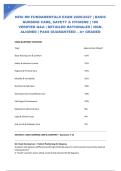
EXAM BLUEPRINT OVERVIEW
Topic Approximate Weight
Basic Nursing Care & Comfort ~15%
Safety & Infection Control ~15%
Hygiene & Personal Care ~12%
Mobility & Immobility ~12%
Nutrition & Hydration ~10%
Elimination & Urinary/Bowel Care ~10%
Vital Signs & Assessment ~10%
Medication Administration ~8%
Legal & Ethical Issues ~4%
End-of-Life & Palliative Care ~4%
SECTION 1: BASIC NURSING CARE & COMFORT – Questions 1–15
Q1: Basic Nursing Care – Patient Positioning for Dyspnea
A patient with dyspnea (difficulty breathing) should be placed in which position to promote optimal
lung expansion?
A. Fowler's position (semi-sitting, head of bed elevated 45-60 degrees)
,2
B. Supine position
C. Prone position
D. Trendelenburg position
Correct Answer: A
Rationale: Fowler's position (semi-sitting with head of bed elevated 45-60 degrees) promotes
optimal lung expansion by allowing the diaphragm to descend and reducing pressure on the chest. It
is the position of choice for patients with respiratory distress, heart failure, and after surgery. High
Fowler's (90 degrees) is used for severe respiratory distress. [100% CORRECT]
Q2: Basic Nursing Care – Oral Hygiene for Unconscious Patient
A patient who is unconscious requires oral care. The nurse should:
A. Position the patient on their side with the head tilted forward to prevent aspiration
B. Position the patient supine
C. Use minimal water
D. Not provide oral care
Correct Answer: A
Rationale: For an unconscious patient, oral care should be performed with the patient positioned on
their side with the head tilted forward to allow fluids to drain out and prevent aspiration. A small
amount of water should be used, and the oral cavity should be suctioned as needed. A toothbrush or
oral swabs may be used. [100% CORRECT]
Q3: Basic Nursing Care – Bed Bath Technique
A patient is receiving a bed bath. The nurse should:
A. Use soap and water, and change the water as needed (keep the patient warm and covered)
B. Use cold water
C. Expose the entire body
D. Not change the water
Correct Answer: A
Rationale: During a bed bath, the nurse should use soap and water and change the water as needed.
The patient should be kept warm and covered (expose only the area being washed) to maintain
dignity and prevent chilling. The bath should proceed from cleanest to dirtiest areas (face to
perineum). [100% CORRECT]
Q4: Basic Nursing Care – Hair Care for Bedridden Patient
A patient with long hair who is on bed rest should have hair:
A. Brushed daily (to prevent tangles and mats)
B. Brushed weekly
C. Cut short
D. Not brushed
Correct Answer: A
Rationale: A patient on bed rest with long hair should have hair brushed daily to prevent tangles,
, 3
mats, and discomfort. The nurse should be gentle and use a wide-toothed comb if hair is tangled.
Hair may also be braided to keep it manageable. [100% CORRECT]
Q5: Basic Nursing Care – Nail Care for Diabetic Patient
When providing nail care to a diabetic patient, the nurse should:
A. Use a nail file (do not cut nails to avoid injury)
B. Cut nails short
C. Cut cuticles
D. Not provide nail care
Correct Answer: A
Rationale: For diabetic patients, nails should be filed (not cut) to avoid injury and potential infection.
Nail cutting can cause nicks and cuts that may lead to serious complications (diabetic foot ulcers).
The nurse should also check the feet for any signs of injury or infection. [100% CORRECT]
Q6: Basic Nursing Care – Perineal Care (Pericare)
Perineal care (pericare) should be performed:
A. After each episode of incontinence and during daily hygiene
B. Weekly
C. Monthly
D. Only when soiled
Correct Answer: A
Rationale: Perineal care should be performed after each episode of incontinence and during daily
hygiene to prevent skin breakdown and infection. The area should be cleaned from front to back
(urethra to anus) to prevent contamination, dried thoroughly, and barrier cream applied if needed.
[100% CORRECT]
Q7: Basic Nursing Care – Dry Skin Care
A patient with dry skin should be advised to:
A. Apply moisturizer after bathing while the skin is still damp
B. Avoid moisturizer
C. Bathe in hot water
D. Use harsh soaps
Correct Answer: A
Rationale: For dry skin, the patient should apply moisturizer immediately after bathing while the
skin is still damp to lock in moisture. Bathing in warm (not hot) water and using mild, fragrance-free
soaps are also recommended. Hot water and harsh soaps can worsen dry skin. [100% CORRECT]
Q8: Basic Nursing Care – Diabetic Foot Care
A patient with diabetes should have foot care that includes:
A. Daily inspection, washing with mild soap, drying thoroughly (especially between toes), and
applying lotion (not between toes)
B. Weekly inspection
HESI RN FUNDAMENTALS EXAM 2026/2027 | BASIC
NURSING CARE, SAFETY & HYGIENE | 100
VERIFIED Q&A | DETAILED RATIONALES | NGN-
ALIGNED | PASS GUARANTEED – A+ GRADED
EXAM BLUEPRINT OVERVIEW
Topic Approximate Weight
Basic Nursing Care & Comfort ~15%
Safety & Infection Control ~15%
Hygiene & Personal Care ~12%
Mobility & Immobility ~12%
Nutrition & Hydration ~10%
Elimination & Urinary/Bowel Care ~10%
Vital Signs & Assessment ~10%
Medication Administration ~8%
Legal & Ethical Issues ~4%
End-of-Life & Palliative Care ~4%
SECTION 1: BASIC NURSING CARE & COMFORT – Questions 1–15
Q1: Basic Nursing Care – Patient Positioning for Dyspnea
A patient with dyspnea (difficulty breathing) should be placed in which position to promote optimal
lung expansion?
A. Fowler's position (semi-sitting, head of bed elevated 45-60 degrees)
,2
B. Supine position
C. Prone position
D. Trendelenburg position
Correct Answer: A
Rationale: Fowler's position (semi-sitting with head of bed elevated 45-60 degrees) promotes
optimal lung expansion by allowing the diaphragm to descend and reducing pressure on the chest. It
is the position of choice for patients with respiratory distress, heart failure, and after surgery. High
Fowler's (90 degrees) is used for severe respiratory distress. [100% CORRECT]
Q2: Basic Nursing Care – Oral Hygiene for Unconscious Patient
A patient who is unconscious requires oral care. The nurse should:
A. Position the patient on their side with the head tilted forward to prevent aspiration
B. Position the patient supine
C. Use minimal water
D. Not provide oral care
Correct Answer: A
Rationale: For an unconscious patient, oral care should be performed with the patient positioned on
their side with the head tilted forward to allow fluids to drain out and prevent aspiration. A small
amount of water should be used, and the oral cavity should be suctioned as needed. A toothbrush or
oral swabs may be used. [100% CORRECT]
Q3: Basic Nursing Care – Bed Bath Technique
A patient is receiving a bed bath. The nurse should:
A. Use soap and water, and change the water as needed (keep the patient warm and covered)
B. Use cold water
C. Expose the entire body
D. Not change the water
Correct Answer: A
Rationale: During a bed bath, the nurse should use soap and water and change the water as needed.
The patient should be kept warm and covered (expose only the area being washed) to maintain
dignity and prevent chilling. The bath should proceed from cleanest to dirtiest areas (face to
perineum). [100% CORRECT]
Q4: Basic Nursing Care – Hair Care for Bedridden Patient
A patient with long hair who is on bed rest should have hair:
A. Brushed daily (to prevent tangles and mats)
B. Brushed weekly
C. Cut short
D. Not brushed
Correct Answer: A
Rationale: A patient on bed rest with long hair should have hair brushed daily to prevent tangles,
, 3
mats, and discomfort. The nurse should be gentle and use a wide-toothed comb if hair is tangled.
Hair may also be braided to keep it manageable. [100% CORRECT]
Q5: Basic Nursing Care – Nail Care for Diabetic Patient
When providing nail care to a diabetic patient, the nurse should:
A. Use a nail file (do not cut nails to avoid injury)
B. Cut nails short
C. Cut cuticles
D. Not provide nail care
Correct Answer: A
Rationale: For diabetic patients, nails should be filed (not cut) to avoid injury and potential infection.
Nail cutting can cause nicks and cuts that may lead to serious complications (diabetic foot ulcers).
The nurse should also check the feet for any signs of injury or infection. [100% CORRECT]
Q6: Basic Nursing Care – Perineal Care (Pericare)
Perineal care (pericare) should be performed:
A. After each episode of incontinence and during daily hygiene
B. Weekly
C. Monthly
D. Only when soiled
Correct Answer: A
Rationale: Perineal care should be performed after each episode of incontinence and during daily
hygiene to prevent skin breakdown and infection. The area should be cleaned from front to back
(urethra to anus) to prevent contamination, dried thoroughly, and barrier cream applied if needed.
[100% CORRECT]
Q7: Basic Nursing Care – Dry Skin Care
A patient with dry skin should be advised to:
A. Apply moisturizer after bathing while the skin is still damp
B. Avoid moisturizer
C. Bathe in hot water
D. Use harsh soaps
Correct Answer: A
Rationale: For dry skin, the patient should apply moisturizer immediately after bathing while the
skin is still damp to lock in moisture. Bathing in warm (not hot) water and using mild, fragrance-free
soaps are also recommended. Hot water and harsh soaps can worsen dry skin. [100% CORRECT]
Q8: Basic Nursing Care – Diabetic Foot Care
A patient with diabetes should have foot care that includes:
A. Daily inspection, washing with mild soap, drying thoroughly (especially between toes), and
applying lotion (not between toes)
B. Weekly inspection