

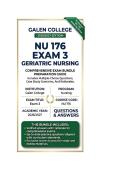
,NU 176 Exam 3 Geriatric Nursing Questions And Answers 2026/2027
Galen College
Q1. Which reproductive change is expected in an older adult
woman?
A) Increased estrogen production
B) Increased fertility
C) Decreased ovarian hormone production
D) Increased menstrual regularity
Correct Answer: C) Decreased ovarian hormone production
Rationale: Aging is associated with declining ovarian function and decreased
production of estrogen and progesterone.
Q2. Which event marks the end of a woman's reproductive years?
A) Menarche
B) Menopause
C) Ovulation
D) Menstruation
Correct Answer: B) Menopause
Rationale: Menopause is the permanent cessation of menstruation resulting
from loss of ovarian follicular activity.
Q3. Which symptom commonly occurs during menopause?
A) Hot flashes
B) Increased fertility
C) Increased menstrual bleeding indefinitely
D) Increased estrogen production
Correct Answer: A) Hot flashes
Rationale: Declining estrogen levels during the menopausal transition can
cause vasomotor symptoms such as hot flashes.
Q4. Which reproductive change commonly occurs in older men?
A) Increased testosterone production
B) Increased sperm production
C) Gradual decline in testosterone production
D) Increased fertility in every older adult
, Correct Answer: C) Gradual decline in testosterone production
Rationale: Testosterone levels generally decline gradually with aging, which
can contribute to changes in sexual function and body composition.
Q5. Which statement about sexuality in older adults is correct?
A) Sexuality ends with aging
B) Sexual activity can remain an important part of life
C) Older adults should not discuss sexual concerns
D) Sexual dysfunction is always caused by age alone
Correct Answer: B) Sexual activity can remain an important part of life
Rationale: Aging does not eliminate sexuality or the desire for intimacy,
although physiologic and health-related changes may affect sexual function.
Q6. Which factor can contribute to erectile dysfunction in an older
adult?
A) Cardiovascular disease
B) Improved vascular function
C) Increased testosterone
D) Increased blood flow
Correct Answer: A) Cardiovascular disease
Rationale: Vascular disease can impair blood flow and contribute to erectile
dysfunction.
**Q7. Which medication-related factor can contribute to sexual dysfunction?
A) Some antihypertensive medications
B) Adequate hydration
C) Regular exercise
D) Balanced nutrition
Correct Answer: A) Some antihypertensive medications
Rationale: Certain medications can affect libido, arousal, erection,
lubrication, or orgasm.
**Q8. Which nursing action is appropriate when discussing sexual health with
an older adult?
A) Use a professional, nonjudgmental approach
B) Assume sexual activity is no longer relevant
Galen College
Q1. Which reproductive change is expected in an older adult
woman?
A) Increased estrogen production
B) Increased fertility
C) Decreased ovarian hormone production
D) Increased menstrual regularity
Correct Answer: C) Decreased ovarian hormone production
Rationale: Aging is associated with declining ovarian function and decreased
production of estrogen and progesterone.
Q2. Which event marks the end of a woman's reproductive years?
A) Menarche
B) Menopause
C) Ovulation
D) Menstruation
Correct Answer: B) Menopause
Rationale: Menopause is the permanent cessation of menstruation resulting
from loss of ovarian follicular activity.
Q3. Which symptom commonly occurs during menopause?
A) Hot flashes
B) Increased fertility
C) Increased menstrual bleeding indefinitely
D) Increased estrogen production
Correct Answer: A) Hot flashes
Rationale: Declining estrogen levels during the menopausal transition can
cause vasomotor symptoms such as hot flashes.
Q4. Which reproductive change commonly occurs in older men?
A) Increased testosterone production
B) Increased sperm production
C) Gradual decline in testosterone production
D) Increased fertility in every older adult
, Correct Answer: C) Gradual decline in testosterone production
Rationale: Testosterone levels generally decline gradually with aging, which
can contribute to changes in sexual function and body composition.
Q5. Which statement about sexuality in older adults is correct?
A) Sexuality ends with aging
B) Sexual activity can remain an important part of life
C) Older adults should not discuss sexual concerns
D) Sexual dysfunction is always caused by age alone
Correct Answer: B) Sexual activity can remain an important part of life
Rationale: Aging does not eliminate sexuality or the desire for intimacy,
although physiologic and health-related changes may affect sexual function.
Q6. Which factor can contribute to erectile dysfunction in an older
adult?
A) Cardiovascular disease
B) Improved vascular function
C) Increased testosterone
D) Increased blood flow
Correct Answer: A) Cardiovascular disease
Rationale: Vascular disease can impair blood flow and contribute to erectile
dysfunction.
**Q7. Which medication-related factor can contribute to sexual dysfunction?
A) Some antihypertensive medications
B) Adequate hydration
C) Regular exercise
D) Balanced nutrition
Correct Answer: A) Some antihypertensive medications
Rationale: Certain medications can affect libido, arousal, erection,
lubrication, or orgasm.
**Q8. Which nursing action is appropriate when discussing sexual health with
an older adult?
A) Use a professional, nonjudgmental approach
B) Assume sexual activity is no longer relevant


