

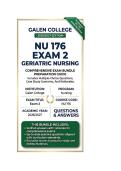
,NU 176 Exam 2 Geriatric Nursing Questions And Answers 2026/2027
Galen College
Q1. Which assessment finding is most important when an older
adult reports new severe pain?
A) Assume pain is a normal part of aging
B) Perform a focused pain assessment
C) Delay assessment until the next shift
D) Ask only the family to describe the pain
Correct Answer: B) Perform a focused pain assessment
Rationale: New or severe pain is not considered an inevitable part of aging
and requires assessment to identify its cause and guide treatment.
Q2. Which statement about pain in older adults is correct?
A) Older adults experience less pain because of aging
B) Pain should be expected and untreated
C) Older adults can experience acute and chronic pain
D) Cognitive impairment eliminates pain
Correct Answer: C) Older adults can experience acute and chronic pain
Rationale: Aging does not eliminate pain perception, and older adults may
experience both acute and chronic pain requiring individualized
management.
Q3. Which pain scale is most appropriate for an older adult who can
communicate reliably?
A) Numeric rating scale
B) Apgar scale
C) Braden scale
D) Glasgow Coma Scale
Correct Answer: A) Numeric rating scale
Rationale: A numeric pain scale is appropriate when the patient can
understand and communicate a numerical rating.
Q4. An older adult with advanced dementia cannot provide a
reliable verbal pain rating. Which approach is appropriate?
A) Assume the patient has no pain
B) Use behavioral and observational pain indicators
, C) Ask only the roommate
D) Avoid pain treatment
Correct Answer: B) Use behavioral and observational pain indicators
Rationale: When self-report is unreliable, behavioral changes, facial
expressions, vocalizations, and other validated observational indicators can
help assess pain.
**Q5. Which behavior may indicate pain in an older adult with cognitive
impairment?
A) New agitation and resistance to care
B) Stable behavior
C) Increased appetite
D) Improved sleep
Correct Answer: A) New agitation and resistance to care
Rationale: Pain may manifest through behavioral changes such as agitation,
grimacing, withdrawal, guarding, or resistance when verbal reporting is
limited.
**Q6. Which principle should guide pain management in older adults?
A) Use the same treatment for everyone
B) Individualize treatment based on the patient's condition and response
C) Avoid nonpharmacologic interventions
D) Treat only severe pain
Correct Answer: B) Individualize treatment based on the patient's condition
and response
Rationale: Older adults differ in pain causes, comorbidities, medications,
kidney function, and treatment responses, requiring individualized
management.
**Q7. Which nonpharmacologic intervention may help reduce chronic
musculoskeletal pain?
A) Appropriate application of heat
B) Prolonged immobility
C) Dehydration
D) Sleep deprivation
Correct Answer: A) Appropriate application of heat
Galen College
Q1. Which assessment finding is most important when an older
adult reports new severe pain?
A) Assume pain is a normal part of aging
B) Perform a focused pain assessment
C) Delay assessment until the next shift
D) Ask only the family to describe the pain
Correct Answer: B) Perform a focused pain assessment
Rationale: New or severe pain is not considered an inevitable part of aging
and requires assessment to identify its cause and guide treatment.
Q2. Which statement about pain in older adults is correct?
A) Older adults experience less pain because of aging
B) Pain should be expected and untreated
C) Older adults can experience acute and chronic pain
D) Cognitive impairment eliminates pain
Correct Answer: C) Older adults can experience acute and chronic pain
Rationale: Aging does not eliminate pain perception, and older adults may
experience both acute and chronic pain requiring individualized
management.
Q3. Which pain scale is most appropriate for an older adult who can
communicate reliably?
A) Numeric rating scale
B) Apgar scale
C) Braden scale
D) Glasgow Coma Scale
Correct Answer: A) Numeric rating scale
Rationale: A numeric pain scale is appropriate when the patient can
understand and communicate a numerical rating.
Q4. An older adult with advanced dementia cannot provide a
reliable verbal pain rating. Which approach is appropriate?
A) Assume the patient has no pain
B) Use behavioral and observational pain indicators
, C) Ask only the roommate
D) Avoid pain treatment
Correct Answer: B) Use behavioral and observational pain indicators
Rationale: When self-report is unreliable, behavioral changes, facial
expressions, vocalizations, and other validated observational indicators can
help assess pain.
**Q5. Which behavior may indicate pain in an older adult with cognitive
impairment?
A) New agitation and resistance to care
B) Stable behavior
C) Increased appetite
D) Improved sleep
Correct Answer: A) New agitation and resistance to care
Rationale: Pain may manifest through behavioral changes such as agitation,
grimacing, withdrawal, guarding, or resistance when verbal reporting is
limited.
**Q6. Which principle should guide pain management in older adults?
A) Use the same treatment for everyone
B) Individualize treatment based on the patient's condition and response
C) Avoid nonpharmacologic interventions
D) Treat only severe pain
Correct Answer: B) Individualize treatment based on the patient's condition
and response
Rationale: Older adults differ in pain causes, comorbidities, medications,
kidney function, and treatment responses, requiring individualized
management.
**Q7. Which nonpharmacologic intervention may help reduce chronic
musculoskeletal pain?
A) Appropriate application of heat
B) Prolonged immobility
C) Dehydration
D) Sleep deprivation
Correct Answer: A) Appropriate application of heat


