
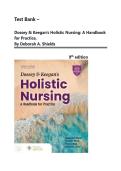
Test Bank –
Dossey & Keegan's Holistic Nursing: A Handbook
for Practice,
By Deborah A. Shields
9th edition
,TABLE OF CONTENTS
CORE VALUE I Holistic Philosophies Theories and Ethics
Chapter 1: Global Holistic Nursing
Chapter 2: The Integral Relations of Holistic Nursing and Society, Past, Present, and Future
Chapter 3: Holistic Nursing: Scope and Standards of Practice
Chapter 4: The Theory of Integral Nursing
Chapter 5: Transpersonal Human Caring and Healing
Chapter 6: Holistic Ethics
Chapter 7: Spirituality and Health
Chapter 8: Nursing Theory in Holistic Nursing Practice
Chapter 9: Holistic Leadership
CORE VALUE II Holistic Nurse Self-Reflection, Self-Development and Self-Care
Chapter 10: Self-Development: The Foundation of Holistic Self-Care
Chapter 11: Integrative Self-Assessment
CORE VALUE III Holistic Caring Process
Chapter 12: The Holistic Caring Process
Chapter 13: Energetic Interconnectedness
Chapter 14: Psychoneuroimmunology: The Science of Holistic Nursing
Chapter 15: Integrative and Complementary Health Approaches
Chapter 16: Aesthetics and Self-Reflection in Holistic Nursing
Chapter 17: Peaceful Transitions at the End of Life
CORE VALUE IV Holistic Communication, Therapeutic Relationship, Healing
Environments, and Cultural Care
Chapter 18: Holistic Communication for Caring-Healing Relationships
Chapter 19: Transcultural Engagement
Chapter 20: Planetary and Environmental Health
CORE VALUE V Holistic Education and Research
Chapter 21: Holistic Nursing Education: Self-Reflection, Growth, Development, and Lifelong
Learning
Chapter 22: Exploring, Applying, Creating, and Disseminating Evidence to Enhance Holistic
Nursing Practice
Chapter 23: Opportunities and Challenges in Advanced Holistic Nursing
Chapter 24: Envisioning a Holistic Framework for Independent Practice
Chapter 25: Narrative Reflections of Advanced Holistic Nurses
Chapter 26: Nurse Coaching
Chapter 27: Holistic Mental Health
Chapter 28: Holistic Nursing’s Role in Plant Medicine
,CORE VALUE I: HOLISTIC PHILOSOPHIES, THEORIES, AND ETHICS
CHAPTER 1: GLOBAL HOLISTIC NURSING
Multiple Choice Questions
1. Which of the following BEST defines holistic nursing?
A) A specialty focused on using herbal remedies and alternative therapies exclusively
B) A practice that recognizes the interconnectedness of body, mind, spirit, and environment in the
promotion of health and healing
C) A nursing practice limited to spiritual care of patients
D) A form of nursing that replaces conventional medicine with complementary therapies
Answer: B
Rationale: Holistic nursing is defined as a practice that draws on nursing knowledge, theories, expertise,
and intuition to guide nurses in becoming partners with individuals in the healing process, recognizing
the interconnectedness of body, mind, spirit, and environment. Option A is incorrect because holistic
nursing does not exclusively use herbal remedies. Option C is too narrow. Option D is incorrect because
holistic nursing integrates rather than replaces conventional care.
2. The concept of "global holistic nursing" emphasizes which of the following?
A) Nursing practice confined to Western medical models
B) The application of holistic nursing principles across diverse cultures and healthcare systems
worldwide
C) Exclusive practice in developing countries
D) Standardized nursing protocols identical in every country
Answer: B
Rationale: Global holistic nursing emphasizes the universal application of holistic principles while
respecting diverse cultural contexts and healthcare systems throughout the world. Option A is incorrect
because it is not confined to Western models. Option C is incorrect because it encompasses all settings.
Option D is incorrect because it values cultural diversity rather than rigid standardization.
3. Florence Nightingale's contributions to nursing are significant to holistic nursing because she:
A) Focused exclusively on germ theory and infection control
B) Emphasized the importance of environment, nutrition, spirituality, and the whole person in healing
C) Was the first nurse to use herbal medicine
D) Rejected the mind-body connection in nursing care
Answer: B
Rationale: Florence Nightingale is considered a foremother of holistic nursing because she recognized
the importance of clean air, water, nutrition, light, quiet, and the spiritual dimensions of care—
, addressing the whole person and environment. Option A is too narrow. Option C is historically
inaccurate. Option D is the opposite of her philosophy.
4. Which organization is primarily responsible for advancing holistic nursing as a recognized specialty?
A) American Medical Association (AMA)
B) American Holistic Nurses Association (AHNA)
C) World Health Organization (WHO)
D) National League for Nursing (NLN)
Answer: B
Rationale: The American Holistic Nurses Association (AHNA) has been the primary organization
advancing holistic nursing as a recognized nursing specialty since its founding in 1981. While WHO and
NLN contribute to nursing, they are not specifically focused on holistic nursing as a specialty.
5. A fundamental belief in global holistic nursing is that:
A) Disease is solely caused by pathogens
B) Health is the absence of disease
C) Healing can occur even when curing is not possible
D) Only evidence-based interventions should be used
Answer: C
Rationale: A core tenet of holistic nursing is that healing (the process of becoming whole) can occur
even when curing (elimination of disease) is not possible. This reflects the holistic understanding that
health encompasses more than physical well-being. Option A reflects a reductionistic biomedical model.
Option B is a limited definition of health. Option D, while important, is not the fundamental
distinguishing belief.
6. The World Health Organization (WHO) definition of health aligns with holistic nursing in that it defines
health as:
A) The absence of disease or infirmity
B) A state of complete physical, mental, and social well-being, not merely the absence of disease
C) The ability to perform activities of daily living independently
D) Freedom from chronic illness
Answer: B
Rationale: The WHO definition includes physical, mental, and social well-being, which aligns with the
holistic nursing perspective of addressing the whole person. Options A, C, and D represent incomplete or
reductionistic views of health.
7. Which of the following is a key characteristic that distinguishes holistic nursing from other nursing
specialties?
Dossey & Keegan's Holistic Nursing: A Handbook
for Practice,
By Deborah A. Shields
9th edition
,TABLE OF CONTENTS
CORE VALUE I Holistic Philosophies Theories and Ethics
Chapter 1: Global Holistic Nursing
Chapter 2: The Integral Relations of Holistic Nursing and Society, Past, Present, and Future
Chapter 3: Holistic Nursing: Scope and Standards of Practice
Chapter 4: The Theory of Integral Nursing
Chapter 5: Transpersonal Human Caring and Healing
Chapter 6: Holistic Ethics
Chapter 7: Spirituality and Health
Chapter 8: Nursing Theory in Holistic Nursing Practice
Chapter 9: Holistic Leadership
CORE VALUE II Holistic Nurse Self-Reflection, Self-Development and Self-Care
Chapter 10: Self-Development: The Foundation of Holistic Self-Care
Chapter 11: Integrative Self-Assessment
CORE VALUE III Holistic Caring Process
Chapter 12: The Holistic Caring Process
Chapter 13: Energetic Interconnectedness
Chapter 14: Psychoneuroimmunology: The Science of Holistic Nursing
Chapter 15: Integrative and Complementary Health Approaches
Chapter 16: Aesthetics and Self-Reflection in Holistic Nursing
Chapter 17: Peaceful Transitions at the End of Life
CORE VALUE IV Holistic Communication, Therapeutic Relationship, Healing
Environments, and Cultural Care
Chapter 18: Holistic Communication for Caring-Healing Relationships
Chapter 19: Transcultural Engagement
Chapter 20: Planetary and Environmental Health
CORE VALUE V Holistic Education and Research
Chapter 21: Holistic Nursing Education: Self-Reflection, Growth, Development, and Lifelong
Learning
Chapter 22: Exploring, Applying, Creating, and Disseminating Evidence to Enhance Holistic
Nursing Practice
Chapter 23: Opportunities and Challenges in Advanced Holistic Nursing
Chapter 24: Envisioning a Holistic Framework for Independent Practice
Chapter 25: Narrative Reflections of Advanced Holistic Nurses
Chapter 26: Nurse Coaching
Chapter 27: Holistic Mental Health
Chapter 28: Holistic Nursing’s Role in Plant Medicine
,CORE VALUE I: HOLISTIC PHILOSOPHIES, THEORIES, AND ETHICS
CHAPTER 1: GLOBAL HOLISTIC NURSING
Multiple Choice Questions
1. Which of the following BEST defines holistic nursing?
A) A specialty focused on using herbal remedies and alternative therapies exclusively
B) A practice that recognizes the interconnectedness of body, mind, spirit, and environment in the
promotion of health and healing
C) A nursing practice limited to spiritual care of patients
D) A form of nursing that replaces conventional medicine with complementary therapies
Answer: B
Rationale: Holistic nursing is defined as a practice that draws on nursing knowledge, theories, expertise,
and intuition to guide nurses in becoming partners with individuals in the healing process, recognizing
the interconnectedness of body, mind, spirit, and environment. Option A is incorrect because holistic
nursing does not exclusively use herbal remedies. Option C is too narrow. Option D is incorrect because
holistic nursing integrates rather than replaces conventional care.
2. The concept of "global holistic nursing" emphasizes which of the following?
A) Nursing practice confined to Western medical models
B) The application of holistic nursing principles across diverse cultures and healthcare systems
worldwide
C) Exclusive practice in developing countries
D) Standardized nursing protocols identical in every country
Answer: B
Rationale: Global holistic nursing emphasizes the universal application of holistic principles while
respecting diverse cultural contexts and healthcare systems throughout the world. Option A is incorrect
because it is not confined to Western models. Option C is incorrect because it encompasses all settings.
Option D is incorrect because it values cultural diversity rather than rigid standardization.
3. Florence Nightingale's contributions to nursing are significant to holistic nursing because she:
A) Focused exclusively on germ theory and infection control
B) Emphasized the importance of environment, nutrition, spirituality, and the whole person in healing
C) Was the first nurse to use herbal medicine
D) Rejected the mind-body connection in nursing care
Answer: B
Rationale: Florence Nightingale is considered a foremother of holistic nursing because she recognized
the importance of clean air, water, nutrition, light, quiet, and the spiritual dimensions of care—
, addressing the whole person and environment. Option A is too narrow. Option C is historically
inaccurate. Option D is the opposite of her philosophy.
4. Which organization is primarily responsible for advancing holistic nursing as a recognized specialty?
A) American Medical Association (AMA)
B) American Holistic Nurses Association (AHNA)
C) World Health Organization (WHO)
D) National League for Nursing (NLN)
Answer: B
Rationale: The American Holistic Nurses Association (AHNA) has been the primary organization
advancing holistic nursing as a recognized nursing specialty since its founding in 1981. While WHO and
NLN contribute to nursing, they are not specifically focused on holistic nursing as a specialty.
5. A fundamental belief in global holistic nursing is that:
A) Disease is solely caused by pathogens
B) Health is the absence of disease
C) Healing can occur even when curing is not possible
D) Only evidence-based interventions should be used
Answer: C
Rationale: A core tenet of holistic nursing is that healing (the process of becoming whole) can occur
even when curing (elimination of disease) is not possible. This reflects the holistic understanding that
health encompasses more than physical well-being. Option A reflects a reductionistic biomedical model.
Option B is a limited definition of health. Option D, while important, is not the fundamental
distinguishing belief.
6. The World Health Organization (WHO) definition of health aligns with holistic nursing in that it defines
health as:
A) The absence of disease or infirmity
B) A state of complete physical, mental, and social well-being, not merely the absence of disease
C) The ability to perform activities of daily living independently
D) Freedom from chronic illness
Answer: B
Rationale: The WHO definition includes physical, mental, and social well-being, which aligns with the
holistic nursing perspective of addressing the whole person. Options A, C, and D represent incomplete or
reductionistic views of health.
7. Which of the following is a key characteristic that distinguishes holistic nursing from other nursing
specialties?


