

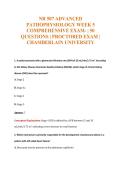
NR 507 ADVANCED
PATHOPHYSIOLOGY WEEK 5
COMPREHENSIVE EXAM- | 50
QUESTIONS | PROCTORED EXAM |
CHAMBERLAIN UNIVERSITY
1. A patient presents with a glomerular filtration rate (GFR) of 25 mL/min/1.73 m². According
to the Kidney Disease Outcomes Quality Initiative (KDOQI), which stage of chronic kidney
disease (CKD) does this represent?
A. Stage 2
B. Stage 3a
C. Stage 4
D. Stage 5
Answer: C
Conceptual Explanation: Stage 4 CKD is defined by a GFR between 15 and 29
mL/min/1.73 m², indicating severe decrease in renal function.
2. Which mechanism is primarily responsible for the development of pulmonary edema in a
patient with left-sided heart failure?
A. Decreased oncotic pressure in the pulmonary capillaries
,B. Increased hydrostatic pressure in the pulmonary capillaries
C. Increased permeability of the alveolar-capillary membrane
D. Lymphatic obstruction in the pleural space
Answer: B
Conceptual Explanation: Left heart failure causes blood to back up into the pulmonary
circulation, increasing pulmonary capillary hydrostatic pressure, which forces fluid into the
interstitial and alveolar spaces.
3. During the compensatory phase of shock, which physiological response is triggered by the
baroreceptor reflex to maintain mean arterial pressure?
A. Increased systemic vascular resistance via alpha-1 stimulation
B. Parasympathetic nervous system activation
C. Decreased heart rate via beta-1 inhibition
D. Renal excretion of sodium and water
Answer: A
Conceptual Explanation: Baroreceptors detect a drop in pressure, triggering the
sympathetic nervous system to release catecholamines, leading to vasoconstriction (alpha-
1) and increased heart rate (beta-1).
, 4. A 55-year-old male with chronic hypertension is diagnosed with left ventricular
hypertrophy. This cellular adaptation is primarily a result of which of the following?
A. Increased preload
B. Atrophy of cardiomyocytes
C. Decreased myocardial oxygen demand
D. Increased afterload
Answer: D
Conceptual Explanation: Hypertension increases the resistance against which the left
ventricle must pump (afterload), leading to compensatory hypertrophy of the myocardium.
5. In the renin-angiotensin-aldosterone system (RAAS), which enzyme is responsible for the
conversion of Angiotensin I to Angiotensin II?
A. Renin
B. Aldosterone synthase
C. Angiotensin-converting enzyme (ACE)
D. Angiotensinogen
Answer: C
Conceptual Explanation: ACE, primarily located in the pulmonary vascular endothelium,
converts Angiotensin I into the potent vasoconstrictor Angiotensin II.
PATHOPHYSIOLOGY WEEK 5
COMPREHENSIVE EXAM- | 50
QUESTIONS | PROCTORED EXAM |
CHAMBERLAIN UNIVERSITY
1. A patient presents with a glomerular filtration rate (GFR) of 25 mL/min/1.73 m². According
to the Kidney Disease Outcomes Quality Initiative (KDOQI), which stage of chronic kidney
disease (CKD) does this represent?
A. Stage 2
B. Stage 3a
C. Stage 4
D. Stage 5
Answer: C
Conceptual Explanation: Stage 4 CKD is defined by a GFR between 15 and 29
mL/min/1.73 m², indicating severe decrease in renal function.
2. Which mechanism is primarily responsible for the development of pulmonary edema in a
patient with left-sided heart failure?
A. Decreased oncotic pressure in the pulmonary capillaries
,B. Increased hydrostatic pressure in the pulmonary capillaries
C. Increased permeability of the alveolar-capillary membrane
D. Lymphatic obstruction in the pleural space
Answer: B
Conceptual Explanation: Left heart failure causes blood to back up into the pulmonary
circulation, increasing pulmonary capillary hydrostatic pressure, which forces fluid into the
interstitial and alveolar spaces.
3. During the compensatory phase of shock, which physiological response is triggered by the
baroreceptor reflex to maintain mean arterial pressure?
A. Increased systemic vascular resistance via alpha-1 stimulation
B. Parasympathetic nervous system activation
C. Decreased heart rate via beta-1 inhibition
D. Renal excretion of sodium and water
Answer: A
Conceptual Explanation: Baroreceptors detect a drop in pressure, triggering the
sympathetic nervous system to release catecholamines, leading to vasoconstriction (alpha-
1) and increased heart rate (beta-1).
, 4. A 55-year-old male with chronic hypertension is diagnosed with left ventricular
hypertrophy. This cellular adaptation is primarily a result of which of the following?
A. Increased preload
B. Atrophy of cardiomyocytes
C. Decreased myocardial oxygen demand
D. Increased afterload
Answer: D
Conceptual Explanation: Hypertension increases the resistance against which the left
ventricle must pump (afterload), leading to compensatory hypertrophy of the myocardium.
5. In the renin-angiotensin-aldosterone system (RAAS), which enzyme is responsible for the
conversion of Angiotensin I to Angiotensin II?
A. Renin
B. Aldosterone synthase
C. Angiotensin-converting enzyme (ACE)
D. Angiotensinogen
Answer: C
Conceptual Explanation: ACE, primarily located in the pulmonary vascular endothelium,
converts Angiotensin I into the potent vasoconstrictor Angiotensin II.


