
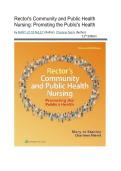
Rector's Community and Public Health
Nursing: Promoting the Public's Health
by MARY JO STANLEY (Author), Charlene Niemi (Author)
11th Edition
,TABLE OF CONTENTS
Unit 1 Foundations of Community/Public Health Nursing
Chapter 1 Introduction to Community Health Nursing
Chapter 2 Public Health Nursing in the Community
Chapter 3 History and Evolution of Public Health Nursing
Chapter 4 Research, Evidence-Based Practice, Quality Improvement, and Ethics
Chapter 5 Transcultural Nursing
Unit 2 Community/Public Health Essentials
Chapter 6 Structure and Economics of Community/Public Health Services
Chapter 7 Epidemiology in the Community
Chapter 8 Communicable Disease
Chapter 9 Environmental Health and Safety
Unit 3 Community/Public Health Nursing Toolbox
Chapter 10 Communication, Collaboration, and Technology
Chapter 11 Health Promotion Through Education
Chapter 12 Planning, Implementing, and Evaluating Community/Public Health Programs
Chapter 13 Policymaking and Advocacy
Unit 4 The Health of Our Population
Chapter 14 Family as Client
Chapter 15 Community as Client
Chapter 16 Global Health Nursing
Chapter 17 Disasters and Their Impact
Chapter 18 Violence and Abuse
Unit 5 Aggregate Populations
Chapter 19 Maternal–Child Health
Chapter 20 School-Age Children and Adolescents
Chapter 21 Adult Health
Chapter 22 Older Adults
Unit 6 Vulnerable Populations
Chapter 23 Working with Vulnerable People
Chapter 24 Clients with Disabilities
Chapter 25 Behavioral Health in the Community
Chapter 26 Unsheltered Populations
Chapter 27 Rural, Migrant, and Urban Communities
Chapter 28 Veterans Health
,Test Bank: Community and Public Health Nursing
UNIT 1: FOUNDATIONS OF COMMUNITY/PUBLIC HEALTH NURSING
CHAPTER 1: Introduction to Community Health Nursing
1. Which best defines community health nursing?
A) Nursing care delivered exclusively in hospital outpatient departments
B) A synthesis of nursing practice and public health practice applied to promoting and preserving the
health of populations
C) Nursing focused solely on individual patient care in the home
D) Medical care provided by physicians in community clinics
Answer: B
Rationale: Community health nursing integrates nursing and public health principles to promote and
preserve the health of entire populations, not just individuals.
2. The primary focus of community health nursing is:
A) Treating acute illnesses in hospitalized patients
B) Providing tertiary care to critically ill patients
C) Promoting and preserving the health of populations
D) Managing chronic diseases in long-term care facilities
Answer: C
Rationale: The hallmark of community health nursing is its population-focused approach to health
promotion and disease prevention.
3. A community health nurse conducts a windshield survey. This activity is an example of:
A) Tertiary prevention
B) Community assessment
C) Case management
D) Policy advocacy
Answer: B
Rationale: A windshield survey is a direct observation method used to assess community characteristics,
resources, and needs.
4. Which level of prevention is demonstrated by a nurse administering influenza vaccines at a
community clinic?
A) Primary prevention
B) Secondary prevention
C) Tertiary prevention
D) Quaternary prevention
Answer: A
Rationale: Primary prevention aims to prevent disease before it occurs. Immunization is a classic
example of primary prevention.
5. A nurse screens community members for hypertension at a health fair. This is an example of:
A) Primary prevention
, B) Secondary prevention
C) Tertiary prevention
D) Health restoration
Answer: B
Rationale: Secondary prevention involves early detection and screening to identify disease in its earliest
stages.
6. Which of the following is the best example of tertiary prevention?
A) Teaching hand hygiene in schools
B) Conducting mammography screenings
C) Providing rehabilitation services for stroke survivors
D) Administering childhood immunizations
Answer: C
Rationale: Tertiary prevention focuses on minimizing disability and maximizing function after disease or
injury has occurred.
7. The "client" in community health nursing is best described as:
A) Only the individual patient
B) The individual, family, group, or community
C) The hospital administration
D) The insurance provider
Answer: B
Rationale: Community health nursing views the client broadly to include individuals, families, groups,
and entire communities.
8. Which core function of public health involves systematically collecting and analyzing health data?
A) Assurance
B) Policy development
C) Assessment
D) Evaluation
Answer: C
Rationale: Assessment is the core function that involves systematic data collection, analysis, and
dissemination of health information.
9. A community health nurse partners with local leaders to develop a smoking cessation program. This
demonstrates:
A) Autonomy in practice
B) Collaboration and partnership
C) Acute care management
D) Institutional care delivery
Answer: B
Rationale: Community health nursing emphasizes partnerships and collaboration with community
stakeholders to address health needs.
10. Which setting is most characteristic of community health nursing practice?
A) Intensive care unit
B) Operating room
Nursing: Promoting the Public's Health
by MARY JO STANLEY (Author), Charlene Niemi (Author)
11th Edition
,TABLE OF CONTENTS
Unit 1 Foundations of Community/Public Health Nursing
Chapter 1 Introduction to Community Health Nursing
Chapter 2 Public Health Nursing in the Community
Chapter 3 History and Evolution of Public Health Nursing
Chapter 4 Research, Evidence-Based Practice, Quality Improvement, and Ethics
Chapter 5 Transcultural Nursing
Unit 2 Community/Public Health Essentials
Chapter 6 Structure and Economics of Community/Public Health Services
Chapter 7 Epidemiology in the Community
Chapter 8 Communicable Disease
Chapter 9 Environmental Health and Safety
Unit 3 Community/Public Health Nursing Toolbox
Chapter 10 Communication, Collaboration, and Technology
Chapter 11 Health Promotion Through Education
Chapter 12 Planning, Implementing, and Evaluating Community/Public Health Programs
Chapter 13 Policymaking and Advocacy
Unit 4 The Health of Our Population
Chapter 14 Family as Client
Chapter 15 Community as Client
Chapter 16 Global Health Nursing
Chapter 17 Disasters and Their Impact
Chapter 18 Violence and Abuse
Unit 5 Aggregate Populations
Chapter 19 Maternal–Child Health
Chapter 20 School-Age Children and Adolescents
Chapter 21 Adult Health
Chapter 22 Older Adults
Unit 6 Vulnerable Populations
Chapter 23 Working with Vulnerable People
Chapter 24 Clients with Disabilities
Chapter 25 Behavioral Health in the Community
Chapter 26 Unsheltered Populations
Chapter 27 Rural, Migrant, and Urban Communities
Chapter 28 Veterans Health
,Test Bank: Community and Public Health Nursing
UNIT 1: FOUNDATIONS OF COMMUNITY/PUBLIC HEALTH NURSING
CHAPTER 1: Introduction to Community Health Nursing
1. Which best defines community health nursing?
A) Nursing care delivered exclusively in hospital outpatient departments
B) A synthesis of nursing practice and public health practice applied to promoting and preserving the
health of populations
C) Nursing focused solely on individual patient care in the home
D) Medical care provided by physicians in community clinics
Answer: B
Rationale: Community health nursing integrates nursing and public health principles to promote and
preserve the health of entire populations, not just individuals.
2. The primary focus of community health nursing is:
A) Treating acute illnesses in hospitalized patients
B) Providing tertiary care to critically ill patients
C) Promoting and preserving the health of populations
D) Managing chronic diseases in long-term care facilities
Answer: C
Rationale: The hallmark of community health nursing is its population-focused approach to health
promotion and disease prevention.
3. A community health nurse conducts a windshield survey. This activity is an example of:
A) Tertiary prevention
B) Community assessment
C) Case management
D) Policy advocacy
Answer: B
Rationale: A windshield survey is a direct observation method used to assess community characteristics,
resources, and needs.
4. Which level of prevention is demonstrated by a nurse administering influenza vaccines at a
community clinic?
A) Primary prevention
B) Secondary prevention
C) Tertiary prevention
D) Quaternary prevention
Answer: A
Rationale: Primary prevention aims to prevent disease before it occurs. Immunization is a classic
example of primary prevention.
5. A nurse screens community members for hypertension at a health fair. This is an example of:
A) Primary prevention
, B) Secondary prevention
C) Tertiary prevention
D) Health restoration
Answer: B
Rationale: Secondary prevention involves early detection and screening to identify disease in its earliest
stages.
6. Which of the following is the best example of tertiary prevention?
A) Teaching hand hygiene in schools
B) Conducting mammography screenings
C) Providing rehabilitation services for stroke survivors
D) Administering childhood immunizations
Answer: C
Rationale: Tertiary prevention focuses on minimizing disability and maximizing function after disease or
injury has occurred.
7. The "client" in community health nursing is best described as:
A) Only the individual patient
B) The individual, family, group, or community
C) The hospital administration
D) The insurance provider
Answer: B
Rationale: Community health nursing views the client broadly to include individuals, families, groups,
and entire communities.
8. Which core function of public health involves systematically collecting and analyzing health data?
A) Assurance
B) Policy development
C) Assessment
D) Evaluation
Answer: C
Rationale: Assessment is the core function that involves systematic data collection, analysis, and
dissemination of health information.
9. A community health nurse partners with local leaders to develop a smoking cessation program. This
demonstrates:
A) Autonomy in practice
B) Collaboration and partnership
C) Acute care management
D) Institutional care delivery
Answer: B
Rationale: Community health nursing emphasizes partnerships and collaboration with community
stakeholders to address health needs.
10. Which setting is most characteristic of community health nursing practice?
A) Intensive care unit
B) Operating room


