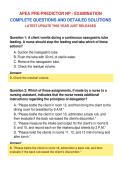
APEA PRE-PREDICTOR NP - EXAMINATION
COMPLETE QUESTIONS AND DETAILED SOLUTIONS
LATEST UPDATE THIS YEAR JUST RELEASED
Question 1: A client vomits during a continuous nasogastric tube
feeding. A nurse should stop the feeding and take which of these
actions?
A. Suction the nasogastric tube.
B. Flush the tube with 30 mL of sterile water.
C. Remove the nasogastric tube.
D. Check the residual volume.
Answer:
D. Check the residual volume.
Question 2: Which of these assignments, if made by a nurse to a
nursing assistant, indicates that the nurse needs additional
instructions regarding the principles of delegation?
A. "Please bathe the client in room 12, and then bring the client to the
dining room for breakfast by 9 A.M."
B. "Please bathe the client in room 10, administer a back rub, and
then evaluate if the back rub eased the client's discomfort."
C. "Please measure the intake and output for the client's in rooms 8.
9. and 10, and record each on the intake/output sheets by 2 P.M."
D. "Please toilet the clients in rooms 11, 12, and 13 mid-morning and
after lunch."
Answer:
B. "Please bathe the client in room 10, administer a back rub, and then
evaluate if the back rub eased the client's discomfort."
,Question 3: Which of these instructions should a nurse include in
the teaching plan for a client who had removal of a cataract in the
left eye?
A. "Forcefully cough and take deep breaths every two hours to keep
your airway clear."
B. "Perform the prescribed eye exercises each day to strengthen your
eye muscles."
C. "Rinse your eyes with saline each morning to prevent
postoperative infection."
D. "Take the prescribed stool softener to avoid increasing intraocular
pressure."
Answer:
D. "Take the prescribed stool softener to avoid increasing intraocular
pressure."
Question 4: Which of these actions best demonstrates cultural
sensitivity by a nurse?
A. The nurse talks in a slow-paced speech.
B. The nurse asks clients about their beliefs and practices toward
pregnancy.
C. The nurse uses charts and diagrams when teaching pregnant
clients.
D. The nurse can speak several different languages.
Answer:
B. The nurse asks clients about their beliefs and practices toward pregnancy.
Question 5: Which of these manifestations should a nurse expect
to observe in a 3-month-old infant who is diagnosed with
dehydration?
, A. Hyperreflexia.
B. Tachycardia.
C. Bradypnea.
D. Agitation.
Answer:
B. Tachycardia.
Question 6: When assessing a client's risk of developing
nosocomial infection, a nurse plans to determine potential entry
portals, which include:
A. the urinary meatus.
B. vomitus.
C. contaminated water.
D. sexual intercourse.
Answer:
A. the urinary meatus.
Question 7: A client who is on the inpatient psychiatric unit has a
history of violence. Which of these actions should a nurse take if
the client is agitated?
A. Encourage the client to verbalize feelings.
B. Lock the client in a secluded room.
C. Ask the other clients to give feedback regarding the client's
behavior.
D. Ignore the client's inappropriate behavior.
Answer:
A. Encourage the client to verbalize feelings.
, Question 8: Which of these measures should a nurse include when
planning care for a school-aged child during a sickle cell crisis
episode?
A. Monitoring for signs of bleeding.
B. Providing pain relief.
C. Administering cool sponge baths to reduce fevers.
D. Offering a high calorie diet.
Answer:
B. Providing pain relief.
Question 9: Which of these instructions should a nurse include in
the plan of care for a 32-week gestation client who had an
amniocentesis today?
A. "Drink at least six glasses of fluids during the next six hours after
the test."
B. "Call the clinic if you experience any abdominal cramps."
C. "Don't be concerned if you have some vaginal spotting in the next
12 hours."
D. "When you get home, stay on bed-rest for the next 48 hours."
Answer:
B. "Call the clinic if you experience any abdominal cramps."
Question 10: An adolescent has a nursing diagnosis of fatigue
related to inadequate intake of ironrich foods. Selection of which of
these lunches by the client indicates a correct understanding of
foods high in iron content?
A. Peanut butter and jam sandwich.
B. Chicken nuggets with rice.
C. Tuna salad sandwich.
COMPLETE QUESTIONS AND DETAILED SOLUTIONS
LATEST UPDATE THIS YEAR JUST RELEASED
Question 1: A client vomits during a continuous nasogastric tube
feeding. A nurse should stop the feeding and take which of these
actions?
A. Suction the nasogastric tube.
B. Flush the tube with 30 mL of sterile water.
C. Remove the nasogastric tube.
D. Check the residual volume.
Answer:
D. Check the residual volume.
Question 2: Which of these assignments, if made by a nurse to a
nursing assistant, indicates that the nurse needs additional
instructions regarding the principles of delegation?
A. "Please bathe the client in room 12, and then bring the client to the
dining room for breakfast by 9 A.M."
B. "Please bathe the client in room 10, administer a back rub, and
then evaluate if the back rub eased the client's discomfort."
C. "Please measure the intake and output for the client's in rooms 8.
9. and 10, and record each on the intake/output sheets by 2 P.M."
D. "Please toilet the clients in rooms 11, 12, and 13 mid-morning and
after lunch."
Answer:
B. "Please bathe the client in room 10, administer a back rub, and then
evaluate if the back rub eased the client's discomfort."
,Question 3: Which of these instructions should a nurse include in
the teaching plan for a client who had removal of a cataract in the
left eye?
A. "Forcefully cough and take deep breaths every two hours to keep
your airway clear."
B. "Perform the prescribed eye exercises each day to strengthen your
eye muscles."
C. "Rinse your eyes with saline each morning to prevent
postoperative infection."
D. "Take the prescribed stool softener to avoid increasing intraocular
pressure."
Answer:
D. "Take the prescribed stool softener to avoid increasing intraocular
pressure."
Question 4: Which of these actions best demonstrates cultural
sensitivity by a nurse?
A. The nurse talks in a slow-paced speech.
B. The nurse asks clients about their beliefs and practices toward
pregnancy.
C. The nurse uses charts and diagrams when teaching pregnant
clients.
D. The nurse can speak several different languages.
Answer:
B. The nurse asks clients about their beliefs and practices toward pregnancy.
Question 5: Which of these manifestations should a nurse expect
to observe in a 3-month-old infant who is diagnosed with
dehydration?
, A. Hyperreflexia.
B. Tachycardia.
C. Bradypnea.
D. Agitation.
Answer:
B. Tachycardia.
Question 6: When assessing a client's risk of developing
nosocomial infection, a nurse plans to determine potential entry
portals, which include:
A. the urinary meatus.
B. vomitus.
C. contaminated water.
D. sexual intercourse.
Answer:
A. the urinary meatus.
Question 7: A client who is on the inpatient psychiatric unit has a
history of violence. Which of these actions should a nurse take if
the client is agitated?
A. Encourage the client to verbalize feelings.
B. Lock the client in a secluded room.
C. Ask the other clients to give feedback regarding the client's
behavior.
D. Ignore the client's inappropriate behavior.
Answer:
A. Encourage the client to verbalize feelings.
, Question 8: Which of these measures should a nurse include when
planning care for a school-aged child during a sickle cell crisis
episode?
A. Monitoring for signs of bleeding.
B. Providing pain relief.
C. Administering cool sponge baths to reduce fevers.
D. Offering a high calorie diet.
Answer:
B. Providing pain relief.
Question 9: Which of these instructions should a nurse include in
the plan of care for a 32-week gestation client who had an
amniocentesis today?
A. "Drink at least six glasses of fluids during the next six hours after
the test."
B. "Call the clinic if you experience any abdominal cramps."
C. "Don't be concerned if you have some vaginal spotting in the next
12 hours."
D. "When you get home, stay on bed-rest for the next 48 hours."
Answer:
B. "Call the clinic if you experience any abdominal cramps."
Question 10: An adolescent has a nursing diagnosis of fatigue
related to inadequate intake of ironrich foods. Selection of which of
these lunches by the client indicates a correct understanding of
foods high in iron content?
A. Peanut butter and jam sandwich.
B. Chicken nuggets with rice.
C. Tuna salad sandwich.