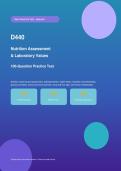
TOPIC PRACTICE TEST • 2026/2027
D440
Nutrition Assessment
& Laboratory Values
100-Question Practice Test
Nutrition screening and assessment, anthropometrics, intake history, hydration and electrolytes,
glucose and lipids, anemia and micronutrients, renal and liver labs, and clinical interpretation.
100 A-D 100
Practice Questions Multiple Choice Immediate Explanations
Original study and revision material • Clean print-ready format
, D440 Nutrition Assessment & Laboratory Values
100 original questions with the answer and explanation immediately after every question.
Instructions: Select the best answer for each question. The correct answer and detailed explanation appear
immediately after every item. Questions focus on nutrition assessment, weight trends, intake, laboratory interpretation,
hydration, metabolic markers, micronutrients, organ function, and clinical judgment.
Nutrition Assessment Foundations
1 Which combination best reflects the major domains used in a comprehensive
nutrition assessment?
A Only laboratory values and medications
B Only a food-frequency questionnaire
C Only body weight and height
D Anthropometric, biochemical, clinical, and dietary data
Answer: D. Anthropometric, biochemical, clinical, and dietary data
Explanation: A strong nutrition assessment integrates multiple domains rather than relying on one
measurement. Anthropometric, biochemical, clinical, and dietary information together provide a more
complete picture of nutrition status and risk.
2 Which finding should the nurse consider most important when screening for recent
nutrition risk?
A Natural hair color
B Dominant hand
C Unintentional weight loss over a short period
D Shoe size
Answer: C. Unintentional weight loss over a short period
Explanation: Recent unintentional weight loss can signal inadequate intake, disease burden, or
catabolism and is a key nutrition-risk indicator. The amount and time frame of loss help determine clinical
significance.
D440 • Nutrition Assessment & Laboratory Values • 100 Questions Page 2
, 3 A nutrition screening tool identifies a hospitalized client as high risk. What is the
most appropriate next step?
A Delay nutrition evaluation until discharge
B Arrange a more comprehensive nutrition assessment and intervention plan
C Assume the client is malnourished without further evaluation
D Repeat the same screening every hour
Answer: B. Arrange a more comprehensive nutrition assessment and intervention plan
Explanation: Screening identifies risk; it does not provide a full diagnosis or plan. A positive screen
should prompt a more detailed assessment, often involving the registered dietitian and interdisciplinary
team.
4 Which statement about a single nutrition indicator is most accurate?
A No single measurement should be used alone to diagnose overall nutrition status
B Serum albumin alone proves malnutrition
C BMI alone always identifies muscle loss
D Diet history alone replaces physical examination
Answer: A. No single measurement should be used alone to diagnose overall nutrition
status
Explanation: Nutrition status is multidimensional. Weight history, intake, physical findings, laboratory
data, disease/inflammation, and functional status should be interpreted together.
5 Which information belongs primarily to the dietary component of nutrition
assessment?
A Serum creatinine only
B Waist circumference only
C Blood pressure only
D Typical food and beverage intake, meal pattern, supplements, and restrictions
Answer: D. Typical food and beverage intake, meal pattern, supplements, and restrictions
Explanation: Dietary assessment explores what, how much, and how often a person eats and drinks,
along with supplements, allergies, preferences, restrictions, and barriers that affect intake.
D440 • Nutrition Assessment & Laboratory Values • 100 Questions Page 3
, 6 Which finding is part of a nutrition-focused physical examination?
A 24-hour food recall
B Serum sodium result
C A1C result
D Visible muscle wasting at the temples and clavicles
Answer: D. Visible muscle wasting at the temples and clavicles
Explanation: A nutrition-focused physical exam evaluates features such as muscle loss, subcutaneous
fat loss, edema, oral health, skin and hair changes, and other signs that may support a nutrition
diagnosis.
7 Which question best assesses a practical barrier to adequate nutrition?
A Do you ever run out of food or have difficulty affording balanced meals?
B What is your favorite color?
C What is your shoe brand?
D Do you prefer mornings or evenings?
Answer: A. Do you ever run out of food or have difficulty affording balanced meals?
Explanation: Food insecurity and limited resources can directly affect food quality and quantity. Asking
respectfully about access helps identify a modifiable cause of poor intake.
8 A client reports eating very little because chewing is painful. Which assessment
area should be prioritized?
A Oral and dental status
B Skin pigmentation only
C Handedness
D Vision only
Answer: A. Oral and dental status
Explanation: Dental pain, poor dentition, oral lesions, and ill-fitting dentures can reduce food intake.
Addressing oral causes may improve nutritional adequacy more effectively than simply prescribing more
calories.
D440 • Nutrition Assessment & Laboratory Values • 100 Questions Page 4
D440
Nutrition Assessment
& Laboratory Values
100-Question Practice Test
Nutrition screening and assessment, anthropometrics, intake history, hydration and electrolytes,
glucose and lipids, anemia and micronutrients, renal and liver labs, and clinical interpretation.
100 A-D 100
Practice Questions Multiple Choice Immediate Explanations
Original study and revision material • Clean print-ready format
, D440 Nutrition Assessment & Laboratory Values
100 original questions with the answer and explanation immediately after every question.
Instructions: Select the best answer for each question. The correct answer and detailed explanation appear
immediately after every item. Questions focus on nutrition assessment, weight trends, intake, laboratory interpretation,
hydration, metabolic markers, micronutrients, organ function, and clinical judgment.
Nutrition Assessment Foundations
1 Which combination best reflects the major domains used in a comprehensive
nutrition assessment?
A Only laboratory values and medications
B Only a food-frequency questionnaire
C Only body weight and height
D Anthropometric, biochemical, clinical, and dietary data
Answer: D. Anthropometric, biochemical, clinical, and dietary data
Explanation: A strong nutrition assessment integrates multiple domains rather than relying on one
measurement. Anthropometric, biochemical, clinical, and dietary information together provide a more
complete picture of nutrition status and risk.
2 Which finding should the nurse consider most important when screening for recent
nutrition risk?
A Natural hair color
B Dominant hand
C Unintentional weight loss over a short period
D Shoe size
Answer: C. Unintentional weight loss over a short period
Explanation: Recent unintentional weight loss can signal inadequate intake, disease burden, or
catabolism and is a key nutrition-risk indicator. The amount and time frame of loss help determine clinical
significance.
D440 • Nutrition Assessment & Laboratory Values • 100 Questions Page 2
, 3 A nutrition screening tool identifies a hospitalized client as high risk. What is the
most appropriate next step?
A Delay nutrition evaluation until discharge
B Arrange a more comprehensive nutrition assessment and intervention plan
C Assume the client is malnourished without further evaluation
D Repeat the same screening every hour
Answer: B. Arrange a more comprehensive nutrition assessment and intervention plan
Explanation: Screening identifies risk; it does not provide a full diagnosis or plan. A positive screen
should prompt a more detailed assessment, often involving the registered dietitian and interdisciplinary
team.
4 Which statement about a single nutrition indicator is most accurate?
A No single measurement should be used alone to diagnose overall nutrition status
B Serum albumin alone proves malnutrition
C BMI alone always identifies muscle loss
D Diet history alone replaces physical examination
Answer: A. No single measurement should be used alone to diagnose overall nutrition
status
Explanation: Nutrition status is multidimensional. Weight history, intake, physical findings, laboratory
data, disease/inflammation, and functional status should be interpreted together.
5 Which information belongs primarily to the dietary component of nutrition
assessment?
A Serum creatinine only
B Waist circumference only
C Blood pressure only
D Typical food and beverage intake, meal pattern, supplements, and restrictions
Answer: D. Typical food and beverage intake, meal pattern, supplements, and restrictions
Explanation: Dietary assessment explores what, how much, and how often a person eats and drinks,
along with supplements, allergies, preferences, restrictions, and barriers that affect intake.
D440 • Nutrition Assessment & Laboratory Values • 100 Questions Page 3
, 6 Which finding is part of a nutrition-focused physical examination?
A 24-hour food recall
B Serum sodium result
C A1C result
D Visible muscle wasting at the temples and clavicles
Answer: D. Visible muscle wasting at the temples and clavicles
Explanation: A nutrition-focused physical exam evaluates features such as muscle loss, subcutaneous
fat loss, edema, oral health, skin and hair changes, and other signs that may support a nutrition
diagnosis.
7 Which question best assesses a practical barrier to adequate nutrition?
A Do you ever run out of food or have difficulty affording balanced meals?
B What is your favorite color?
C What is your shoe brand?
D Do you prefer mornings or evenings?
Answer: A. Do you ever run out of food or have difficulty affording balanced meals?
Explanation: Food insecurity and limited resources can directly affect food quality and quantity. Asking
respectfully about access helps identify a modifiable cause of poor intake.
8 A client reports eating very little because chewing is painful. Which assessment
area should be prioritized?
A Oral and dental status
B Skin pigmentation only
C Handedness
D Vision only
Answer: A. Oral and dental status
Explanation: Dental pain, poor dentition, oral lesions, and ill-fitting dentures can reduce food intake.
Addressing oral causes may improve nutritional adequacy more effectively than simply prescribing more
calories.
D440 • Nutrition Assessment & Laboratory Values • 100 Questions Page 4