

TOPIC PRACTICE TEST • 2026/2027
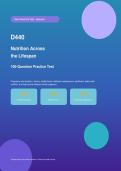
D440
Nutrition Across
the Lifespan
100-Question Practice Test
Pregnancy and lactation, infancy, toddlerhood, childhood, adolescence, adulthood, older-adult
nutrition, and high-priority lifespan clinical judgment.
100 A-D 100
Practice Questions Multiple Choice Immediate Explanations
Original study and revision material • Clean print-ready format
, D440 Nutrition Across the Lifespan
100 original questions with the answer and explanation immediately after every question.
Instructions: Select the best answer for each question. The correct answer and detailed explanation appear
immediately after every item. Questions focus on nutrition across pregnancy, lactation, infancy, toddlerhood, childhood,
adolescence, adulthood, and older adulthood.
Preconception, Pregnancy & Lactation
1 Which nutrition strategy best supports a healthy pregnancy before conception?
A Avoid all fortified foods
B Eliminate all dietary fat
C Build a nutrient-dense eating pattern and ensure adequate folate intake
D Double calorie intake immediately
Answer: C. Build a nutrient-dense eating pattern and ensure adequate folate intake
Explanation: Good nutrition before conception helps establish nutrient stores for early fetal
development. Folate is especially important before and during early pregnancy because neural-tube
development occurs very early.
2 Which nutrient is most closely associated with reducing the risk of neural-tube
defects when intake is adequate before and during early pregnancy?
A Folate
B Sodium
C Vitamin E
D Vitamin K
Answer: A. Folate
Explanation: Folate supports DNA synthesis and cell division. Adequate folate or folic acid around
conception is a key preventive nutrition measure for neural-tube defects.
D440 • Nutrition Across the Lifespan • 100 Questions Page 2
, 3 Which nutrient requirement rises substantially during pregnancy because of
expansion of maternal blood volume and fetal needs?
A Fluoride
B Iron
C Sodium
D Vitamin K
Answer: B. Iron
Explanation: Pregnancy increases iron needs for maternal red-blood-cell production and fetal growth.
Inadequate iron can contribute to iron-deficiency anemia and fatigue.
4 A pregnant client reports constipation. Which nutrition recommendation is generally
most appropriate if there is no contraindication?
A Increase fiber-rich foods and fluids gradually
B Eliminate fruits and vegetables
C Reduce fluid intake
D Rely on stimulant laxatives with every meal
Answer: A. Increase fiber-rich foods and fluids gradually
Explanation: Fiber from vegetables, fruits, legumes, and whole grains can support bowel regularity.
Adequate fluid helps fiber work effectively and gradual changes can reduce bloating.
5 A pregnant client has morning nausea. Which eating pattern is often best tolerated?
A One very large evening meal
B Small, frequent meals and bland foods as tolerated
C Only high-fat fried foods
D Skipping all morning intake
Answer: B. Small, frequent meals and bland foods as tolerated
Explanation: Small, frequent intake can reduce long periods with an empty stomach and may be easier
to tolerate. Individual triggers vary, so the plan should emphasize hydration and foods the client can keep
down.
D440 • Nutrition Across the Lifespan • 100 Questions Page 3
, 6 Which food-safety choice is most appropriate during pregnancy?
A Choose pasteurized dairy products and thoroughly cooked high-risk animal foods
B Choose unpasteurized soft cheese
C Eat raw eggs for extra protein
D Use undercooked meat to preserve nutrients
Answer: A. Choose pasteurized dairy products and thoroughly cooked high-risk animal
foods
Explanation: Pregnancy increases vulnerability to some foodborne infections. Pasteurization and
thorough cooking reduce exposure to pathogens such as Listeria and Salmonella.
7 Which statement about alcohol during pregnancy is most appropriate?
A Avoid alcohol during pregnancy
B Alcohol is safe only in the first trimester
C One alcoholic drink daily is required for circulation
D Only beer should be avoided
Answer: A. Avoid alcohol during pregnancy
Explanation: Alcohol crosses the placenta and can harm fetal development. Avoidance is the safest
recommendation during pregnancy.
8 Which mineral is important for fetal skeletal development while also supporting
maternal bone health?
A Copper only
B Chloride
C Calcium
D Sodium
Answer: C. Calcium
Explanation: Calcium supports fetal bone and tooth mineralization and helps preserve maternal skeletal
health. Needs should be met through appropriate foods or supplements when prescribed.
D440 • Nutrition Across the Lifespan • 100 Questions Page 4
D440
Nutrition Across
the Lifespan
100-Question Practice Test
Pregnancy and lactation, infancy, toddlerhood, childhood, adolescence, adulthood, older-adult
nutrition, and high-priority lifespan clinical judgment.
100 A-D 100
Practice Questions Multiple Choice Immediate Explanations
Original study and revision material • Clean print-ready format
, D440 Nutrition Across the Lifespan
100 original questions with the answer and explanation immediately after every question.
Instructions: Select the best answer for each question. The correct answer and detailed explanation appear
immediately after every item. Questions focus on nutrition across pregnancy, lactation, infancy, toddlerhood, childhood,
adolescence, adulthood, and older adulthood.
Preconception, Pregnancy & Lactation
1 Which nutrition strategy best supports a healthy pregnancy before conception?
A Avoid all fortified foods
B Eliminate all dietary fat
C Build a nutrient-dense eating pattern and ensure adequate folate intake
D Double calorie intake immediately
Answer: C. Build a nutrient-dense eating pattern and ensure adequate folate intake
Explanation: Good nutrition before conception helps establish nutrient stores for early fetal
development. Folate is especially important before and during early pregnancy because neural-tube
development occurs very early.
2 Which nutrient is most closely associated with reducing the risk of neural-tube
defects when intake is adequate before and during early pregnancy?
A Folate
B Sodium
C Vitamin E
D Vitamin K
Answer: A. Folate
Explanation: Folate supports DNA synthesis and cell division. Adequate folate or folic acid around
conception is a key preventive nutrition measure for neural-tube defects.
D440 • Nutrition Across the Lifespan • 100 Questions Page 2
, 3 Which nutrient requirement rises substantially during pregnancy because of
expansion of maternal blood volume and fetal needs?
A Fluoride
B Iron
C Sodium
D Vitamin K
Answer: B. Iron
Explanation: Pregnancy increases iron needs for maternal red-blood-cell production and fetal growth.
Inadequate iron can contribute to iron-deficiency anemia and fatigue.
4 A pregnant client reports constipation. Which nutrition recommendation is generally
most appropriate if there is no contraindication?
A Increase fiber-rich foods and fluids gradually
B Eliminate fruits and vegetables
C Reduce fluid intake
D Rely on stimulant laxatives with every meal
Answer: A. Increase fiber-rich foods and fluids gradually
Explanation: Fiber from vegetables, fruits, legumes, and whole grains can support bowel regularity.
Adequate fluid helps fiber work effectively and gradual changes can reduce bloating.
5 A pregnant client has morning nausea. Which eating pattern is often best tolerated?
A One very large evening meal
B Small, frequent meals and bland foods as tolerated
C Only high-fat fried foods
D Skipping all morning intake
Answer: B. Small, frequent meals and bland foods as tolerated
Explanation: Small, frequent intake can reduce long periods with an empty stomach and may be easier
to tolerate. Individual triggers vary, so the plan should emphasize hydration and foods the client can keep
down.
D440 • Nutrition Across the Lifespan • 100 Questions Page 3
, 6 Which food-safety choice is most appropriate during pregnancy?
A Choose pasteurized dairy products and thoroughly cooked high-risk animal foods
B Choose unpasteurized soft cheese
C Eat raw eggs for extra protein
D Use undercooked meat to preserve nutrients
Answer: A. Choose pasteurized dairy products and thoroughly cooked high-risk animal
foods
Explanation: Pregnancy increases vulnerability to some foodborne infections. Pasteurization and
thorough cooking reduce exposure to pathogens such as Listeria and Salmonella.
7 Which statement about alcohol during pregnancy is most appropriate?
A Avoid alcohol during pregnancy
B Alcohol is safe only in the first trimester
C One alcoholic drink daily is required for circulation
D Only beer should be avoided
Answer: A. Avoid alcohol during pregnancy
Explanation: Alcohol crosses the placenta and can harm fetal development. Avoidance is the safest
recommendation during pregnancy.
8 Which mineral is important for fetal skeletal development while also supporting
maternal bone health?
A Copper only
B Chloride
C Calcium
D Sodium
Answer: C. Calcium
Explanation: Calcium supports fetal bone and tooth mineralization and helps preserve maternal skeletal
health. Needs should be met through appropriate foods or supplements when prescribed.
D440 • Nutrition Across the Lifespan • 100 Questions Page 4


