
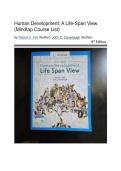
Human Development: A Life-Span View
(Mindtap Course List)
by Robert V. Kail (Author), John C. Cavanaugh (Author)
9th Edition
,TABLE OF CONTENTS
Chapter 1. The Study of Human Development
Chapter 2. Biological Foundations: Heredity, Prenatal Development, and Birth
Chapter 3. Tools for Exploring the World: Physical, Perceptual, and Motor Development
Chapter 4. The Emergence of Thought and Language: Cognitive Development in Infancy and
Early Childhood
Chapter 5. Entering the Social World: Socioemotional Development in Infancy and Early
Childhood
Chapter 6. Off to School: Cognitive and Physical Development in Middle Childhood
Chapter 7. Expanding Social Horizons: Socioemotional Development in Middle Childhood
Chapter 8. Rites of Passage: Physical and Cognitive Development in Adolescence
Chapter 9. Moving into the Adult Social World: Socioemotional Development in Adolescence
Chapter 10. Emerging and Established Adulthood: Physical, Cognitive, and Personality
Development
Chapter 11. Being Connected: Relationships in Emerging, Established, and Middle Adulthood
Chapter 12. Working and Relaxing
Chapter 13. Making it in Midlife: the Biopsychosocial Challenges of Middle Adulthood
Chapter 14. The Personal Context of Later Life: Physical, Cognitive, and Mental Health Issues
Chapter 15. Social Aspects of Later Life: Psychosocial, Retirement, Relationship, and Societal
Issues
Chapter 16. Dying and Bereavement
,Test Bank: Human Development: A Life-Span View, 9th Edition
(Kail, 2023)
CHAPTER 1: THE STUDY OF HUMAN DEVELOPMENT
Multiple Choice Questions
1. The study of human development is best described as a science that examines:
a) Changes in behavior only during childhood
b) Changes and stability from conception to death
c) Psychological disorders across the lifespan
d) Only physical growth patterns
Answer: b
Rationale: Human development is the multidisciplinary study of how people change and how they
remain the same over time, from conception through death.
2. Which of the following is NOT one of the four key issues in human development?
a) Nature versus nurture
b) Continuity versus discontinuity
c) Universal versus context-specific development
d) Conscious versus unconscious motivation
Answer: d
Rationale: The four key issues are nature-nurture, continuity-discontinuity, universal versus context-
specific development, and the interaction of biological, psychological, and sociocultural forces.
3. The biopsychosocial framework includes all of the following forces EXCEPT:
a) Biological forces
b) Psychological forces
c) Supernatural forces
, d) Sociocultural forces
Answer: c
Rationale: The biopsychosocial framework includes biological, psychological, sociocultural, and life-cycle
forces.
4. Life-cycle forces in the biopsychosocial framework refer to:
a) The biological clock that determines aging
b) How the same event affects people of different ages differently
c) The circular nature of generational patterns
d) Hormonal changes across the lifespan
Answer: b
Rationale: Life-cycle forces reflect the fact that the same event (e.g., marriage, death of a parent) can
have different effects depending on when in a person's life it occurs.
5. Erik Erikson's psychosocial theory proposes how many stages of development?
a) 5
b) 6
c) 8
d) 10
Answer: c
Rationale: Erikson proposed eight stages of psychosocial development, each characterized by a specific
crisis or challenge, spanning from infancy through late adulthood.
6. According to Bronfenbrenner's ecological theory, the microsystem refers to:
a) Genetic and chromosomal influences
b) Cultural values and customs
c) The immediate environment in which a person develops
(Mindtap Course List)
by Robert V. Kail (Author), John C. Cavanaugh (Author)
9th Edition
,TABLE OF CONTENTS
Chapter 1. The Study of Human Development
Chapter 2. Biological Foundations: Heredity, Prenatal Development, and Birth
Chapter 3. Tools for Exploring the World: Physical, Perceptual, and Motor Development
Chapter 4. The Emergence of Thought and Language: Cognitive Development in Infancy and
Early Childhood
Chapter 5. Entering the Social World: Socioemotional Development in Infancy and Early
Childhood
Chapter 6. Off to School: Cognitive and Physical Development in Middle Childhood
Chapter 7. Expanding Social Horizons: Socioemotional Development in Middle Childhood
Chapter 8. Rites of Passage: Physical and Cognitive Development in Adolescence
Chapter 9. Moving into the Adult Social World: Socioemotional Development in Adolescence
Chapter 10. Emerging and Established Adulthood: Physical, Cognitive, and Personality
Development
Chapter 11. Being Connected: Relationships in Emerging, Established, and Middle Adulthood
Chapter 12. Working and Relaxing
Chapter 13. Making it in Midlife: the Biopsychosocial Challenges of Middle Adulthood
Chapter 14. The Personal Context of Later Life: Physical, Cognitive, and Mental Health Issues
Chapter 15. Social Aspects of Later Life: Psychosocial, Retirement, Relationship, and Societal
Issues
Chapter 16. Dying and Bereavement
,Test Bank: Human Development: A Life-Span View, 9th Edition
(Kail, 2023)
CHAPTER 1: THE STUDY OF HUMAN DEVELOPMENT
Multiple Choice Questions
1. The study of human development is best described as a science that examines:
a) Changes in behavior only during childhood
b) Changes and stability from conception to death
c) Psychological disorders across the lifespan
d) Only physical growth patterns
Answer: b
Rationale: Human development is the multidisciplinary study of how people change and how they
remain the same over time, from conception through death.
2. Which of the following is NOT one of the four key issues in human development?
a) Nature versus nurture
b) Continuity versus discontinuity
c) Universal versus context-specific development
d) Conscious versus unconscious motivation
Answer: d
Rationale: The four key issues are nature-nurture, continuity-discontinuity, universal versus context-
specific development, and the interaction of biological, psychological, and sociocultural forces.
3. The biopsychosocial framework includes all of the following forces EXCEPT:
a) Biological forces
b) Psychological forces
c) Supernatural forces
, d) Sociocultural forces
Answer: c
Rationale: The biopsychosocial framework includes biological, psychological, sociocultural, and life-cycle
forces.
4. Life-cycle forces in the biopsychosocial framework refer to:
a) The biological clock that determines aging
b) How the same event affects people of different ages differently
c) The circular nature of generational patterns
d) Hormonal changes across the lifespan
Answer: b
Rationale: Life-cycle forces reflect the fact that the same event (e.g., marriage, death of a parent) can
have different effects depending on when in a person's life it occurs.
5. Erik Erikson's psychosocial theory proposes how many stages of development?
a) 5
b) 6
c) 8
d) 10
Answer: c
Rationale: Erikson proposed eight stages of psychosocial development, each characterized by a specific
crisis or challenge, spanning from infancy through late adulthood.
6. According to Bronfenbrenner's ecological theory, the microsystem refers to:
a) Genetic and chromosomal influences
b) Cultural values and customs
c) The immediate environment in which a person develops


