

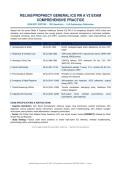
RELIAS/PROPHECY GENERAL ICU RN A V3 EXAM
COMPREHENSIVE PRACTICE
2026/2027 EDITION • 200 Questions • Full Explanatory Rationales
Aligned with the current Relias & Prophecy Healthcare General ICU RN A V3 competency blueprint, AACN critical care
standards, and evidence-based intensive care nursing practice. Covers advanced hemodynamics, mechanical ventilation,
neurological monitoring, acute kidney injury and CRRT, vasoactive pharmacology, sedation, rapid response/ACLS, and
complex multi-system clinical scenarios.
Domain Section Questions Core Critical Care Competency Focus
1. Hemodynamics & Shock 35 Qs (Q1–Q35) ScvO2, cardiogenic/septic shock, dobutamine, art lines, CVP,
PAOP
2. Respiratory & Ventilator Care 30 Qs (Q36–Q65) VAP bundle (HOB 30–45°), high-pressure alarms, BiPAP, SBT
weaning, ARDS proning
3. Neurologic Critical Care 25 Qs (Q66–Q90) CAM-ICU delirium, OPO notification (24 hrs), LOC, CPP
(MAP-ICP), EVD leveling
4. Renal & Electrolytes 25 Qs (Q91–Q115) Hyperkalemia peaked T waves, IV K+ recheck (30–60 min),
CI-AKI hydration, CRRT
5. Pharmacology & Sedation 25 Qs (Q116–Q140) Precedex for non-intubated, concentration checks, dopamine,
wasting, liver clearance
6. Emergency & Rapid Response 20 Qs (Q141–Q160) Self-extubation oral inspection, ACLS adherence, surgical
airway (CICO), TTM
7. Clinical Reasoning & Ethics 20 Qs (Q161–Q180) Transfer coordination, belongings (safe), Healthcare POA
consent, delegation
8. Integrated ICU Scenarios 20 Qs (Q181–Q200) Multi-system shock, ventilator pneumothorax, anuric
hyperkalemia, code leadership
EXAM SPECIFICATIONS & INSTRUCTIONS
• Cognitive Distribution: 30% Recall (hemodynamic reference ranges, drug mechanisms, protocol timeframes), 50%
Application (clinical judgment, priority interventions, vasoactive titration, alarm troubleshooting), 20% Analysis (complex
multi-system case synthesis, shock differentiation, emergency prioritization).
• Format: 200 Critical Care Multiple-Choice Questions (A–D, one correct answer marked [CORRECT]) followed by official
Answer Key and Rationale.
• Study Strategy: Practice under timed conditions to master high-stakes ICU telemetry, ventilator troubleshooting,
pharmacology safety, and emergency protocols.
Turn the page to begin the examination. Good luck — lead with clinical excellence.
Relias/Prophecy General ICU RN A V3 Competency Examination (2026/2027 Edition) | Page 1
,Section 1: Hemodynamic Monitoring & Shock States – MAP, CVP, PAOP, ScvO2, Arterial
Waveforms, Septic/Cardiogenic Shock, Dobutamine Titration (35 questions)
ScvO2 monitoring for inotropic titration, cardiogenic shock (elevated CVP/PAOP, low CI, dobutamine), septic shock
(norepinephrine, MAP ≥ 65), early hyperdynamic sepsis (high CO, low SVR), arterial line waveforms (dicrotic notch, damping),
and shock hemodynamics.
Q1: In a critically ill client with septic shock receiving an inotropic infusion, which continuous hemodynamic
parameter is the primary objective indicator used to evaluate tissue oxygen delivery and guide the titration of a
Dobutamine infusion?
A. Central Venous Oxygen Saturation (ScvO2 ≥ 70%) [CORRECT]
B. Central Venous Pressure (CVP)
C. Pulmonary Vascular Resistance (PVR)
D. Urine specific gravity
Correct Answer: A
Rationale: ScvO2 reflects the balance between systemic oxygen delivery (DO2) and oxygen consumption (VO2); an ScvO2 <
70% indicates inadequate cardiac output, guiding the upward titration of inotropic dobutamine.
Q2: A client in Cardiogenic Shock following an anterior myocardial infarction has a CVP of 18 mm Hg, a Pulmonary
Artery Occlusion Pressure (PAOP) of 24 mm Hg, a Cardiac Index (CI) of 1.8 L/min/m², and an SVR of 1800
dynes·s/cm■. Which medication is the priority intervention to improve contractility without disproportionately
increasing afterload?
A. Phenylephrine infusion
B. Dobutamine continuous intravenous infusion [CORRECT]
C. High-dose Norepinephrine alone
D. 0.9% Normal Saline 1000 mL bolus
Correct Answer: B
Rationale: Dobutamine is a potent beta-1 adrenergic inotrope with mild beta-2 vasodilation that increases myocardial contractility
and cardiac index while reducing elevated left ventricular filling pressures (PAOP).
Q3: A client in Septic Shock remains hypotensive with a Mean Arterial Pressure (MAP) of 54 mm Hg despite
receiving an initial 30 mL/kg intravenous bolus of balanced crystalloids. What is the first-line vasopressor of choice
recommended by international sepsis guidelines?
A. Vasopressin monotherapy at 0.1 units/min
B. Dopamine low-dose infusion at 2 mcg/kg/min
C. Norepinephrine (Levophed) continuous intravenous infusion titrated to maintain MAP ≥ 65 mm Hg [CORRECT]
D. Epinephrine bolus 1 mg IV push
Correct Answer: C
Rationale: Norepinephrine is the first-line vasopressor in septic shock, acting predominantly on alpha-1 adrenergic receptors to
restore vascular tone and maintain vital organ perfusion (MAP ≥ 65 mmHg).
Q4: What is the expected initial cardiovascular and hemodynamic response in a client entering early (hyperdynamic
/ warm) Septic Shock?
A. Profound bradycardia and decreased cardiac output
B. Complete absence of pulse pressure
C. Severe elevation of pulmonary artery occlusion pressure
D. Increased Cardiac Output / Cardiac Index, decreased Systemic Vascular Resistance (SVR < 800 dynes·s/cm■), and
warm flushed skin [CORRECT]
Correct Answer: D
Rationale: Early distributive septic shock features systemic vasodilation (low SVR) and compensatory tachycardia with bounding
peripheral pulses, producing a hyperdynamic state with elevated cardiac output.
Relias/Prophecy General ICU RN A V3 Competency Examination (2026/2027 Edition) | Page 2
,Q5: Which of the following descriptions accurately characterizes a normal, high-fidelity systemic Arterial Line
Pressure Waveform?
A. A steep, rapid systolic upstroke, a rounded systolic peak, a sharp downstroke with a distinct Dicrotic Notch, and a
gradual diastolic runoff [CORRECT]
B. A flat horizontal line with random electrical spikes
C. A sinusoidal wave with alternating elevated and depressed peaks
D. Multiple rapid oscillations without any identifiable peak
Correct Answer: A
Rationale: B normal arterial waveform exhibits a steep systolic upstroke (ventricular ejection), peak systolic pressure, a dicrotic
notch (marking aortic valve closure), and diastolic runoff.
Q6: While evaluating a client's radial arterial line, the nurse performs a fast-flush test (square wave test) and notes
an Overdamped Waveform with a slurred systolic upstroke, loss of the dicrotic notch, and falsely low systolic blood
pressure. What is the most common cause?
A. Excessive tubing length and catheter whip
B. Air bubbles in the transducer tubing, blood clots at the catheter tip, or loose pressure tubing connections
[CORRECT]
C. Extreme arterial hypertension
D. High cardiac output
Correct Answer: B
Rationale: Overdamping absorbs kinetic pressure waves, underestimating systolic BP; common causes include air bubbles in the
transducer, fibrin clots, compliant tubing, or loose stopcocks.
Q7: What is the normal physiological reference range for Central Venous Pressure (CVP) in a critically ill adult
client?
A. 15 to 25 mm Hg
B. -5 to -10 mm Hg
C. 2 to 6 mm Hg (or 2 to 8 mm Hg) [CORRECT]
D. 30 to 40 mm Hg
Correct Answer: C
Rationale: Normal CVP (measured at the right atrium/cranial vena cava) is 2 to 6 mm Hg (or 2–8 mmHg); values < 2 mmHg reflect
hypovolemia, while values > 8–10 mmHg reflect volume overload or RV failure.
Q8: A client with a pulmonary artery catheter has a Pulmonary Artery Occlusion Pressure (PAOP / Wedge) of 4 mm
Hg (normal: 6–12 mm Hg) and a CVP of 1 mm Hg. How should the critical care nurse interpret these hemodynamic
findings?
A. Severe left ventricular systolic failure and pulmonary edema
B. Cardiac tamponade
C. Aortic valve regurgitation
D. Hypovolemia or absolute intravascular fluid volume deficit requiring volume resuscitation [CORRECT]
Correct Answer: D
Rationale: PAOP reflects left ventricular end-diastolic pressure (preload), while CVP reflects right ventricular preload; subnormal
values in both parameters indicate severe intravascular hypovolemia.
Q9: A client with a blood pressure of 86/44 mm Hg has a Mean Arterial Pressure (MAP) of:
A. 58 mm Hg [CORRECT]
B. 44 mm Hg
C. 72 mm Hg
D. 65 mm Hg
Correct Answer: A
Relias/Prophecy General ICU RN A V3 Competency Examination (2026/2027 Edition) | Page 3
, Rationale: MAP = [Systolic BP + 2(Diastolic BP)] / 3 = [86 + 2(44)] / 3 = [86 + 88] / 3 = = 58 mmHg, which is below the
minimum therapeutic target of ≥ 65 mmHg.
Q10: What is the normal reference range for Systemic Vascular Resistance (SVR) in an adult client?
A. 100 to 250 dynes·s/cm■
B. 800 to 1200 dynes·s/cm■ [CORRECT]
C. 2000 to 3500 dynes·s/cm■
D. 50 to 80 dynes·s/cm■
Correct Answer: B
Rationale: Normal SVR (left ventricular afterload) is 800 to 1200 dynes·s/cm■; it is elevated in cardiogenic/hypovolemic shock
(vasoconstriction) and decreased in distributive shock (vasodilation).
Q11: A client presenting with Hypovolemic Shock from active gastrointestinal bleeding will characteristically exhibit
which hemodynamic profile?
A. High CVP, high PAOP, high Cardiac Output, and low SVR
B. Normal CVP, normal PAOP, high Cardiac Output, and normal SVR
C. Low CVP (< 2 mm Hg), low PAOP (< 6 mm Hg), low Cardiac Index (< 2.2 L/min/m²), and high SVR (> 1400
dynes·s/cm■) [CORRECT]
D. High CVP, low PAOP, high SVR, and bradycardia
Correct Answer: C
Rationale: Hypovolemic shock is characterized by reduced preload (low CVP/PAOP), reduced cardiac index, and compensatory
sympathetic vasoconstriction (high SVR).
Q12: A client with a high cervical spinal cord injury (C5) presents with a blood pressure of 78/42 mm Hg, a heart rate
of 42 bpm (bradycardia), and warm, dry skin. What type of distributive shock is present?
A. Septic Shock
B. Anaphylactic Shock
C. Cardiogenic Shock
D. Neurogenic Shock [CORRECT]
Correct Answer: D
Rationale: Neurogenic shock results from disruption of descending sympathetic pathways, causing loss of vasomotor tone
(vasodilation/hypotension) and unopposed vagal tone (bradycardia with warm, dry skin).
Q13: A client in the ICU with acute chest trauma develops Beck's Triad (Hypotension, Muffled heart sounds, Jugular
Venous Distension) and a Pulmonary Artery Catheter shows equalization of CVP, PAOP, and Pulmonary Artery
Diastolic pressure (all measuring 20 mm Hg). What condition is present?
A. Cardiac Tamponade requiring emergent pericardiocentesis [CORRECT]
B. Tension Pneumothorax
C. Severe Hypovolemia
D. Acute Pulmonary Embolism
Correct Answer: A
Rationale: Equalization of right and left cardiac chamber diastolic pressures (CVP ≈ PAOP) combined with Beck's triad confirms
cardiac tamponade compressing the heart.
Q14: What is the clinical significance of Pulsus Paradoxus (a drop in systolic blood pressure > 10 mm Hg during
inspiration) in a client with a large pericardial effusion?
A. It indicates full recovery of left ventricular function
B. It is a key diagnostic indicator of hemodynamic compromise and impending cardiac tamponade [CORRECT]
C. It indicates severe aortic insufficiency
D. It confirms the presence of systemic hypertension
Correct Answer: B
Relias/Prophecy General ICU RN A V3 Competency Examination (2026/2027 Edition) | Page 4
COMPREHENSIVE PRACTICE
2026/2027 EDITION • 200 Questions • Full Explanatory Rationales
Aligned with the current Relias & Prophecy Healthcare General ICU RN A V3 competency blueprint, AACN critical care
standards, and evidence-based intensive care nursing practice. Covers advanced hemodynamics, mechanical ventilation,
neurological monitoring, acute kidney injury and CRRT, vasoactive pharmacology, sedation, rapid response/ACLS, and
complex multi-system clinical scenarios.
Domain Section Questions Core Critical Care Competency Focus
1. Hemodynamics & Shock 35 Qs (Q1–Q35) ScvO2, cardiogenic/septic shock, dobutamine, art lines, CVP,
PAOP
2. Respiratory & Ventilator Care 30 Qs (Q36–Q65) VAP bundle (HOB 30–45°), high-pressure alarms, BiPAP, SBT
weaning, ARDS proning
3. Neurologic Critical Care 25 Qs (Q66–Q90) CAM-ICU delirium, OPO notification (24 hrs), LOC, CPP
(MAP-ICP), EVD leveling
4. Renal & Electrolytes 25 Qs (Q91–Q115) Hyperkalemia peaked T waves, IV K+ recheck (30–60 min),
CI-AKI hydration, CRRT
5. Pharmacology & Sedation 25 Qs (Q116–Q140) Precedex for non-intubated, concentration checks, dopamine,
wasting, liver clearance
6. Emergency & Rapid Response 20 Qs (Q141–Q160) Self-extubation oral inspection, ACLS adherence, surgical
airway (CICO), TTM
7. Clinical Reasoning & Ethics 20 Qs (Q161–Q180) Transfer coordination, belongings (safe), Healthcare POA
consent, delegation
8. Integrated ICU Scenarios 20 Qs (Q181–Q200) Multi-system shock, ventilator pneumothorax, anuric
hyperkalemia, code leadership
EXAM SPECIFICATIONS & INSTRUCTIONS
• Cognitive Distribution: 30% Recall (hemodynamic reference ranges, drug mechanisms, protocol timeframes), 50%
Application (clinical judgment, priority interventions, vasoactive titration, alarm troubleshooting), 20% Analysis (complex
multi-system case synthesis, shock differentiation, emergency prioritization).
• Format: 200 Critical Care Multiple-Choice Questions (A–D, one correct answer marked [CORRECT]) followed by official
Answer Key and Rationale.
• Study Strategy: Practice under timed conditions to master high-stakes ICU telemetry, ventilator troubleshooting,
pharmacology safety, and emergency protocols.
Turn the page to begin the examination. Good luck — lead with clinical excellence.
Relias/Prophecy General ICU RN A V3 Competency Examination (2026/2027 Edition) | Page 1
,Section 1: Hemodynamic Monitoring & Shock States – MAP, CVP, PAOP, ScvO2, Arterial
Waveforms, Septic/Cardiogenic Shock, Dobutamine Titration (35 questions)
ScvO2 monitoring for inotropic titration, cardiogenic shock (elevated CVP/PAOP, low CI, dobutamine), septic shock
(norepinephrine, MAP ≥ 65), early hyperdynamic sepsis (high CO, low SVR), arterial line waveforms (dicrotic notch, damping),
and shock hemodynamics.
Q1: In a critically ill client with septic shock receiving an inotropic infusion, which continuous hemodynamic
parameter is the primary objective indicator used to evaluate tissue oxygen delivery and guide the titration of a
Dobutamine infusion?
A. Central Venous Oxygen Saturation (ScvO2 ≥ 70%) [CORRECT]
B. Central Venous Pressure (CVP)
C. Pulmonary Vascular Resistance (PVR)
D. Urine specific gravity
Correct Answer: A
Rationale: ScvO2 reflects the balance between systemic oxygen delivery (DO2) and oxygen consumption (VO2); an ScvO2 <
70% indicates inadequate cardiac output, guiding the upward titration of inotropic dobutamine.
Q2: A client in Cardiogenic Shock following an anterior myocardial infarction has a CVP of 18 mm Hg, a Pulmonary
Artery Occlusion Pressure (PAOP) of 24 mm Hg, a Cardiac Index (CI) of 1.8 L/min/m², and an SVR of 1800
dynes·s/cm■. Which medication is the priority intervention to improve contractility without disproportionately
increasing afterload?
A. Phenylephrine infusion
B. Dobutamine continuous intravenous infusion [CORRECT]
C. High-dose Norepinephrine alone
D. 0.9% Normal Saline 1000 mL bolus
Correct Answer: B
Rationale: Dobutamine is a potent beta-1 adrenergic inotrope with mild beta-2 vasodilation that increases myocardial contractility
and cardiac index while reducing elevated left ventricular filling pressures (PAOP).
Q3: A client in Septic Shock remains hypotensive with a Mean Arterial Pressure (MAP) of 54 mm Hg despite
receiving an initial 30 mL/kg intravenous bolus of balanced crystalloids. What is the first-line vasopressor of choice
recommended by international sepsis guidelines?
A. Vasopressin monotherapy at 0.1 units/min
B. Dopamine low-dose infusion at 2 mcg/kg/min
C. Norepinephrine (Levophed) continuous intravenous infusion titrated to maintain MAP ≥ 65 mm Hg [CORRECT]
D. Epinephrine bolus 1 mg IV push
Correct Answer: C
Rationale: Norepinephrine is the first-line vasopressor in septic shock, acting predominantly on alpha-1 adrenergic receptors to
restore vascular tone and maintain vital organ perfusion (MAP ≥ 65 mmHg).
Q4: What is the expected initial cardiovascular and hemodynamic response in a client entering early (hyperdynamic
/ warm) Septic Shock?
A. Profound bradycardia and decreased cardiac output
B. Complete absence of pulse pressure
C. Severe elevation of pulmonary artery occlusion pressure
D. Increased Cardiac Output / Cardiac Index, decreased Systemic Vascular Resistance (SVR < 800 dynes·s/cm■), and
warm flushed skin [CORRECT]
Correct Answer: D
Rationale: Early distributive septic shock features systemic vasodilation (low SVR) and compensatory tachycardia with bounding
peripheral pulses, producing a hyperdynamic state with elevated cardiac output.
Relias/Prophecy General ICU RN A V3 Competency Examination (2026/2027 Edition) | Page 2
,Q5: Which of the following descriptions accurately characterizes a normal, high-fidelity systemic Arterial Line
Pressure Waveform?
A. A steep, rapid systolic upstroke, a rounded systolic peak, a sharp downstroke with a distinct Dicrotic Notch, and a
gradual diastolic runoff [CORRECT]
B. A flat horizontal line with random electrical spikes
C. A sinusoidal wave with alternating elevated and depressed peaks
D. Multiple rapid oscillations without any identifiable peak
Correct Answer: A
Rationale: B normal arterial waveform exhibits a steep systolic upstroke (ventricular ejection), peak systolic pressure, a dicrotic
notch (marking aortic valve closure), and diastolic runoff.
Q6: While evaluating a client's radial arterial line, the nurse performs a fast-flush test (square wave test) and notes
an Overdamped Waveform with a slurred systolic upstroke, loss of the dicrotic notch, and falsely low systolic blood
pressure. What is the most common cause?
A. Excessive tubing length and catheter whip
B. Air bubbles in the transducer tubing, blood clots at the catheter tip, or loose pressure tubing connections
[CORRECT]
C. Extreme arterial hypertension
D. High cardiac output
Correct Answer: B
Rationale: Overdamping absorbs kinetic pressure waves, underestimating systolic BP; common causes include air bubbles in the
transducer, fibrin clots, compliant tubing, or loose stopcocks.
Q7: What is the normal physiological reference range for Central Venous Pressure (CVP) in a critically ill adult
client?
A. 15 to 25 mm Hg
B. -5 to -10 mm Hg
C. 2 to 6 mm Hg (or 2 to 8 mm Hg) [CORRECT]
D. 30 to 40 mm Hg
Correct Answer: C
Rationale: Normal CVP (measured at the right atrium/cranial vena cava) is 2 to 6 mm Hg (or 2–8 mmHg); values < 2 mmHg reflect
hypovolemia, while values > 8–10 mmHg reflect volume overload or RV failure.
Q8: A client with a pulmonary artery catheter has a Pulmonary Artery Occlusion Pressure (PAOP / Wedge) of 4 mm
Hg (normal: 6–12 mm Hg) and a CVP of 1 mm Hg. How should the critical care nurse interpret these hemodynamic
findings?
A. Severe left ventricular systolic failure and pulmonary edema
B. Cardiac tamponade
C. Aortic valve regurgitation
D. Hypovolemia or absolute intravascular fluid volume deficit requiring volume resuscitation [CORRECT]
Correct Answer: D
Rationale: PAOP reflects left ventricular end-diastolic pressure (preload), while CVP reflects right ventricular preload; subnormal
values in both parameters indicate severe intravascular hypovolemia.
Q9: A client with a blood pressure of 86/44 mm Hg has a Mean Arterial Pressure (MAP) of:
A. 58 mm Hg [CORRECT]
B. 44 mm Hg
C. 72 mm Hg
D. 65 mm Hg
Correct Answer: A
Relias/Prophecy General ICU RN A V3 Competency Examination (2026/2027 Edition) | Page 3
, Rationale: MAP = [Systolic BP + 2(Diastolic BP)] / 3 = [86 + 2(44)] / 3 = [86 + 88] / 3 = = 58 mmHg, which is below the
minimum therapeutic target of ≥ 65 mmHg.
Q10: What is the normal reference range for Systemic Vascular Resistance (SVR) in an adult client?
A. 100 to 250 dynes·s/cm■
B. 800 to 1200 dynes·s/cm■ [CORRECT]
C. 2000 to 3500 dynes·s/cm■
D. 50 to 80 dynes·s/cm■
Correct Answer: B
Rationale: Normal SVR (left ventricular afterload) is 800 to 1200 dynes·s/cm■; it is elevated in cardiogenic/hypovolemic shock
(vasoconstriction) and decreased in distributive shock (vasodilation).
Q11: A client presenting with Hypovolemic Shock from active gastrointestinal bleeding will characteristically exhibit
which hemodynamic profile?
A. High CVP, high PAOP, high Cardiac Output, and low SVR
B. Normal CVP, normal PAOP, high Cardiac Output, and normal SVR
C. Low CVP (< 2 mm Hg), low PAOP (< 6 mm Hg), low Cardiac Index (< 2.2 L/min/m²), and high SVR (> 1400
dynes·s/cm■) [CORRECT]
D. High CVP, low PAOP, high SVR, and bradycardia
Correct Answer: C
Rationale: Hypovolemic shock is characterized by reduced preload (low CVP/PAOP), reduced cardiac index, and compensatory
sympathetic vasoconstriction (high SVR).
Q12: A client with a high cervical spinal cord injury (C5) presents with a blood pressure of 78/42 mm Hg, a heart rate
of 42 bpm (bradycardia), and warm, dry skin. What type of distributive shock is present?
A. Septic Shock
B. Anaphylactic Shock
C. Cardiogenic Shock
D. Neurogenic Shock [CORRECT]
Correct Answer: D
Rationale: Neurogenic shock results from disruption of descending sympathetic pathways, causing loss of vasomotor tone
(vasodilation/hypotension) and unopposed vagal tone (bradycardia with warm, dry skin).
Q13: A client in the ICU with acute chest trauma develops Beck's Triad (Hypotension, Muffled heart sounds, Jugular
Venous Distension) and a Pulmonary Artery Catheter shows equalization of CVP, PAOP, and Pulmonary Artery
Diastolic pressure (all measuring 20 mm Hg). What condition is present?
A. Cardiac Tamponade requiring emergent pericardiocentesis [CORRECT]
B. Tension Pneumothorax
C. Severe Hypovolemia
D. Acute Pulmonary Embolism
Correct Answer: A
Rationale: Equalization of right and left cardiac chamber diastolic pressures (CVP ≈ PAOP) combined with Beck's triad confirms
cardiac tamponade compressing the heart.
Q14: What is the clinical significance of Pulsus Paradoxus (a drop in systolic blood pressure > 10 mm Hg during
inspiration) in a client with a large pericardial effusion?
A. It indicates full recovery of left ventricular function
B. It is a key diagnostic indicator of hemodynamic compromise and impending cardiac tamponade [CORRECT]
C. It indicates severe aortic insufficiency
D. It confirms the presence of systemic hypertension
Correct Answer: B
Relias/Prophecy General ICU RN A V3 Competency Examination (2026/2027 Edition) | Page 4


