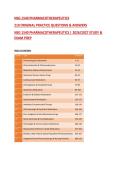
NSG 1540 PHARMACOTHERAPEUTICS
210 ORIGINAL PRACTICE QUESTIONS & ANSWERS
NSG 1540 PHARMACOTHERAPEUTICS | 2026/2027 STUDY &
EXAM PREP
TABLE OF CONTENTS
Section Topic Questions
1 Pharmacology Fundamentals 1–15
2 Pharmacokinetics & Pharmacodynamics 16–30
3 Medication Safety & Administration 31–45
4 Autonomic Nervous System Drugs 46–55
5 Cardiovascular Medications 56–75
6 Anticoagulants & Antiplatelet Drugs 76–88
7 Respiratory Medications 89–100
8 Endocrine & Diabetes Medications 101–115
9 Gastrointestinal Medications 116–127
10 Antibiotics & Antimicrobial Therapy 128–145
11 CNS, Neurologic & Psychiatric Medications 146–165
12 Pain, Analgesics & Anti-Inflammatory Drugs 166–177
13 Renal, Electrolyte & Fluid Medications 178–187
14 Hematologic & Immune-System Medications 188–196
15 Reproductive & Women's Health Medications 197–203
16 Pediatric, Older-Adult & Special-Population Pharmacotherapy 204–207
17 Integrated Clinical Pharmacotherapy & Nursing Priorities 208–210
,SECTION 1 — PHARMACOLOGY FOUNDATIONS
1. A medication produces its therapeutic effect by binding to a specific
receptor. What term describes the drug's ability to bind to that
receptor?
A. Efficacy
B. Potency
C. Affinity
D. Clearance
Correct Answer: C
Rationale: Affinity refers to the tendency of a drug to bind to its
receptor.
2. A drug that activates a receptor and produces a response is
classified as a:
A. Antagonist
B. Agonist
C. Inhibitor
D. Chelator
Correct Answer: B
Rationale: An agonist binds to a receptor and activates it to produce a
pharmacologic response.
3. A medication binds to a receptor but prevents activation by another
drug. It is a:
A. Partial agonist
B. Antagonist
,C. Prodrug
D. Synergist
Correct Answer: B
Rationale: An antagonist occupies a receptor without producing the
activating effect of an agonist and can block its action.
4. Which term describes the maximum effect a drug can produce?
A. Affinity
B. Absorption
C. Efficacy
D. Half-life
Correct Answer: C
Rationale: Efficacy describes the maximum pharmacologic effect a drug
can achieve.
5. Which characteristic describes how much drug is required to
produce a particular effect?
A. Potency
B. Clearance
C. Bioavailability
D. Distribution
Correct Answer: A
Rationale: Potency refers to the amount of drug needed to produce a
specified effect.
6. A patient asks what pharmacodynamics means. Which response is
best?
, A. "It describes how the body absorbs drugs."
B. "It describes what the drug does to the body."
C. "It describes how the kidneys eliminate drugs."
D. "It describes how drugs are manufactured."
Correct Answer: B
Rationale: Pharmacodynamics concerns drug actions and effects on the
body.
7. Which process involves movement of a drug from the
administration site into systemic circulation?
A. Metabolism
B. Distribution
C. Absorption
D. Excretion
Correct Answer: C
Rationale: Absorption is movement of a drug into the bloodstream
from its administration site.
8. Which organ is primarily responsible for drug metabolism?
A. Heart
B. Liver
C. Spleen
D. Thyroid
Correct Answer: B
Rationale: The liver is the major site of biotransformation for many
medications.
210 ORIGINAL PRACTICE QUESTIONS & ANSWERS
NSG 1540 PHARMACOTHERAPEUTICS | 2026/2027 STUDY &
EXAM PREP
TABLE OF CONTENTS
Section Topic Questions
1 Pharmacology Fundamentals 1–15
2 Pharmacokinetics & Pharmacodynamics 16–30
3 Medication Safety & Administration 31–45
4 Autonomic Nervous System Drugs 46–55
5 Cardiovascular Medications 56–75
6 Anticoagulants & Antiplatelet Drugs 76–88
7 Respiratory Medications 89–100
8 Endocrine & Diabetes Medications 101–115
9 Gastrointestinal Medications 116–127
10 Antibiotics & Antimicrobial Therapy 128–145
11 CNS, Neurologic & Psychiatric Medications 146–165
12 Pain, Analgesics & Anti-Inflammatory Drugs 166–177
13 Renal, Electrolyte & Fluid Medications 178–187
14 Hematologic & Immune-System Medications 188–196
15 Reproductive & Women's Health Medications 197–203
16 Pediatric, Older-Adult & Special-Population Pharmacotherapy 204–207
17 Integrated Clinical Pharmacotherapy & Nursing Priorities 208–210
,SECTION 1 — PHARMACOLOGY FOUNDATIONS
1. A medication produces its therapeutic effect by binding to a specific
receptor. What term describes the drug's ability to bind to that
receptor?
A. Efficacy
B. Potency
C. Affinity
D. Clearance
Correct Answer: C
Rationale: Affinity refers to the tendency of a drug to bind to its
receptor.
2. A drug that activates a receptor and produces a response is
classified as a:
A. Antagonist
B. Agonist
C. Inhibitor
D. Chelator
Correct Answer: B
Rationale: An agonist binds to a receptor and activates it to produce a
pharmacologic response.
3. A medication binds to a receptor but prevents activation by another
drug. It is a:
A. Partial agonist
B. Antagonist
,C. Prodrug
D. Synergist
Correct Answer: B
Rationale: An antagonist occupies a receptor without producing the
activating effect of an agonist and can block its action.
4. Which term describes the maximum effect a drug can produce?
A. Affinity
B. Absorption
C. Efficacy
D. Half-life
Correct Answer: C
Rationale: Efficacy describes the maximum pharmacologic effect a drug
can achieve.
5. Which characteristic describes how much drug is required to
produce a particular effect?
A. Potency
B. Clearance
C. Bioavailability
D. Distribution
Correct Answer: A
Rationale: Potency refers to the amount of drug needed to produce a
specified effect.
6. A patient asks what pharmacodynamics means. Which response is
best?
, A. "It describes how the body absorbs drugs."
B. "It describes what the drug does to the body."
C. "It describes how the kidneys eliminate drugs."
D. "It describes how drugs are manufactured."
Correct Answer: B
Rationale: Pharmacodynamics concerns drug actions and effects on the
body.
7. Which process involves movement of a drug from the
administration site into systemic circulation?
A. Metabolism
B. Distribution
C. Absorption
D. Excretion
Correct Answer: C
Rationale: Absorption is movement of a drug into the bloodstream
from its administration site.
8. Which organ is primarily responsible for drug metabolism?
A. Heart
B. Liver
C. Spleen
D. Thyroid
Correct Answer: B
Rationale: The liver is the major site of biotransformation for many
medications.