

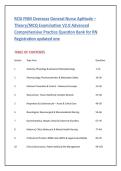
RCSI FNM Overseas General Nurse Aptitude –
Theory/MCQ Examination V2.0 Advanced
Comprehensive Practice Question Bank for RN
Registration updated one
Section Topic Area Questions
1 Anatomy, Physiology & Advanced Pathophysiology 1–15
2 Pharmacology, Pharmacokinetics & Medication Safety 16–30
3 Infection Prevention & Control – Advanced Concepts 31–40
4 Wound Care, Tissue Viability & Complex Wounds 41–48
5 Respiratory & Cardiovascular – Acute & Critical Care 49–58
6 Neurological, Neurosurgical & Musculoskeletal Nursing 59–66
7 Gastrointestinal, Hepatic, Renal & Endocrine Disorders 67–76
8 Maternal, Child, Adolescent & Mental Health Nursing 77–84
9 Professional Practice, NMBI Code (2025) & Legal Accountability 85–95
10 Clinical Governance, Patient Safety & Risk Management 96–105
,Section Topic Area Questions
11 ISBAR, Clinical Handover & Advanced Documentation 106–113
12 Nursing Process, Clinical Reasoning & Diagnostic Thinking 114–122
13 Gerontology, Dementia, Delirium & Complex Older Person Care 123–130
14 Palliative Care, End-of-Life & Bereavement Support 131–138
15 Health Promotion, Patient Education & Reflective Practice 139–145
16 Emergency Nursing, Sepsis & Acute Deterioration Management 146–150
SECTION 1: ANATOMY, PHYSIOLOGY & ADVANCED
• Q1. A patient with chronic heart failure develops cardiogenic shock. Which of the following
haemodynamic parameters would the nurse most likely observe?
• A. Elevated cardiac index with decreased systemic vascular resistance
• B. Decreased pulmonary artery wedge pressure with increased cardiac output
• C. Decreased cardiac index with elevated pulmonary artery wedge pressure
• D. Elevated cardiac index with elevated central venous pressure
Rationale: Cardiogenic shock is characterised by pump failure, resulting in decreased
cardiac index (< 2.2 L/min/m²) and elevated pulmonary artery wedge pressure (> 18 mmHg) due
to left ventricular failure and pulmonary congestion.
,• Q2. The renin-angiotensin-aldosterone system (RAAS) is activated in response to which of
the following stimuli?
• A. Increased serum sodium concentration
• B. Elevated blood pressure
• C. Decreased renal perfusion pressure
• D. Increased serum potassium concentration
Rationale: RAAS is activated by decreased renal perfusion pressure (detected by
juxtaglomerular cells), sympathetic stimulation, and decreased sodium delivery to the macula
densa. This leads to angiotensin II and aldosterone release, promoting vasoconstriction and
sodium/water retention.
• Q3. A patient presents with metabolic alkalosis. Which of the following compensatory
mechanisms would the nurse expect?
• A. Increased respiratory rate to blow off CO₂
• B. Decreased respiratory rate to retain CO₂
• C. Increased renal bicarbonate excretion
• D. Decreased renal hydrogen ion excretion
Rationale: In metabolic alkalosis, the respiratory compensation is hypoventilation
(decreased respiratory rate) to retain CO₂ and increase PaCO₂, partially correcting the pH toward
normal. Renal compensation involves increased bicarbonate excretion.
• Q4. The Frank-Starling law of the heart states that:
• A. Cardiac output decreases as venous return increases
• B. Heart rate increases in response to increased venous return
• C. Stroke volume increases in response to increased ventricular filling (preload)
• D. Peripheral vascular resistance decreases with increased cardiac output
, Rationale: The Frank-Starling law describes the intrinsic ability of the heart to adapt to
increasing volumes of incoming blood: increased ventricular filling (preload) stretches
myocardial fibres, resulting in a more forceful contraction and increased stroke volume.
• Q5. A patient with liver cirrhosis develops portal hypertension. Which of the following is a
direct consequence of this pathophysiology?
• A. Decreased splenic congestion
• B. Increased serum albumin levels
• C. Formation of oesophageal varices
• D. Decreased hepatic artery pressure
Rationale: Portal hypertension leads to the formation of portosystemic collateral vessels,
including oesophageal and gastric varices, which are prone to bleeding. It also causes
splenomegaly and ascites.
• Q6. The nurse is caring for a patient with syndrome of inappropriate antidiuretic hormone
(SIADH). Which of the following laboratory findings would the nurse expect?
• A. Hypernatraemia and increased serum osmolality
• B. Hypokalaemia and decreased serum osmolality
• C. Hyponatraemia and decreased serum osmolality
• D. Hypernatraemia and increased urine osmolality
Rationale: SIADH is characterised by excessive ADH release, leading to water retention,
dilutional hyponatraemia, decreased serum osmolality, and concentrated urine (increased urine
osmolality) despite normal or increased fluid volume.
• Q7. The primary pathophysiological mechanism underlying type 2 diabetes mellitus is:
• A. Autoimmune destruction of pancreatic beta cells
Theory/MCQ Examination V2.0 Advanced
Comprehensive Practice Question Bank for RN
Registration updated one
Section Topic Area Questions
1 Anatomy, Physiology & Advanced Pathophysiology 1–15
2 Pharmacology, Pharmacokinetics & Medication Safety 16–30
3 Infection Prevention & Control – Advanced Concepts 31–40
4 Wound Care, Tissue Viability & Complex Wounds 41–48
5 Respiratory & Cardiovascular – Acute & Critical Care 49–58
6 Neurological, Neurosurgical & Musculoskeletal Nursing 59–66
7 Gastrointestinal, Hepatic, Renal & Endocrine Disorders 67–76
8 Maternal, Child, Adolescent & Mental Health Nursing 77–84
9 Professional Practice, NMBI Code (2025) & Legal Accountability 85–95
10 Clinical Governance, Patient Safety & Risk Management 96–105
,Section Topic Area Questions
11 ISBAR, Clinical Handover & Advanced Documentation 106–113
12 Nursing Process, Clinical Reasoning & Diagnostic Thinking 114–122
13 Gerontology, Dementia, Delirium & Complex Older Person Care 123–130
14 Palliative Care, End-of-Life & Bereavement Support 131–138
15 Health Promotion, Patient Education & Reflective Practice 139–145
16 Emergency Nursing, Sepsis & Acute Deterioration Management 146–150
SECTION 1: ANATOMY, PHYSIOLOGY & ADVANCED
• Q1. A patient with chronic heart failure develops cardiogenic shock. Which of the following
haemodynamic parameters would the nurse most likely observe?
• A. Elevated cardiac index with decreased systemic vascular resistance
• B. Decreased pulmonary artery wedge pressure with increased cardiac output
• C. Decreased cardiac index with elevated pulmonary artery wedge pressure
• D. Elevated cardiac index with elevated central venous pressure
Rationale: Cardiogenic shock is characterised by pump failure, resulting in decreased
cardiac index (< 2.2 L/min/m²) and elevated pulmonary artery wedge pressure (> 18 mmHg) due
to left ventricular failure and pulmonary congestion.
,• Q2. The renin-angiotensin-aldosterone system (RAAS) is activated in response to which of
the following stimuli?
• A. Increased serum sodium concentration
• B. Elevated blood pressure
• C. Decreased renal perfusion pressure
• D. Increased serum potassium concentration
Rationale: RAAS is activated by decreased renal perfusion pressure (detected by
juxtaglomerular cells), sympathetic stimulation, and decreased sodium delivery to the macula
densa. This leads to angiotensin II and aldosterone release, promoting vasoconstriction and
sodium/water retention.
• Q3. A patient presents with metabolic alkalosis. Which of the following compensatory
mechanisms would the nurse expect?
• A. Increased respiratory rate to blow off CO₂
• B. Decreased respiratory rate to retain CO₂
• C. Increased renal bicarbonate excretion
• D. Decreased renal hydrogen ion excretion
Rationale: In metabolic alkalosis, the respiratory compensation is hypoventilation
(decreased respiratory rate) to retain CO₂ and increase PaCO₂, partially correcting the pH toward
normal. Renal compensation involves increased bicarbonate excretion.
• Q4. The Frank-Starling law of the heart states that:
• A. Cardiac output decreases as venous return increases
• B. Heart rate increases in response to increased venous return
• C. Stroke volume increases in response to increased ventricular filling (preload)
• D. Peripheral vascular resistance decreases with increased cardiac output
, Rationale: The Frank-Starling law describes the intrinsic ability of the heart to adapt to
increasing volumes of incoming blood: increased ventricular filling (preload) stretches
myocardial fibres, resulting in a more forceful contraction and increased stroke volume.
• Q5. A patient with liver cirrhosis develops portal hypertension. Which of the following is a
direct consequence of this pathophysiology?
• A. Decreased splenic congestion
• B. Increased serum albumin levels
• C. Formation of oesophageal varices
• D. Decreased hepatic artery pressure
Rationale: Portal hypertension leads to the formation of portosystemic collateral vessels,
including oesophageal and gastric varices, which are prone to bleeding. It also causes
splenomegaly and ascites.
• Q6. The nurse is caring for a patient with syndrome of inappropriate antidiuretic hormone
(SIADH). Which of the following laboratory findings would the nurse expect?
• A. Hypernatraemia and increased serum osmolality
• B. Hypokalaemia and decreased serum osmolality
• C. Hyponatraemia and decreased serum osmolality
• D. Hypernatraemia and increased urine osmolality
Rationale: SIADH is characterised by excessive ADH release, leading to water retention,
dilutional hyponatraemia, decreased serum osmolality, and concentrated urine (increased urine
osmolality) despite normal or increased fluid volume.
• Q7. The primary pathophysiological mechanism underlying type 2 diabetes mellitus is:
• A. Autoimmune destruction of pancreatic beta cells


