
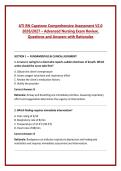
ATI RN Capstone Comprehensive Assessment V2.0
2026/2027 – Advanced Nursing Exam Review,
Questions and Answers with Rationales
SECTION 1 — FUNDAMENTALS & CLINICAL JUDGMENT
1. A nurse is caring for a client who reports sudden shortness of breath. Which
action should the nurse take first?
A. Obtain the client's temperature
B. Assess oxygen saturation and respiratory effort
C. Review the client's medication history
D. Notify the provider
Correct Answer: B
Rationale: Airway and breathing are immediate priorities. Assessing respiratory
effort and oxygenation determines the urgency of intervention.
2. Which finding requires immediate intervention?
A. Pain rating of 4/10
B. Respiratory rate of 8/min
C. Temperature of 37.4°C (99.3°F)
D. Heart rate of 88/min
Correct Answer: B
Rationale: Bradypnea can indicate respiratory depression and inadequate
ventilation and requires immediate assessment and intervention.
,3. A nurse is using the nursing process. Which action represents the assessment
phase?
A. Establishing a nursing diagnosis
B. Collecting subjective and objective data
C. Developing expected outcomes
D. Evaluating client progress
Correct Answer: B
Rationale: Assessment involves systematic collection of subjective and objective
client information.
4. Which client should the nurse assess first?
A. Client requesting a sleep medication
B. Client with chronic arthritis reporting pain
C. Client with new-onset confusion and oxygen saturation of 84%
D. Client awaiting discharge instructions
Correct Answer: C
Rationale: Acute confusion combined with severe hypoxemia indicates an
immediate physiologic threat.
5. A nurse identifies a safety risk during a client assessment. What should the
nurse do first?
A. Document the finding
B. Correct the immediate hazard
C. Notify the nurse manager
D. Complete an incident report
Correct Answer: B
Rationale: Immediate threats to client safety should be addressed before
documentation or reporting.
,6. Which statement reflects effective clinical judgment?
A. "I always use the same intervention for this diagnosis."
B. "I will prioritize interventions based on the client's current findings."
C. "The provider determines all nursing priorities."
D. "A client's diagnosis determines every intervention."
Correct Answer: B
Rationale: Clinical judgment requires interpreting current findings and selecting
interventions appropriate to the client's condition.
7. Which client statement demonstrates understanding of informed consent?
A. "The nurse will explain all possible surgical risks."
B. "The provider performing the procedure should explain its risks and benefits."
C. "Signing the form means the procedure cannot be stopped."
D. "I must sign before I can ask questions."
Correct Answer: B
Rationale: The provider performing the procedure is responsible for explaining its
nature, risks, benefits, and alternatives.
8. Which finding should the nurse recognize as objective data?
A. "I feel dizzy."
B. "My pain is severe."
C. Blood pressure 88/52 mm Hg
D. "I feel anxious."
Correct Answer: C
Rationale: Objective data are measurable or observable findings.
9. Which intervention best promotes client independence?
, A. Performing all care for the client
B. Allowing the client to perform appropriate self-care
C. Asking family members to complete all activities
D. Avoiding discussion of limitations
Correct Answer: B
Rationale: Nursing care should maximize independence while maintaining safety.
10. Which action demonstrates reassessment?
A. Administering an analgesic
B. Measuring pain 45 minutes after analgesic administration
C. Identifying acute pain
D. Planning to administer medication
Correct Answer: B
Rationale: Reassessment determines whether an intervention produced the
desired outcome.
SECTION 2 — SAFETY & INFECTION CONTROL
11. Which intervention is most effective for preventing transmission of
infection?
A. Wearing a mask continuously
B. Performing hand hygiene
C. Using sterile gloves for every procedure
D. Administering prophylactic antibiotics
Correct Answer: B
Rationale: Hand hygiene is the most fundamental measure for preventing
transmission of microorganisms.
12. A client has suspected tuberculosis. Which precautions are appropriate?
2026/2027 – Advanced Nursing Exam Review,
Questions and Answers with Rationales
SECTION 1 — FUNDAMENTALS & CLINICAL JUDGMENT
1. A nurse is caring for a client who reports sudden shortness of breath. Which
action should the nurse take first?
A. Obtain the client's temperature
B. Assess oxygen saturation and respiratory effort
C. Review the client's medication history
D. Notify the provider
Correct Answer: B
Rationale: Airway and breathing are immediate priorities. Assessing respiratory
effort and oxygenation determines the urgency of intervention.
2. Which finding requires immediate intervention?
A. Pain rating of 4/10
B. Respiratory rate of 8/min
C. Temperature of 37.4°C (99.3°F)
D. Heart rate of 88/min
Correct Answer: B
Rationale: Bradypnea can indicate respiratory depression and inadequate
ventilation and requires immediate assessment and intervention.
,3. A nurse is using the nursing process. Which action represents the assessment
phase?
A. Establishing a nursing diagnosis
B. Collecting subjective and objective data
C. Developing expected outcomes
D. Evaluating client progress
Correct Answer: B
Rationale: Assessment involves systematic collection of subjective and objective
client information.
4. Which client should the nurse assess first?
A. Client requesting a sleep medication
B. Client with chronic arthritis reporting pain
C. Client with new-onset confusion and oxygen saturation of 84%
D. Client awaiting discharge instructions
Correct Answer: C
Rationale: Acute confusion combined with severe hypoxemia indicates an
immediate physiologic threat.
5. A nurse identifies a safety risk during a client assessment. What should the
nurse do first?
A. Document the finding
B. Correct the immediate hazard
C. Notify the nurse manager
D. Complete an incident report
Correct Answer: B
Rationale: Immediate threats to client safety should be addressed before
documentation or reporting.
,6. Which statement reflects effective clinical judgment?
A. "I always use the same intervention for this diagnosis."
B. "I will prioritize interventions based on the client's current findings."
C. "The provider determines all nursing priorities."
D. "A client's diagnosis determines every intervention."
Correct Answer: B
Rationale: Clinical judgment requires interpreting current findings and selecting
interventions appropriate to the client's condition.
7. Which client statement demonstrates understanding of informed consent?
A. "The nurse will explain all possible surgical risks."
B. "The provider performing the procedure should explain its risks and benefits."
C. "Signing the form means the procedure cannot be stopped."
D. "I must sign before I can ask questions."
Correct Answer: B
Rationale: The provider performing the procedure is responsible for explaining its
nature, risks, benefits, and alternatives.
8. Which finding should the nurse recognize as objective data?
A. "I feel dizzy."
B. "My pain is severe."
C. Blood pressure 88/52 mm Hg
D. "I feel anxious."
Correct Answer: C
Rationale: Objective data are measurable or observable findings.
9. Which intervention best promotes client independence?
, A. Performing all care for the client
B. Allowing the client to perform appropriate self-care
C. Asking family members to complete all activities
D. Avoiding discussion of limitations
Correct Answer: B
Rationale: Nursing care should maximize independence while maintaining safety.
10. Which action demonstrates reassessment?
A. Administering an analgesic
B. Measuring pain 45 minutes after analgesic administration
C. Identifying acute pain
D. Planning to administer medication
Correct Answer: B
Rationale: Reassessment determines whether an intervention produced the
desired outcome.
SECTION 2 — SAFETY & INFECTION CONTROL
11. Which intervention is most effective for preventing transmission of
infection?
A. Wearing a mask continuously
B. Performing hand hygiene
C. Using sterile gloves for every procedure
D. Administering prophylactic antibiotics
Correct Answer: B
Rationale: Hand hygiene is the most fundamental measure for preventing
transmission of microorganisms.
12. A client has suspected tuberculosis. Which precautions are appropriate?


