
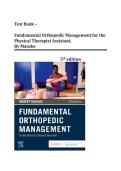
Test Bank –
Fundamental Orthopedic Management for the
Physical Therapist Assistant,
By Manske
5th edition
,Table of contents
Part I: Basic Concepts of Orthopedic Management
1. Patient Supervision and Observation During Treatment
2. The Role of the Physical Therapist Assistant in Physical Assessment
3. Differential Diagnosis and Emergent Conditions NEW!
4. Muscle Flexibility and Range of Motion
5. Muscle Strength
6. Endurance
7. Balance and Coordination
Part II: Review of Tissue Healing
8. Composition and Function of Connective Tissue
9. Ligament Healing
10. Bone Healing
11. Cartilage Healing
12. Muscle and Tendon Healing
13. Neurovascular Healing and Thromboembolic Disease
Part III: Basis for Movement
14. Fundamentals of Normal and Abnormal Gait
15. Concepts of Joint and Soft Tissue Mobilization
16. Biomechanics and Kinesiology
Part V: Management of Orthopedic Patients by Region
17. Orthopedic Management of the Ankle, Foot, and Toes
18. Orthopedic Management of the Knee
19. Orthopedic Management of the Hip and Pelvis
20. Orthopedic Management of the Lumbar, Thoracic, and Cervical Spine
21. Orthopedic Management of the Shoulder
22. Orthopedic Management of the Elbow
23. Orthopedic Management of the Wrist and Hand
Part VI: Management of Orthopedic Patients by Condition
24. Orthopedic Management of Rheumatic Disorders
25. Orthopedic Management of Pain and Pain Syndromes
26. Orthopedic Management of Bracing, Orthotics, and Prosthetics
27. Orthopedic Management Concepts Specific to Women NEW!
Part VIII: Topics in Orthopedics
28. Concepts of Orthopedic Pharmacology
29. Musculoskeletal Imaging NEW!
,PART I: BASIC CONCEPTS OF ORTHOPEDIC MANAGEMENT
Chapter 1: Patient Supervision and Observation During Treatment
Multiple choice
1. Which of the following is the MOST important responsibility of the physical therapist
assistant (PTA) during patient treatment?
a. Modifying the plan of care independently
b. Monitoring patient response and reporting changes to the supervising PT
c. Establishing the initial diagnosis
d. Discharging the patient when goals are met
Answer:B | Rationale: The PTA's primary role during treatment is to observe and monitor
patient responses and communicate significant findings to the supervising physical
therapist.
2. A patient reports sudden onset of sharp chest pain during a therapeutic exercise session.
What is the MOST appropriate initial action by the PTA?
a. Continue the exercise at a lower intensity
b. Document the complaint and proceed with treatment
c. Stop the activity immediately and notify the supervising PT
d. Instruct the patient to perform deep breathing exercises
Answer:C | Rationale: Sudden chest pain is a red flag requiring immediate cessation of
activity and notification of the supervising PT or emergency medical services.
3. According to APTA guidelines, which of the following tasks may a PTA perform under
appropriate supervision?
a. Performing the initial evaluation
b. Interpreting referral documents to establish a plan of care
c. Implementing selected interventions from the established plan of care
d. Re-evaluating and changing the plan of care independently
, Answer:C | Rationale: PTAs implement selected interventions from a plan of care
established by the PT but do not perform evaluations, establish plans of care, or
independently modify them.
4. During gait training, a patient's face becomes pale and the patient reports feeling dizzy.
The PTA should FIRST:
a. Have the patient sit or lie down safely
b. Check the patient's blood glucose level
c. Call 911 immediately
d. Continue gait training at a slower pace
Answer:A | Rationale: The first priority is patient safety. The PTA should safely position
the patient to prevent a fall, then assess further and notify the PT.
5. Which vital sign change during exercise would be considered an abnormal response
requiring intervention?
a. Heart rate increase of 20 bpm above resting
b. Systolic blood pressure increase of 20 mmHg during exercise
c. Diastolic blood pressure increase of more than 20 mmHg during exercise
d. Respiratory rate increase to 24 breaths per minute during moderate exercise
Answer:C | Rationale: A diastolic blood pressure increase of more than 15–20 mmHg
during exercise is considered abnormal and may indicate cardiovascular compromise.
6. The PTA observes that a post-surgical patient's wound dressing has become saturated
with bright red blood during a treatment session. The BEST course of action is to:
a. Remove the dressing and inspect the wound
b. Apply a new dressing over the existing one and continue treatment
c. Apply direct pressure, notify the PT, and document the finding
d. Instruct the patient to elevate the extremity and resume exercise
Answer:C | Rationale: Active bleeding requires direct pressure, notification of the
supervising PT, and documentation. The PTA should not remove surgical dressings without
direction.
Fundamental Orthopedic Management for the
Physical Therapist Assistant,
By Manske
5th edition
,Table of contents
Part I: Basic Concepts of Orthopedic Management
1. Patient Supervision and Observation During Treatment
2. The Role of the Physical Therapist Assistant in Physical Assessment
3. Differential Diagnosis and Emergent Conditions NEW!
4. Muscle Flexibility and Range of Motion
5. Muscle Strength
6. Endurance
7. Balance and Coordination
Part II: Review of Tissue Healing
8. Composition and Function of Connective Tissue
9. Ligament Healing
10. Bone Healing
11. Cartilage Healing
12. Muscle and Tendon Healing
13. Neurovascular Healing and Thromboembolic Disease
Part III: Basis for Movement
14. Fundamentals of Normal and Abnormal Gait
15. Concepts of Joint and Soft Tissue Mobilization
16. Biomechanics and Kinesiology
Part V: Management of Orthopedic Patients by Region
17. Orthopedic Management of the Ankle, Foot, and Toes
18. Orthopedic Management of the Knee
19. Orthopedic Management of the Hip and Pelvis
20. Orthopedic Management of the Lumbar, Thoracic, and Cervical Spine
21. Orthopedic Management of the Shoulder
22. Orthopedic Management of the Elbow
23. Orthopedic Management of the Wrist and Hand
Part VI: Management of Orthopedic Patients by Condition
24. Orthopedic Management of Rheumatic Disorders
25. Orthopedic Management of Pain and Pain Syndromes
26. Orthopedic Management of Bracing, Orthotics, and Prosthetics
27. Orthopedic Management Concepts Specific to Women NEW!
Part VIII: Topics in Orthopedics
28. Concepts of Orthopedic Pharmacology
29. Musculoskeletal Imaging NEW!
,PART I: BASIC CONCEPTS OF ORTHOPEDIC MANAGEMENT
Chapter 1: Patient Supervision and Observation During Treatment
Multiple choice
1. Which of the following is the MOST important responsibility of the physical therapist
assistant (PTA) during patient treatment?
a. Modifying the plan of care independently
b. Monitoring patient response and reporting changes to the supervising PT
c. Establishing the initial diagnosis
d. Discharging the patient when goals are met
Answer:B | Rationale: The PTA's primary role during treatment is to observe and monitor
patient responses and communicate significant findings to the supervising physical
therapist.
2. A patient reports sudden onset of sharp chest pain during a therapeutic exercise session.
What is the MOST appropriate initial action by the PTA?
a. Continue the exercise at a lower intensity
b. Document the complaint and proceed with treatment
c. Stop the activity immediately and notify the supervising PT
d. Instruct the patient to perform deep breathing exercises
Answer:C | Rationale: Sudden chest pain is a red flag requiring immediate cessation of
activity and notification of the supervising PT or emergency medical services.
3. According to APTA guidelines, which of the following tasks may a PTA perform under
appropriate supervision?
a. Performing the initial evaluation
b. Interpreting referral documents to establish a plan of care
c. Implementing selected interventions from the established plan of care
d. Re-evaluating and changing the plan of care independently
, Answer:C | Rationale: PTAs implement selected interventions from a plan of care
established by the PT but do not perform evaluations, establish plans of care, or
independently modify them.
4. During gait training, a patient's face becomes pale and the patient reports feeling dizzy.
The PTA should FIRST:
a. Have the patient sit or lie down safely
b. Check the patient's blood glucose level
c. Call 911 immediately
d. Continue gait training at a slower pace
Answer:A | Rationale: The first priority is patient safety. The PTA should safely position
the patient to prevent a fall, then assess further and notify the PT.
5. Which vital sign change during exercise would be considered an abnormal response
requiring intervention?
a. Heart rate increase of 20 bpm above resting
b. Systolic blood pressure increase of 20 mmHg during exercise
c. Diastolic blood pressure increase of more than 20 mmHg during exercise
d. Respiratory rate increase to 24 breaths per minute during moderate exercise
Answer:C | Rationale: A diastolic blood pressure increase of more than 15–20 mmHg
during exercise is considered abnormal and may indicate cardiovascular compromise.
6. The PTA observes that a post-surgical patient's wound dressing has become saturated
with bright red blood during a treatment session. The BEST course of action is to:
a. Remove the dressing and inspect the wound
b. Apply a new dressing over the existing one and continue treatment
c. Apply direct pressure, notify the PT, and document the finding
d. Instruct the patient to elevate the extremity and resume exercise
Answer:C | Rationale: Active bleeding requires direct pressure, notification of the
supervising PT, and documentation. The PTA should not remove surgical dressings without
direction.


