Original Pharmacology Practice & Rationales
Practice Page 1 of 3817
Question 1
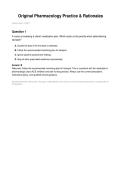
A nurse is reviewing a client's medication plan. Which action is the priority when administering
lisinopril?
A. Double the dose if the first dose is tolerated.
B. Follow the recommended monitoring plan for lisinopril.
C. Ignore baseline assessment findings.
D. Stop all other prescribed medicines automatically.
Answer: B
Rationale: Follow the recommended monitoring plan for lisinopril. This is consistent with the medication's
pharmacologic class (ACE inhibitor) and safe nursing practice. Always use the current prescription,
institutional policy, and qualified clinical guidance.
Educational practice material only. This page is independently written and is not an ATI proctored assessment or a reproduction of
ATI questions.
, Original Pharmacology Practice & Rationales
Practice Page 2 of 3817
Question 2
Which finding is most important for the nurse to monitor in a client receiving losartan?
A. Only the client's height
B. No assessment is needed
C. monitor blood pressure and potassium
D. A completely unrelated laboratory value
Answer: C
Rationale: monitor blood pressure and potassium This is consistent with the medication's pharmacologic
class (ARB) and safe nursing practice. Always use the current prescription, institutional policy, and
qualified clinical guidance.
Educational practice material only. This page is independently written and is not an ATI proctored assessment or a reproduction of
ATI questions.
, Original Pharmacology Practice & Rationales
Practice Page 3 of 3817
Question 3
A client asks why metoprolol requires nursing monitoring. Which response is best?
A. Monitoring is unnecessary; it is done only for paperwork.
B. The drug works only if the client avoids all fluids.
C. The medication should always be stopped after one dose.
D. The medication can cause clinically important effects that are detected through assessment and
monitoring.
Answer: D
Rationale: The medication can cause clinically important effects that are detected through assessment
and monitoring. This is consistent with the medication's pharmacologic class (beta blocker) and safe
nursing practice. Always use the current prescription, institutional policy, and qualified clinical guidance.
Educational practice material only. This page is independently written and is not an ATI proctored assessment or a reproduction of
ATI questions.
, Original Pharmacology Practice & Rationales
Practice Page 4 of 3817
Question 4
Which adverse effect should the nurse teach the client to report promptly while taking
furosemide?
A. hypokalemia
B. A stable, expected therapeutic response
C. A normal appetite
D. A routine medication schedule
Answer: A
Rationale: hypokalemia This is consistent with the medication's pharmacologic class (loop diuretic) and
safe nursing practice. Always use the current prescription, institutional policy, and qualified clinical
guidance.
Educational practice material only. This page is independently written and is not an ATI proctored assessment or a reproduction of
ATI questions.
Practice Page 1 of 3817
Question 1
A nurse is reviewing a client's medication plan. Which action is the priority when administering
lisinopril?
A. Double the dose if the first dose is tolerated.
B. Follow the recommended monitoring plan for lisinopril.
C. Ignore baseline assessment findings.
D. Stop all other prescribed medicines automatically.
Answer: B
Rationale: Follow the recommended monitoring plan for lisinopril. This is consistent with the medication's
pharmacologic class (ACE inhibitor) and safe nursing practice. Always use the current prescription,
institutional policy, and qualified clinical guidance.
Educational practice material only. This page is independently written and is not an ATI proctored assessment or a reproduction of
ATI questions.
, Original Pharmacology Practice & Rationales
Practice Page 2 of 3817
Question 2
Which finding is most important for the nurse to monitor in a client receiving losartan?
A. Only the client's height
B. No assessment is needed
C. monitor blood pressure and potassium
D. A completely unrelated laboratory value
Answer: C
Rationale: monitor blood pressure and potassium This is consistent with the medication's pharmacologic
class (ARB) and safe nursing practice. Always use the current prescription, institutional policy, and
qualified clinical guidance.
Educational practice material only. This page is independently written and is not an ATI proctored assessment or a reproduction of
ATI questions.
, Original Pharmacology Practice & Rationales
Practice Page 3 of 3817
Question 3
A client asks why metoprolol requires nursing monitoring. Which response is best?
A. Monitoring is unnecessary; it is done only for paperwork.
B. The drug works only if the client avoids all fluids.
C. The medication should always be stopped after one dose.
D. The medication can cause clinically important effects that are detected through assessment and
monitoring.
Answer: D
Rationale: The medication can cause clinically important effects that are detected through assessment
and monitoring. This is consistent with the medication's pharmacologic class (beta blocker) and safe
nursing practice. Always use the current prescription, institutional policy, and qualified clinical guidance.
Educational practice material only. This page is independently written and is not an ATI proctored assessment or a reproduction of
ATI questions.
, Original Pharmacology Practice & Rationales
Practice Page 4 of 3817
Question 4
Which adverse effect should the nurse teach the client to report promptly while taking
furosemide?
A. hypokalemia
B. A stable, expected therapeutic response
C. A normal appetite
D. A routine medication schedule
Answer: A
Rationale: hypokalemia This is consistent with the medication's pharmacologic class (loop diuretic) and
safe nursing practice. Always use the current prescription, institutional policy, and qualified clinical
guidance.
Educational practice material only. This page is independently written and is not an ATI proctored assessment or a reproduction of
ATI questions.