

Indiana For-Hire Endorsement Exam | Practice Questions and Study
Guide
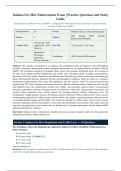
Indiana Bureau of Motor Vehicles (BMV) — Chauffeur/For-Hire Endorsement, Passenger Transport Safety,
and State Traffic Laws (2026)
Total Questions: 50 Format: Multiple Choice (A-D) with Rationales
2026 Indiana BMV For-Hire
Sections: 5 Aligned:
Endorsement Blueprint
30% Recall / 50%
Cognitive Mix: Application / 20% Item Mix: 75% Scenario / 25% Direct
Analysis
Regulations,
Passengers,
Coverage: Verification: 100% Keyed with Rationales
Inspection,
Driving, Hazards
Abstract. This practice examination is an original, non-confidential study aid aligned to the 2026 Indiana
For-Hire (Chauffeur) Endorsement content blueprint administered by the Indiana Bureau of Motor Vehicles
(BMV). The instrument comprises 50 multiple-choice items with rationales distributed across five sections of
10 items each: Indiana For-Hire Regulations and Traffic Laws; Passenger Safety, Loading, and Emergency
Procedures; Pre-Trip Vehicle Inspection and Maintenance; Safe Driving, Defensive Driving, and Sharing the
Road; and Distracted Driving, Impaired Driving, and Hazardous Conditions. Items are keyed to a cognitive
distribution of approximately 30% recall, 50% application, and 20% analysis, with 75% scenario-based driving
vignettes and 25% direct regulatory knowledge questions. Special inclusions address Indiana-specific for-hire
and chauffeur rules (age requirements, medical card validity, and passenger capacity limits), scenario-based
emergency procedures (railroad crossing protocols, tire blowouts, vehicle fire, and passenger evacuation), and
pre-trip vehicle inspection items strictly required for passenger-carrying vehicles (emergency exits, fire
extinguishers, seating integrity, mirrors, and braking systems). Distractors reflect common driver errors, such as
misinterpreting right-of-way, failing to check mirrors before lane changes, ignoring passenger safety protocols,
or misunderstanding Indiana-specific BMV rules. Each item includes a verified correct answer and a concise
rationale explaining why the keyed option is correct and why the distractors are incorrect. This artifact does not
reproduce any proprietary exam content; drivers should verify all current requirements with the Indiana BMV
and the Indiana Driver’s Manual.
Keywords: Indiana for-hire endorsement; chauffeur license; passenger transport safety; pre-trip inspection;
emergency procedures; Indiana traffic laws
Section 1: Indiana For-Hire Regulations and Traffic Laws — 10 Questions
Q1: In Indiana, what is the minimum age required to obtain a For-Hire (Chauffeur) Endorsement on a
driver's license?
A. 16 years of age
B. 18 years of age *[CORRECT]*
C. 21 years of age
D. 25 years of age
Correct Answer: B
Rationale: Indiana requires a minimum age of 18 for a For-Hire endorsement; 16 is too young for for-hire operation,
and 21/25 are higher than the Indiana requirement.
, Q2: An Indiana for-hire driver operating a commercial motor vehicle in interstate commerce must carry
a valid medical examiner's certificate. How long is a standard medical card valid for a medically
qualified driver?
A. 6 months
B. 12 months
C. Up to 24 months (2 years), with shorter intervals if a condition warrants *[CORRECT]*
D. Indefinitely
Correct Answer: C
Rationale: A standard medical certificate is valid up to 24 months; shorter intervals apply when conditions warrant,
and 6/12 months or indefinite validity are incorrect.
Q3: Under Indiana law, a For-Hire endorsement is required to operate which of the following?
A. A personal vehicle used only for commuting
B. A farm vehicle used exclusively for agriculture
C. A recreational vehicle used for personal travel
D. A vehicle transporting passengers for compensation, such as a taxi, limousine, or rideshare vehicle
carrying passengers for hire *[CORRECT]*
Correct Answer: D
Rationale: A For-Hire endorsement is required for passenger transport for compensation; personal commuting, farm
vehicles, and RVs for personal use do not require it.
Q4: An Indiana chauffeur is cited for a traffic violation while operating a for-hire vehicle. Which
statement is most accurate regarding the BMV record?
A. The violation is recorded on the driver's record and may affect the for-hire endorsement and insurance
status *[CORRECT]*
B. For-hire violations are not recorded on the BMV record
C. Only the vehicle owner is cited, not the driver
D. Traffic tickets in a for-hire vehicle are automatically dismissed
Correct Answer: A
Rationale: Violations are recorded on the driver's BMV record and may impact the endorsement and insurance; they
are not erased, not only the owner's responsibility, and not automatically dismissed.
Q5: Which Indiana speed limit applies on a rural interstate highway for a passenger-carrying for-hire
vehicle unless otherwise posted?
A. 45 mph
B. 65 mph (or as posted; commercial buses may be subject to lower limits) *[CORRECT]*
C. 80 mph
D. 75 mph
Correct Answer: B
Rationale: Indiana's rural interstate limit is typically 65 mph for such vehicles unless posted otherwise; 45 mph is too
low, and 75-80 mph exceed Indiana's posted limits for passenger-carrying vehicles.
Q6: Indiana's Move Over law requires a driver approaching a stationary emergency, recovery, or
highway maintenance vehicle with flashing lights to:
A. Speed up to pass quickly
B. Stop in the travel lane
C. Change lanes away from the stationary vehicle if safe, and slow down if a lane change is not possible
*[CORRECT]*
D. Maintain the same speed and continue
Guide
Indiana Bureau of Motor Vehicles (BMV) — Chauffeur/For-Hire Endorsement, Passenger Transport Safety,
and State Traffic Laws (2026)
Total Questions: 50 Format: Multiple Choice (A-D) with Rationales
2026 Indiana BMV For-Hire
Sections: 5 Aligned:
Endorsement Blueprint
30% Recall / 50%
Cognitive Mix: Application / 20% Item Mix: 75% Scenario / 25% Direct
Analysis
Regulations,
Passengers,
Coverage: Verification: 100% Keyed with Rationales
Inspection,
Driving, Hazards
Abstract. This practice examination is an original, non-confidential study aid aligned to the 2026 Indiana
For-Hire (Chauffeur) Endorsement content blueprint administered by the Indiana Bureau of Motor Vehicles
(BMV). The instrument comprises 50 multiple-choice items with rationales distributed across five sections of
10 items each: Indiana For-Hire Regulations and Traffic Laws; Passenger Safety, Loading, and Emergency
Procedures; Pre-Trip Vehicle Inspection and Maintenance; Safe Driving, Defensive Driving, and Sharing the
Road; and Distracted Driving, Impaired Driving, and Hazardous Conditions. Items are keyed to a cognitive
distribution of approximately 30% recall, 50% application, and 20% analysis, with 75% scenario-based driving
vignettes and 25% direct regulatory knowledge questions. Special inclusions address Indiana-specific for-hire
and chauffeur rules (age requirements, medical card validity, and passenger capacity limits), scenario-based
emergency procedures (railroad crossing protocols, tire blowouts, vehicle fire, and passenger evacuation), and
pre-trip vehicle inspection items strictly required for passenger-carrying vehicles (emergency exits, fire
extinguishers, seating integrity, mirrors, and braking systems). Distractors reflect common driver errors, such as
misinterpreting right-of-way, failing to check mirrors before lane changes, ignoring passenger safety protocols,
or misunderstanding Indiana-specific BMV rules. Each item includes a verified correct answer and a concise
rationale explaining why the keyed option is correct and why the distractors are incorrect. This artifact does not
reproduce any proprietary exam content; drivers should verify all current requirements with the Indiana BMV
and the Indiana Driver’s Manual.
Keywords: Indiana for-hire endorsement; chauffeur license; passenger transport safety; pre-trip inspection;
emergency procedures; Indiana traffic laws
Section 1: Indiana For-Hire Regulations and Traffic Laws — 10 Questions
Q1: In Indiana, what is the minimum age required to obtain a For-Hire (Chauffeur) Endorsement on a
driver's license?
A. 16 years of age
B. 18 years of age *[CORRECT]*
C. 21 years of age
D. 25 years of age
Correct Answer: B
Rationale: Indiana requires a minimum age of 18 for a For-Hire endorsement; 16 is too young for for-hire operation,
and 21/25 are higher than the Indiana requirement.
, Q2: An Indiana for-hire driver operating a commercial motor vehicle in interstate commerce must carry
a valid medical examiner's certificate. How long is a standard medical card valid for a medically
qualified driver?
A. 6 months
B. 12 months
C. Up to 24 months (2 years), with shorter intervals if a condition warrants *[CORRECT]*
D. Indefinitely
Correct Answer: C
Rationale: A standard medical certificate is valid up to 24 months; shorter intervals apply when conditions warrant,
and 6/12 months or indefinite validity are incorrect.
Q3: Under Indiana law, a For-Hire endorsement is required to operate which of the following?
A. A personal vehicle used only for commuting
B. A farm vehicle used exclusively for agriculture
C. A recreational vehicle used for personal travel
D. A vehicle transporting passengers for compensation, such as a taxi, limousine, or rideshare vehicle
carrying passengers for hire *[CORRECT]*
Correct Answer: D
Rationale: A For-Hire endorsement is required for passenger transport for compensation; personal commuting, farm
vehicles, and RVs for personal use do not require it.
Q4: An Indiana chauffeur is cited for a traffic violation while operating a for-hire vehicle. Which
statement is most accurate regarding the BMV record?
A. The violation is recorded on the driver's record and may affect the for-hire endorsement and insurance
status *[CORRECT]*
B. For-hire violations are not recorded on the BMV record
C. Only the vehicle owner is cited, not the driver
D. Traffic tickets in a for-hire vehicle are automatically dismissed
Correct Answer: A
Rationale: Violations are recorded on the driver's BMV record and may impact the endorsement and insurance; they
are not erased, not only the owner's responsibility, and not automatically dismissed.
Q5: Which Indiana speed limit applies on a rural interstate highway for a passenger-carrying for-hire
vehicle unless otherwise posted?
A. 45 mph
B. 65 mph (or as posted; commercial buses may be subject to lower limits) *[CORRECT]*
C. 80 mph
D. 75 mph
Correct Answer: B
Rationale: Indiana's rural interstate limit is typically 65 mph for such vehicles unless posted otherwise; 45 mph is too
low, and 75-80 mph exceed Indiana's posted limits for passenger-carrying vehicles.
Q6: Indiana's Move Over law requires a driver approaching a stationary emergency, recovery, or
highway maintenance vehicle with flashing lights to:
A. Speed up to pass quickly
B. Stop in the travel lane
C. Change lanes away from the stationary vehicle if safe, and slow down if a lane change is not possible
*[CORRECT]*
D. Maintain the same speed and continue


