

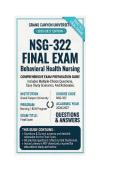
,NSG 322 Final Exam Behavioral Health Nursing Questions And
Answers 2026/2027 Grand canyon university
Q1. Which nursing theorist is most closely associated with the
interpersonal relationship between the nurse and client?
A. Dorothea Orem
B. Hildegard Peplau
C. Jean Watson
D. Sigmund Freud
Correct Answer: B
Rationale: Peplau's theory emphasizes the therapeutic nurse-client
relationship and describes phases of orientation, working, and termination.
Q2. Which action best demonstrates the nurse's role as a client
advocate?
A. Making treatment decisions for the client
B. Supporting the client's informed healthcare choices
C. Withholding treatment information
D. Choosing the treatment the nurse prefers
Correct Answer: B
Rationale: Advocacy includes protecting client rights and supporting
informed participation in healthcare decisions.
Q3. Which principle requires treatment to occur in the least
restrictive environment that can safely meet the client's needs?
A. Beneficence
B. Least restrictive alternative
C. Fidelity
D. Veracity
Correct Answer: B
Rationale: The least restrictive principle requires using the minimum
restriction necessary to maintain safety and provide appropriate care.
**Q4. Which response is most therapeutic when a client says, "I am terrified
about what is happening to me"?
A. "There is nothing to worry about."
B. "Other people have it worse."
, C. "Tell me more about what is frightening you."
D. "You need to calm down."
Correct Answer: C
Rationale: An open-ended response encourages the client to explore
feelings and communicates acceptance.
**Q5. Which therapy focuses on identifying and changing dysfunctional
thoughts and behaviors?
A. Cognitive behavioral therapy
B. Psychoanalysis only
C. Aversion therapy only
D. Supportive milieu therapy only
Correct Answer: A
Rationale: CBT helps clients identify maladaptive thoughts and behaviors
and replace them with healthier cognitive and behavioral patterns.
**Q6. Which therapy is particularly associated with improving emotion
regulation and distress tolerance in clients with severe emotional
dysregulation?
A. Dialectical behavior therapy
B. Dream analysis
C. Electroconvulsive therapy
D. Light therapy
Correct Answer: A
Rationale: DBT combines cognitive-behavioral techniques with acceptance
strategies and emphasizes mindfulness, distress tolerance, emotion
regulation, and interpersonal effectiveness.
Topic 2 — Depressive Disorders
Questions 7–16
Q7. Which finding is characteristic of major depressive disorder?
A. Persistent depressed mood or loss of interest with associated cognitive,
physical, and behavioral symptoms
B. Increased energy with decreased need for sleep
Answers 2026/2027 Grand canyon university
Q1. Which nursing theorist is most closely associated with the
interpersonal relationship between the nurse and client?
A. Dorothea Orem
B. Hildegard Peplau
C. Jean Watson
D. Sigmund Freud
Correct Answer: B
Rationale: Peplau's theory emphasizes the therapeutic nurse-client
relationship and describes phases of orientation, working, and termination.
Q2. Which action best demonstrates the nurse's role as a client
advocate?
A. Making treatment decisions for the client
B. Supporting the client's informed healthcare choices
C. Withholding treatment information
D. Choosing the treatment the nurse prefers
Correct Answer: B
Rationale: Advocacy includes protecting client rights and supporting
informed participation in healthcare decisions.
Q3. Which principle requires treatment to occur in the least
restrictive environment that can safely meet the client's needs?
A. Beneficence
B. Least restrictive alternative
C. Fidelity
D. Veracity
Correct Answer: B
Rationale: The least restrictive principle requires using the minimum
restriction necessary to maintain safety and provide appropriate care.
**Q4. Which response is most therapeutic when a client says, "I am terrified
about what is happening to me"?
A. "There is nothing to worry about."
B. "Other people have it worse."
, C. "Tell me more about what is frightening you."
D. "You need to calm down."
Correct Answer: C
Rationale: An open-ended response encourages the client to explore
feelings and communicates acceptance.
**Q5. Which therapy focuses on identifying and changing dysfunctional
thoughts and behaviors?
A. Cognitive behavioral therapy
B. Psychoanalysis only
C. Aversion therapy only
D. Supportive milieu therapy only
Correct Answer: A
Rationale: CBT helps clients identify maladaptive thoughts and behaviors
and replace them with healthier cognitive and behavioral patterns.
**Q6. Which therapy is particularly associated with improving emotion
regulation and distress tolerance in clients with severe emotional
dysregulation?
A. Dialectical behavior therapy
B. Dream analysis
C. Electroconvulsive therapy
D. Light therapy
Correct Answer: A
Rationale: DBT combines cognitive-behavioral techniques with acceptance
strategies and emphasizes mindfulness, distress tolerance, emotion
regulation, and interpersonal effectiveness.
Topic 2 — Depressive Disorders
Questions 7–16
Q7. Which finding is characteristic of major depressive disorder?
A. Persistent depressed mood or loss of interest with associated cognitive,
physical, and behavioral symptoms
B. Increased energy with decreased need for sleep


