

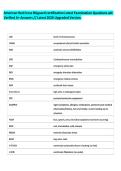
American Red Cross lifeguard certification Latest Examination Questions wit
Verified A+ Answers // Latest 2026 Upgraded Version.
LOC level of consciousness
OSHA occupational safety & health association
AED automatic external defibrillator
CPR Cardiopulmonary resuscitation
EAP emergency action plan
RID recognize intrusion distraction
EMS emergency medical services
AFR accidental fecal release
H.A.I.N.E.S. high arms in endangered spine
PPE personal protective equipment
SAMPLE signs+symptoms, allergies, medications, pertinent past medical
information/history, last oral intake, events leading up to
situation
FAST face, speech, arms, time [that symptoms have been occurring]
RICE rest, immobolize, cold, elevate
MSDS material safety data sheets
BVM bag-valve mask
V-TACH ventricular tachycardia (heart is beating too fast)
V-FIB ventricular fibulation (no pulse)
, Barriers to act -Fear of doing something wrong
-Being unsure of the person's condition
-Assuming someone else will take action
-Fear of disease
-Not knowing their illness
-Fear of being sued
You must continue giving care until: You are too exhausted, obvious signsof life, scene becomes
unsafe, someone with higher training takes over, DNR
presented
What is the very first thing you do before Check that the scene is safe
you give care
3 C's Check, call, care
When do you call 911? No response (check for consciousness), No pulse, no breathing,
severe bleeding
When would you call before giving care? If the situation is a cardiac emergency
Abandonment Ending the care of an injured or ill person without obtaining
that person's consent or without ensuring that someone with
equal or greater training will continue care
Verified A+ Answers // Latest 2026 Upgraded Version.
LOC level of consciousness
OSHA occupational safety & health association
AED automatic external defibrillator
CPR Cardiopulmonary resuscitation
EAP emergency action plan
RID recognize intrusion distraction
EMS emergency medical services
AFR accidental fecal release
H.A.I.N.E.S. high arms in endangered spine
PPE personal protective equipment
SAMPLE signs+symptoms, allergies, medications, pertinent past medical
information/history, last oral intake, events leading up to
situation
FAST face, speech, arms, time [that symptoms have been occurring]
RICE rest, immobolize, cold, elevate
MSDS material safety data sheets
BVM bag-valve mask
V-TACH ventricular tachycardia (heart is beating too fast)
V-FIB ventricular fibulation (no pulse)
, Barriers to act -Fear of doing something wrong
-Being unsure of the person's condition
-Assuming someone else will take action
-Fear of disease
-Not knowing their illness
-Fear of being sued
You must continue giving care until: You are too exhausted, obvious signsof life, scene becomes
unsafe, someone with higher training takes over, DNR
presented
What is the very first thing you do before Check that the scene is safe
you give care
3 C's Check, call, care
When do you call 911? No response (check for consciousness), No pulse, no breathing,
severe bleeding
When would you call before giving care? If the situation is a cardiac emergency
Abandonment Ending the care of an injured or ill person without obtaining
that person's consent or without ensuring that someone with
equal or greater training will continue care


