

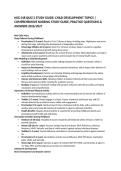
NSG 548 QUIZ 2 STUDY GUIDE: CHILD DEVELOPMENT TOPICS |
COMPREHENSIVE NURSING STUDY GUIDE, PRACTICE QUESTIONS &
ANSWERS 2026/2027
Well Child Visits
Sleep Patterns During Childhood
Preschoolers (3-5 years): Require 10 to 13 hours of sleep, including naps. Nightmares may occur
during this stage, indicating the development of imagination and fears.
School-Age Children (6-10 years): Need 9 to 12 hours of sleep. Sleep is crucial for cognitive
development and physical growth during these years.
Adolescents (11-21 years): Should aim for at least 8 hours of sleep. Sleep deprivation can lead to
issues such as poor academic performance and increased risk of mental health issues.
Role Modeling in Child Development
Definition: Role modeling involves adults setting examples for children to emulate, which is
crucial for social learning.
Impact on Development: Children observe parental interactions, which shapes their behavior in
social settings, such as school.
Cognitive Development: Parents can stimulate thinking and language development by asking
open-ended questions, encouraging critical thinking.
Literacy and Numeracy Skills: Allowing children to explore interests at their own pace fosters
literacy and numeracy skills, essential for academic success.
Reading: Engaging in storybook reading with pictures enhances early literacy skills, promoting
vocabulary and comprehension.
Importance of Normal Physical Activity
Definition: Normal physical activity refers to the recommended levels of exercise for children at
various developmental stages.
Toddler (1-3 years): Should engage in at least 3 hours of physical activity per day, with 30
minutes directed by an adult to ensure safety and engagement.
Preschooler (3-5 years): Needs at least 2 hours of physical activity daily, with a preference for
outdoor play and at least 60 minutes of moderate to vigorous intensity activities.
Health Benefits: Regular physical activity is essential for preventing childhood obesity and
promoting overall health and well-being.
Vaccination Schedule During Childhood
Newborn (0-28 days): Hepatitis B vaccine should be administered within 24 hours of birth to
prevent infection.
Infants (28 days to 1 year): Vaccines include Hep B (2nd dose), DTaP, Poliovirus, Influenza,
Rotavirus, MMR, Varicella, and Hep A, which protect against various infectious diseases.
Toddlers (1-3 years): Annual influenza vaccination is recommended to protect against seasonal
flu.
Preschoolers (3-6 years): Vaccinations include annual influenza, DTaP (5th dose), Inactivated
polio, MMR, and Varicella.
School Age (6-12 years): Vaccines at ages 4-6 include DTaP, IPV, MMR, and Varicella; at ages 11-
12, Tdap, HPV, and Meningococcal vaccines are administered.
Adolescent Development
Brain Development and Impulse Control
, Adolescent Brain Maturation: The amygdala matures before the frontal lobe, leading to
heightened emotional responses and impulsivity.
Risk and Reward: The amygdala's development is linked to increased risk-taking behaviors, as it
governs the sense of reward without the moderating influence of the frontal lobe.
Implications for Behavior: This developmental stage can lead to challenges in impulse control,
making adolescents more prone to risky behaviors.
Developmental Goals Across Ages
Newborn Milestones: Key milestones include gross motor skills like reflex movements, fine
motor skills such as palmar grasp, and social skills like making eye contact.
Infant Assessment: Development can be assessed using tools like Ages and Stages and parental
evaluations to ensure milestones are met.
Toddlerhood: Regular assessments help identify developmental delays early, allowing for timely
interventions.
Preschool and School Age: Monitoring progress through parental concerns and developmental
assessments is crucial for ensuring children meet their milestones.
Hormonal Changes During Adolescence
Oxytocin: Levels increase during adolescence, playing a role in social behavior and the
maturation of the hypothalamic-pituitary-gonadal (HPG) axis.
Testosterone: In boys, testosterone levels rise, promoting puberty-related changes such as voice
deepening and development of secondary sexual characteristics.
Estrogen: In girls, estrogen production increases during prepubescence, leading to the first
menstruation and development of female secondary sexual characteristics.
Health Screenings and Assessments
Screening for Pulses and Abnormalities
Pulses Assessment: Diminished or absent femoral pulses may indicate serious conditions such as
coarctation of the aorta, necessitating further investigation.
Emotional Screening in Children
Substance Use Screening: The CRAFFT screening tool assesses risk factors related to tobacco,
alcohol, and drug use among adolescents.
Depression Screening: The PHQ-9 questionnaire is recommended for screening depression
starting at age 12, allowing for early identification and intervention.
Nutritional Assessment of Children
Newborn Nutrition: Newborns should be breastfed 8-12 times a day, with vitamin D
supplementation of 400 units recommended.
Infant Nutrition: Exclusive breastfeeding is advised until 6 months, with solid foods introduced
thereafter. Cow's milk should be avoided until after 1 year due to iron absorption issues.
Toddler Nutrition: Breastfeeding should continue for at least 12 months, with a focus on
balanced meals and avoiding juice cups in bed to prevent dental carries.
Hearing Assessment in Children
Normal Hearing Evaluation
Newborn Hearing: Newborns undergo hearing assessments using an OAS to evaluate tympanic
membrane reactions.
Infant Hearing: Hearing is assessed through language development comparisons to ensure
proper auditory processing.
Toddler Hearing Tests: Methods include the whisper test, Weber test, and Rinne test, with
audiometry used for more detailed assessments.
Pediatric Hearing Assessments
Hearing Tests for Toddlers
COMPREHENSIVE NURSING STUDY GUIDE, PRACTICE QUESTIONS &
ANSWERS 2026/2027
Well Child Visits
Sleep Patterns During Childhood
Preschoolers (3-5 years): Require 10 to 13 hours of sleep, including naps. Nightmares may occur
during this stage, indicating the development of imagination and fears.
School-Age Children (6-10 years): Need 9 to 12 hours of sleep. Sleep is crucial for cognitive
development and physical growth during these years.
Adolescents (11-21 years): Should aim for at least 8 hours of sleep. Sleep deprivation can lead to
issues such as poor academic performance and increased risk of mental health issues.
Role Modeling in Child Development
Definition: Role modeling involves adults setting examples for children to emulate, which is
crucial for social learning.
Impact on Development: Children observe parental interactions, which shapes their behavior in
social settings, such as school.
Cognitive Development: Parents can stimulate thinking and language development by asking
open-ended questions, encouraging critical thinking.
Literacy and Numeracy Skills: Allowing children to explore interests at their own pace fosters
literacy and numeracy skills, essential for academic success.
Reading: Engaging in storybook reading with pictures enhances early literacy skills, promoting
vocabulary and comprehension.
Importance of Normal Physical Activity
Definition: Normal physical activity refers to the recommended levels of exercise for children at
various developmental stages.
Toddler (1-3 years): Should engage in at least 3 hours of physical activity per day, with 30
minutes directed by an adult to ensure safety and engagement.
Preschooler (3-5 years): Needs at least 2 hours of physical activity daily, with a preference for
outdoor play and at least 60 minutes of moderate to vigorous intensity activities.
Health Benefits: Regular physical activity is essential for preventing childhood obesity and
promoting overall health and well-being.
Vaccination Schedule During Childhood
Newborn (0-28 days): Hepatitis B vaccine should be administered within 24 hours of birth to
prevent infection.
Infants (28 days to 1 year): Vaccines include Hep B (2nd dose), DTaP, Poliovirus, Influenza,
Rotavirus, MMR, Varicella, and Hep A, which protect against various infectious diseases.
Toddlers (1-3 years): Annual influenza vaccination is recommended to protect against seasonal
flu.
Preschoolers (3-6 years): Vaccinations include annual influenza, DTaP (5th dose), Inactivated
polio, MMR, and Varicella.
School Age (6-12 years): Vaccines at ages 4-6 include DTaP, IPV, MMR, and Varicella; at ages 11-
12, Tdap, HPV, and Meningococcal vaccines are administered.
Adolescent Development
Brain Development and Impulse Control
, Adolescent Brain Maturation: The amygdala matures before the frontal lobe, leading to
heightened emotional responses and impulsivity.
Risk and Reward: The amygdala's development is linked to increased risk-taking behaviors, as it
governs the sense of reward without the moderating influence of the frontal lobe.
Implications for Behavior: This developmental stage can lead to challenges in impulse control,
making adolescents more prone to risky behaviors.
Developmental Goals Across Ages
Newborn Milestones: Key milestones include gross motor skills like reflex movements, fine
motor skills such as palmar grasp, and social skills like making eye contact.
Infant Assessment: Development can be assessed using tools like Ages and Stages and parental
evaluations to ensure milestones are met.
Toddlerhood: Regular assessments help identify developmental delays early, allowing for timely
interventions.
Preschool and School Age: Monitoring progress through parental concerns and developmental
assessments is crucial for ensuring children meet their milestones.
Hormonal Changes During Adolescence
Oxytocin: Levels increase during adolescence, playing a role in social behavior and the
maturation of the hypothalamic-pituitary-gonadal (HPG) axis.
Testosterone: In boys, testosterone levels rise, promoting puberty-related changes such as voice
deepening and development of secondary sexual characteristics.
Estrogen: In girls, estrogen production increases during prepubescence, leading to the first
menstruation and development of female secondary sexual characteristics.
Health Screenings and Assessments
Screening for Pulses and Abnormalities
Pulses Assessment: Diminished or absent femoral pulses may indicate serious conditions such as
coarctation of the aorta, necessitating further investigation.
Emotional Screening in Children
Substance Use Screening: The CRAFFT screening tool assesses risk factors related to tobacco,
alcohol, and drug use among adolescents.
Depression Screening: The PHQ-9 questionnaire is recommended for screening depression
starting at age 12, allowing for early identification and intervention.
Nutritional Assessment of Children
Newborn Nutrition: Newborns should be breastfed 8-12 times a day, with vitamin D
supplementation of 400 units recommended.
Infant Nutrition: Exclusive breastfeeding is advised until 6 months, with solid foods introduced
thereafter. Cow's milk should be avoided until after 1 year due to iron absorption issues.
Toddler Nutrition: Breastfeeding should continue for at least 12 months, with a focus on
balanced meals and avoiding juice cups in bed to prevent dental carries.
Hearing Assessment in Children
Normal Hearing Evaluation
Newborn Hearing: Newborns undergo hearing assessments using an OAS to evaluate tympanic
membrane reactions.
Infant Hearing: Hearing is assessed through language development comparisons to ensure
proper auditory processing.
Toddler Hearing Tests: Methods include the whisper test, Weber test, and Rinne test, with
audiometry used for more detailed assessments.
Pediatric Hearing Assessments
Hearing Tests for Toddlers


