

Written by students who passed Immediately available after payment Read online or as PDF Wrong document? Swap it for free 4.6 TrustPilot
logo-home
Document preview thumbnail
Preview 1 out of 4 pages
Exam (elaborations)

HESI Case Studies: Stroke Questions & Answers Updated 2026/2027 – HESI Stroke Case Study Exam Review, Ischemic Stroke, Right-Sided Stroke, Neurologic Assessment, GCS, Aphasia, Dysphagia, Hemiplegia, Hemianopsia, tPA, Enoxaparin, CT, MRI, Stroke Rehabilita

Document preview thumbnail
Preview 1 out of 4 pages

Prepare for HESI Stroke Case Studies and medical-surgical nursing assessments with this comprehensive, exam-focused study resource covering stroke assessment, ischemic stroke, neurologic deterioration, diagnostic testing, medication calculations, dysphagia, aphasia, hemiplegia, visual-field deficits, rehabilitation, patient safety, delegation, communication, nutrition, and end-of-life nursing care. This resource is based on the supplied HESI Case Studies – Stroke content associated with BSN 266 / Concepts of Nursing 2 and is designed to help nursing students review important stroke-related clinical scenarios, recognize priority findings, understand nursing interventions, and strengthen clinical judgment and prioritization. HESI STROKE CASE STUDY TOPICS COVERED: • HESI Stroke Case Studies • HESI stroke questions and answers • Stroke nursing questions • Stroke case study review • Ischemic stroke • Right-sided stroke • Cerebrovascular accident (CVA) • Neurologic assessment • Neurologic deterioration • Glasgow Coma Scale • GCS assessment • Babinski reflex • Deep tendon reflexes • Carotid bruit • Elevated blood pressure • Speech changes • Slurred speech • Aphasia • Dysphagia • Hemiplegia • Facial drooping • Left-sided paralysis • Left visual-field deficit • Homonymous hemianopsia • Paresthesia • Spatial-perceptual deficits • Increased distractibility • Stroke risk factors • Modifiable stroke risk factors • High cholesterol • Diet • Lifestyle • Smoking • Atrial fibrillation • Stroke prevention • CT scan • CT without contrast • MRI • MRI safety • Implanted medical devices • Hip replacement and MRI considerations • Thrombolytic therapy • Tissue plasminogen activator • tPA • Stroke treatment time window • Enoxaparin • Anticoagulation • Medication dosage calculation • Stroke monitoring • Oxygen saturation • Cardiac output • Intake and output • Capillary refill • Level of consciousness • Neurologic checks • Head-of-bed elevation • Stroke nursing interventions • Impaired swallowing • Aspiration precautions • Feeding safety • Speech therapy • Communication board • Self-care deficit • Plate guards • Adaptive equipment • Hemianopsia interventions • Shoulder pain after stroke • Stroke shoulder rehabilitation • Joint deformity prevention • Splints • Positioning • Prone positioning • Range-of-motion considerations • Physical therapy • Gait belt • Fall prevention • Orthostatic symptoms • Documentation • UAP delegation • Vital signs • Bed bath • Intake and output • Rehabilitation team • Speech therapist • Dysphagia evaluation • Enteral feeding • Infusion pump calculations • Feeding rate calculations • Family support • Therapeutic communication • Organ donation • Tissue donation • End-of-life care STROKE ASSESSMENT & CLINICAL MANIFESTATIONS Review the clinical presentation of stroke, including sudden neurologic changes such as slurred speech, difficulty answering questions, weakness, sensory changes, visual deficits, and altered neurologic status. The case focuses on recognizing manifestations that may accompany a stroke, including: • Speech impairment • Slurred speech • Aphasia • Hemiplegia • Facial drooping • Paresthesia • Visual-field deficits • Spatial-perceptual problems • Changes in reflexes • Changes in level of consciousness • Elevated blood pressure • Carotid bruit NEUROLOGIC ASSESSMENT & PRIORITY FINDINGS The resource emphasizes identifying neurologic changes that require immediate nursing attention. Review concepts involving: • Glasgow Coma Scale • Decreasing GCS score • Level of consciousness • Neurologic checks • Babinski reflex • Motor assessment • Sensory assessment • Speech assessment • Pupil and neurologic monitoring • Recognition of neurologic deterioration • Priority nursing interventions RIGHT-SIDED STROKE The case specifically addresses manifestations associated with a right-sided cerebral stroke and resulting left-sided deficits. Topics include: • Left-sided paralysis • Left-sided paresthesia • Left visual-field deficit • Homonymous hemianopsia • Spatial-perceptual deficits • Increased distractibility • Impaired judgment and safety awareness • Stroke-related functional deficits DIAGNOSTIC TESTING: CT & MRI The case reviews preparation for urgent neuroimaging after suspected stroke. Review: • CT scan without contrast • Emergency stroke imaging • Client preparation for CT • Remaining still during imaging • MRI safety • Implanted devices • Medical-device screening • Communicating relevant surgical history before MRI STROKE THROMBOLYTIC THERAPY The supplied case addresses tissue plasminogen activator and why some clients are not candidates for thrombolytic therapy. Review: • tPA • Tissue plasminogen activator • Ischemic stroke • Thrombolytic therapy • Treatment time considerations • Stroke onset • Eligibility considerations • Nursing monitoring associated with acute stroke care ENoxaparin & DOSAGE CALCULATION The case includes a medication calculation involving enoxaparin based on the client's weight. Review: • Weight-based medication calculations • Pounds-to-kilograms conversion • Enoxaparin dosage • Subcutaneous medication administration • Anticoagulant therapy • Safe medication calculation STROKE PRIORITY NURSING CARE The material focuses on identifying priority interventions for a client with stroke. Topics include: • Neurologic assessment • Level of consciousness • Oxygenation • Blood glucose • Potassium monitoring • Cardiac monitoring • Pulse oximetry • Intake and output • Capillary refill • Cardiac output • Hemodynamic monitoring • Head-of-bed positioning DYSPHAGIA & ASPIRATION RISK Dysphagia is a major complication following stroke and is emphasized in the case. Review: • Impaired swallowing • Dysphagia • Aspiration risk • Swallowing assessment • Feeding precautions • Speech-language pathology • Safe feeding • Upright positioning • Enteral nutrition • Feeding assistance The rehabilitation team member responsible for evaluating swallowing function is also addressed. APHASIA & COMMUNICATION Stroke can significantly affect communication. The case includes aphasia and the use of alternative communication strategies. Review: • Aphasia • Expressive communication difficulties • Communication boards • Therapeutic communication • Family communication • Patient frustration • Supporting clients with speech impairment • Nonverbal communication SELF-CARE DEFICIT & ADAPTIVE EQUIPMENT The case addresses ways to help a stroke survivor participate in self-care despite weakness and paralysis. Topics include: • Self-care deficit • Adaptive equipment • Plate guards • Eating independently • Activities of daily living • Promoting independence • Occupational therapy concepts • Rehabilitation nursing HOMONYMOUS HEMIANOPSIA Review nursing interventions for visual-field deficits following stroke. Topics include: • Homonymous hemianopsia • Left visual-field loss • Environmental safety • Placement of personal items • ADL assistance • Visual scanning • Fall prevention • Environmental modification STROKE SHOULDER PAIN The resource includes post-stroke shoulder pain and interventions intended to support safe movement and rehabilitation. Review: • Hemiplegic shoulder • Shoulder pain • Affected upper extremity • Supporting the affected arm • Safe movement • Upper-extremity exercises • Transfer skills • Self-care activities • Rehabilitation JOINT DEFORMITY PREVENTION The case addresses nursing interventions designed to prevent contractures and joint deformities following stroke. Review: • Splints • Positioning • Prone positioning • Affected extremity positioning • Range-of-motion principles • Contracture prevention • Stroke rehabilitation • Musculoskeletal complications PHYSICAL THERAPY & FALL PREVENTION Review the role of the physical therapist and nursing documentation when a stroke patient experiences dizziness during transfer or ambulation. Topics include: • Gait belt • Transfer assistance • Ambulation • Dizziness • Fall prevention • Safe transfer • Physical therapy • Nursing documentation • Objective charting • Reporting patient responses DELEGATION TO THE UAP The case includes delegation questions addressing appropriate tasks for unlicensed assistive personnel. Review: • Delegation • UAP responsibilities • Vital signs • Bed bath • Linen changes • Intake and output • Nursing scope of practice • RN responsibilities • Delegation principles ENTERAL FEEDING & INFUSION PUMP CALCULATIONS The resource includes a calculation involving liquid nourishment diluted with water and administered through an infusion pump. Review: • Enteral feeding • Feeding volume • Water dilution • Infusion pump • mL/hr calculations • Hourly feeding rate • Nutrition support • Safe feeding practices STROKE RISK FACTORS Review modifiable factors associated with stroke prevention. Topics include: • Smoking • High cholesterol • Diet • Lifestyle • Atrial fibrillation • Cardiovascular risk • Stroke prevention • Health education • Risk-factor modification FAMILY EDUCATION & THERAPEUTIC COMMUNICATION The case includes several situations involving the patient's son and his emotional response to the stroke. Review: • Therapeutic communication • Anxiety • Fear • Family support • Active listening • Emotional support • Open-ended questions • Providing appropriate information • Supporting family members during acute illness END-OF-LIFE & ORGAN/TISSUE DONATION The later portion of the case addresses communication and nursing responsibilities surrounding donation and end-of-life situations. Review: • Organ donation • Tissue donation • Donation referral • Family communication • Ethical nursing care • End-of-life support • Therapeutic communication • Respectful family interactions • Spiritual support HIGH-YIELD STROKE CONCEPTS INCLUDED: Ischemic stroke Right-sided stroke Left-sided paralysis Aphasia Dysphagia Facial drooping Homonymous hemianopsia GCS changes Babinski reflex CT without contrast MRI safety tPA Thrombolytic therapy Enoxaparin Weight-based dosage calculation Oxygen saturation Cardiac output Blood glucose Potassium Intake and output Capillary refill Aspiration precautions Speech therapy Communication boards Self-care deficit Adaptive equipment Plate guards Shoulder pain Joint deformity prevention Splints Prone positioning Physical therapy Gait belt Fall prevention UAP delegation Enteral feeding Infusion pump calculations Stroke risk factors Smoking cessation education Therapeutic communication Family support Organ and tissue donation WHO CAN BENEFIT FROM THIS RESOURCE? This HESI Stroke Case Study resource can be useful for: • BSN nursing students • Medical-surgical nursing students • Adult health nursing students • Neurological nursing students • HESI exam candidates • Nursing school students • Students studying stroke and CVA • Students reviewing neurologic disorders • Students preparing for case-study style assessments • Students studying clinical judgment • Students reviewing nursing prioritization • Students preparing for medical-surgical exams • Students reviewing rehabilitation nursing Use this resource to reinforce stroke assessment, recognize priority clinical changes, review acute and long-term stroke management concepts, practice medication and infusion calculations, and strengthen nursing judgment across assessment, intervention, rehabilitation, patient education, delegation, and family support scenarios. IMPORTANT NOTE: This is an independently prepared study resource based on the supplied HESI Stroke Case Study content. It is not an official HESI, Elsevier, Evolve, Nightingale College, or institutional publication, and no affiliation or guarantee that the material will appear on a live examination is implied. Always use your school's current course materials and official study resources alongside independent preparation materials. INSTANT DOWNLOAD – ACCESS YOUR STUDY RESOURCE AND BEGIN REVIEWING ANYTIME.

Content preview

Nightingale College BSN 266


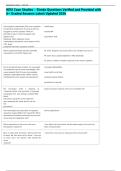
HESI Case Studies – Stroke Questions Verified and Provided with
A+ Graded Answers Latest Updated 2026


The Emergency Department (ED) nurse completes carotid bruit
the admission assessment. Mr. Jones is alert but
struggles to answer questions. When he elevated BP
attempts to talk, he slurs his speech and
appears very hyporeflexic DTR
frightened. Which additional clinical
manifestations should the nurse expect to find
if Mr. Jones'
symptoms have been caused by a stroke?

Which assessment finding warrants immediate Mr. Jones' Glasgow Coma Scale (GCS) score changes from 12 to 9
intervention by the RN? (Select all)
Mr. Jones has a positive Babinski's reflex bilaterally


Mr. Jones is unable to verbalize responses to the nurse's questions


Due to his deteriorating condition, the neurologist increased distractibility
is consulted to see Mr. Jones immediately. The
nurse suspects that Mr. Jones has probably visual deficit on left side
suffered a right-sided stroke. Which clinical
manifestations further support this assessment? spatial-perceptual deficits


paresthesia on left side


The neurologist writes a diagnosis of Explain procedure requires client to lie completely still
"suspected stroke" and prescribes a computed
tomography (CT) scan without contrast STAT.
Which
intervention should the nurse implement
when preparing Mr. Jones and his son for
this
procedure?

The neurologist also prescribes a magnetic left hip replacement
resonance imaging (MRI) of the head STAT. Which
data warrants immediate intervention by the nurse
concerning this diagnostic test?


Which explanation by the nurse is the most "Your father has had a stroke, and the blood supply to the brain has
therapeutic response? been compromised."


Barry is visibly upset and states, "Dad has been fine "I know this is scary for you. Would you like to sit and talk?"
all week. We even went out to dinner. I love him
so much and I am scared." How should the
nurse
respond?


Document information

Uploaded on
September 6, 2026
Number of pages
4
Written in
2026/2027
Type
Exam (elaborations)
Contains
Questions & answers
$15.99

Wrong document? Swap it for free Within 14 days of purchase and before downloading, you can choose a different document. You can simply spend the amount again.
Written by students who passed
Immediately available after payment
Read online or as PDF

Seller avatar
Reputation scores are based on the amount of documents a seller has sold for a fee and the reviews they have received for those documents. There are three levels: Bronze, Silver and Gold. The better the reputation, the more your can rely on the quality of the sellers work.
LectDeniz
5.0
(1)
Sold
21
Followers
16
Items
5281
Last sold
10 months ago


Why students choose Stuvia

Created by fellow students, verified by reviews

Quality you can trust: written by students who passed their exams and reviewed by others who've used these revision notes.

Didn't get what you expected? Choose another document

No problem! You can straightaway pick a different document that better suits what you're after.

Pay as you like, start learning straight away

No subscription, no commitments. Pay the way you're used to via credit card and download your PDF document instantly.

Student with book image

“Bought, downloaded, and smashed it. It really can be that simple.”

Alisha Student

Working on your references?

Create accurate citations in APA, MLA and Harvard with our free citation generator.

Working on your references?

Frequently asked questions
