
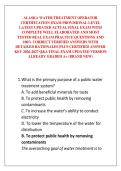
ALASKA WATER TREATMENT OPERATOR
CERTIFICATION EXAM PROVISIONAL LEVEL
LATEST UPDATED ACTUAL FINAL EXAM WITH
COMPLETE WELL ELABORATED AND MOST
TESTED REAL EXAM PRACTICE QUESTIONS AND
100% CORRECT VERIFIED ANSWERS WITH
DETAILED RATIONALES PLUS CERTIFIED ANSWER
KEY 2026-2027 Q&A FINAL EXAM UPDATED VERSION
ALREADY GRADED A+ (BRAND NEW)
1. What is the primary purpose of a public water
treatment system?
A. To add beneficial minerals for taste
B. To protect public health by removing
contaminants
C. To increase the water’s ability to conduct
electricity
D. To lower the temperature of the water for
distribution
B. To protect public health by removing
contaminants
The overarching goal of water treatment is to
, remove or inactivate biological, chemical, and
radiological contaminants to ensure the water is
safe for human consumption.
2. The underground layer of rock or soil that yields
a usable supply of water is known as a(n):
A. Aquifer
B. Reservoir
C. Watershed
D. Estuary
A. Aquifer
An aquifer is a saturated geological formation
that can store and transmit water in sufficient
quantities to supply a well or spring.
3. A sample of water with a pH of 5 is considered:
A. Basic
B. Alkaline
C. Acidic
D. Neutral
C. Acidic
The pH scale ranges from 0 to 14, with 7 being
, neutral. Values below 7 indicate acidity, while
values above 7 indicate alkalinity.
4. High turbidity in source water can interfere with
disinfection by:
A. Increasing the water temperature
B. Shielding pathogens from the disinfectant
C. Lowering the pH
D. Adding oxygen to the water
B. Shielding pathogens from the disinfectant
Particulate matter that causes turbidity can
encapsulate bacteria and viruses, preventing
the chemical disinfectant from making direct
contact to destroy them.
5. What is the process of adding chlorine to water
until all ammonia and organic nitrogen
compounds are oxidized, leaving free available
chlorine?
A. Simple chlorination
B. Pre-chlorination
C. Breakpoint chlorination
D. Dechlorination
, C. Breakpoint chlorination
When chlorine is added, it first reacts with
reducing agents and ammonia. The breakpoint
is reached when the chlorine demand is
satisfied, and a free chlorine residual appears.
6. An operator collects a sample from a
customer’s tap. This sample is most likely used
to test for:
A. Raw water turbidity
B. Lead and copper
C. Cryptosporidium density
D. Aquifer recharge rates
B. Lead and copper
The Lead and Copper Rule requires samples to
be collected from high-risk residential taps
because contamination occurs in the
distribution system or plumbing, not the source
water.
7. The term "pathogen" refers to:
A. A harmless mineral deposit
B. A type of treatment chemical
CERTIFICATION EXAM PROVISIONAL LEVEL
LATEST UPDATED ACTUAL FINAL EXAM WITH
COMPLETE WELL ELABORATED AND MOST
TESTED REAL EXAM PRACTICE QUESTIONS AND
100% CORRECT VERIFIED ANSWERS WITH
DETAILED RATIONALES PLUS CERTIFIED ANSWER
KEY 2026-2027 Q&A FINAL EXAM UPDATED VERSION
ALREADY GRADED A+ (BRAND NEW)
1. What is the primary purpose of a public water
treatment system?
A. To add beneficial minerals for taste
B. To protect public health by removing
contaminants
C. To increase the water’s ability to conduct
electricity
D. To lower the temperature of the water for
distribution
B. To protect public health by removing
contaminants
The overarching goal of water treatment is to
, remove or inactivate biological, chemical, and
radiological contaminants to ensure the water is
safe for human consumption.
2. The underground layer of rock or soil that yields
a usable supply of water is known as a(n):
A. Aquifer
B. Reservoir
C. Watershed
D. Estuary
A. Aquifer
An aquifer is a saturated geological formation
that can store and transmit water in sufficient
quantities to supply a well or spring.
3. A sample of water with a pH of 5 is considered:
A. Basic
B. Alkaline
C. Acidic
D. Neutral
C. Acidic
The pH scale ranges from 0 to 14, with 7 being
, neutral. Values below 7 indicate acidity, while
values above 7 indicate alkalinity.
4. High turbidity in source water can interfere with
disinfection by:
A. Increasing the water temperature
B. Shielding pathogens from the disinfectant
C. Lowering the pH
D. Adding oxygen to the water
B. Shielding pathogens from the disinfectant
Particulate matter that causes turbidity can
encapsulate bacteria and viruses, preventing
the chemical disinfectant from making direct
contact to destroy them.
5. What is the process of adding chlorine to water
until all ammonia and organic nitrogen
compounds are oxidized, leaving free available
chlorine?
A. Simple chlorination
B. Pre-chlorination
C. Breakpoint chlorination
D. Dechlorination
, C. Breakpoint chlorination
When chlorine is added, it first reacts with
reducing agents and ammonia. The breakpoint
is reached when the chlorine demand is
satisfied, and a free chlorine residual appears.
6. An operator collects a sample from a
customer’s tap. This sample is most likely used
to test for:
A. Raw water turbidity
B. Lead and copper
C. Cryptosporidium density
D. Aquifer recharge rates
B. Lead and copper
The Lead and Copper Rule requires samples to
be collected from high-risk residential taps
because contamination occurs in the
distribution system or plumbing, not the source
water.
7. The term "pathogen" refers to:
A. A harmless mineral deposit
B. A type of treatment chemical


