

OTR 716: MIDTERM UPDATED ACTUAL QUESTIONS AND
CORRECT ANSWERS
Question:
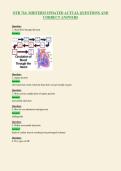
1. blood flow through the heart
Answer:
Question:
2. angina pectoris
Answer:
chest pain that results when the heart does not get enough oxygen
Question:
3. Most serious complication of angina pectoris
Answer:
myocardial infarction
Question:
4. How do you administer nitroglycerin
Answer:
sublingually
Question:
5. Define myocardial infarction
Answer:
death of cardiac muscle resulting from prolonged ischemia
Question:
6. Five types of MI
, Answer:
Type 1: primarily associated w/ atherosclerosis and the destruction of cardiac muscle due to blockage of a
major artery/arteries
Type 2: characterized by a mismatch in myocardial oxygen supply and demand that is not a direct result of
arterial blockage
Type 3: involved only fatal MIs
Type 4-5: attributed to MIs that occur as a result of a medical procedure(s) such as angioplasty or stents
Question:
7. Causes of MI
Answer:
1. thrombus buildup to obstruct the artery due to atherosclerosis (most common)
2. vasospasm in the presence of a partial occlusion
3. embolization of a thrombus to a smaller artery that is totally obstructed
Question:
8. Warning signs of MI
Answer:
pallor, anxiety, fear, diaphoresis, shortness of breath and tightness in chest, weakness, indigestion, or
nausea
Question:
9. Most common site of MI
Answer:
left ventricle
Question:
10. How the diagnosis of MI is confirmed
Answer:
diagnose through electrocardiogram changes and serum enzyme and isoenzyme levels
serum levels of myosin and cardiac troponin are elevated
serum electrolyte levels may be abnormal
leukocytosis and an elevated C-reactive protein and erythrocyte sedimentation rate are common
arterial blood gas is altered
pulmonary artery pressure measurements should be conducted to determine ventricular function
Question:
11. cardioversion
Answer:
restoration of a normal heart rhythm by electric shock
Question:
12. bradycardia
Answer:
heart rate less than 60 bpm
CORRECT ANSWERS
Question:
1. blood flow through the heart
Answer:
Question:
2. angina pectoris
Answer:
chest pain that results when the heart does not get enough oxygen
Question:
3. Most serious complication of angina pectoris
Answer:
myocardial infarction
Question:
4. How do you administer nitroglycerin
Answer:
sublingually
Question:
5. Define myocardial infarction
Answer:
death of cardiac muscle resulting from prolonged ischemia
Question:
6. Five types of MI
, Answer:
Type 1: primarily associated w/ atherosclerosis and the destruction of cardiac muscle due to blockage of a
major artery/arteries
Type 2: characterized by a mismatch in myocardial oxygen supply and demand that is not a direct result of
arterial blockage
Type 3: involved only fatal MIs
Type 4-5: attributed to MIs that occur as a result of a medical procedure(s) such as angioplasty or stents
Question:
7. Causes of MI
Answer:
1. thrombus buildup to obstruct the artery due to atherosclerosis (most common)
2. vasospasm in the presence of a partial occlusion
3. embolization of a thrombus to a smaller artery that is totally obstructed
Question:
8. Warning signs of MI
Answer:
pallor, anxiety, fear, diaphoresis, shortness of breath and tightness in chest, weakness, indigestion, or
nausea
Question:
9. Most common site of MI
Answer:
left ventricle
Question:
10. How the diagnosis of MI is confirmed
Answer:
diagnose through electrocardiogram changes and serum enzyme and isoenzyme levels
serum levels of myosin and cardiac troponin are elevated
serum electrolyte levels may be abnormal
leukocytosis and an elevated C-reactive protein and erythrocyte sedimentation rate are common
arterial blood gas is altered
pulmonary artery pressure measurements should be conducted to determine ventricular function
Question:
11. cardioversion
Answer:
restoration of a normal heart rhythm by electric shock
Question:
12. bradycardia
Answer:
heart rate less than 60 bpm


