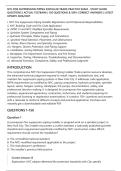
NYC FIRE SUPPRESSION PIPING INSTALLER TRADE PRACTICE EXAM - STUDY GUIDE
QUESTIONS | ACTUAL TESTBANK | 150 QUESTIONS & 100% CORRECT ANSWERS | LATEST
UPDATE 2026/2027
i. NYC Fire Suppression Piping Installer Registration and Professional Responsibilities
ii. NYC Building Code and Fire Code Application
iii. NFPA 13 and NYC-Modified Sprinkler Requirements
iv. Sprinkler System Components and Piping
v. Hydraulic Principles, Water Supply, and Calculations
vi. Sprinkler Head Selection, Placement, and Obstructions
vii. Valves, Alarm Devices, and Specialty Components
viii. Hangers, Seismic Protection, and Piping Support
ix. Installation, Joining Methods, Testing, and Commissioning
x. Standpipes, Fire Department Connections, and Fire Pumps
xi. Inspection, Testing, Maintenance, Troubleshooting, and Documentation
xii. Advanced Scenarios, Compliance, Safety, and Professional Judgment
INTRODUCTION
This comprehensive NYC Fire Suppression Piping Installer Trade practice resource develops
the advanced technical judgment required to install, inspect, troubleshoot, test, and
maintain fire suppression piping systems in New York City. It addresses code application,
NFPA requirements as modified by NYC, piping components, hydraulic principles, sprinkler
layout, valves, hangers, testing, standpipes, fire pumps, documentation, safety, and
professional decision-making. It is designed for journeyman fire suppression piping
installers, experienced apprentices, contractors, technicians, and students preparing for
professional licensing or registration examinations. It contains 150+ questions and answers
with a rationale to reinforce difficult concepts and practical application. Purchase and
instantly get a downloadable and editable PDF.
QUESTIONS 1–150
Question 1
A journeyman fire suppression piping installer is assigned work on a sprinkler project in
New York City. The installer encounters a conflict between a nationally published sprinkler
standard and a requirement specifically modified by NYC construction codes. Which
requirement should control the installation?
A. The unmodified national standard
B. The NYC-modified requirement applicable to the project
C. The manufacturer's preference
D. The installer's previous field practice
Correct Answer: B
Explanation: NYC adopts referenced fire-protection standards with City-specific
, modifications. The installer must apply the applicable NYC code and modified standard
rather than relying solely on the unmodified national publication.
Question 2
A worker has extensive general plumbing experience but no qualifying fire suppression
piping experience. He applies for NYC Journeyman Fire Suppression Piping Installer
registration based entirely on his plumbing experience. What is the fundamental problem?
A. Plumbing experience automatically counts at 50%
B. Only supervisory plumbing experience counts
C. Plumbing experience cannot substitute for qualifying fire suppression experience
D. Plumbing experience counts if obtained outside New York
Correct Answer: C
Explanation: NYC distinguishes qualifying plumbing experience from qualifying fire
suppression experience for the respective journeyman registrations.
Question 3
During installation, an installer discovers that the approved plans show a pipe routing that
cannot physically be installed because of an unforeseen structural obstruction. What is the
most appropriate professional response?
A. Modify the routing without documentation
B. Remove the structural member
C. Resolve the conflict through the responsible design/approval process before making a
material change
D. Install the pipe wherever clearance appears adequate
Correct Answer: C
Explanation: Field conditions do not authorize an installer to independently redesign a fire
protection system. Changes should be reviewed and properly documented through the
responsible parties.
Question 4
A sprinkler installer is asked to omit sprinklers from a room solely because the room has a
two-hour fire-resistance-rated enclosure. What is the best conclusion?
A. The sprinkler may always be omitted
B. Fire resistance automatically replaces sprinkler protection
C. The omission must be specifically permitted by applicable code provisions
D. The omission is acceptable if the room is unoccupied
, Correct Answer: C
Explanation: A fire-resistance-rated enclosure does not by itself authorize sprinkler
omission. Specific code conditions and applicable exceptions must be satisfied.
Question 5
A fire suppression piping installer is reviewing a project that references NFPA 13. Which
approach is most appropriate in NYC?
A. Apply only the latest edition of NFPA 13 regardless of the code
B. Apply the edition and modifications incorporated by NYC requirements
C. Apply whichever edition the installer owns
D. Apply the manufacturer's installation manual instead of NFPA 13
Correct Answer: B
Explanation: NYC construction codes identify applicable referenced standards and City
modifications. The installer must use the legally applicable edition and modifications.
Question 6
A piping installer notices that a pipe support is being installed from a ceiling component
that is not structurally adequate for the anticipated load. What should the installer do?
A. Install it because the pipe is lightweight
B. Add a second weak attachment
C. Provide a properly engineered or approved support arrangement
D. Leave the piping unsupported until inspection
Correct Answer: C
Explanation: Fire suppression piping supports must safely carry the imposed loads and
comply with applicable support requirements. Structural adequacy cannot be assumed.
Question 7
A contractor proposes using a sprinkler component that is physically compatible with the
pipe but has a listing that does not cover the intended application. What is the primary
concern?
A. Pipe color
B. Component listing and suitability for the application
C. Installation speed
D. Thread appearance
, Correct Answer: B
Explanation: Fire protection components must be appropriate for their intended use and
installed within their listing limitations.
Question 8
A sprinkler system is connected to a potable water supply. Which additional issue must be
considered?
A. Elimination of all valves
B. Backflow protection where required
C. Removal of the water meter
D. Increasing sprinkler temperature rating
Correct Answer: B
Explanation: NYC requirements address protection of potable water supplies against
backflow where fire protection systems are connected to them.
Question 9
During a final inspection, an inspector asks the installer to demonstrate that a valve
controlling sprinkler water supply is supervised as required. The installer should primarily
verify:
A. Pipe insulation thickness
B. Valve position and required supervisory arrangement
C. Ceiling tile color
D. Sprinkler escutcheon finish
Correct Answer: B
Explanation: Control valves must remain in their required operating position and
supervisory arrangements help identify unauthorized closure.
Question 10
A piping installer is given an approved shop drawing but discovers that the field installation
would place a sprinkler directly behind a large structural obstruction. What is the best
action?
A. Install it anyway
B. Relocate the sprinkler without review
C. Evaluate the obstruction against sprinkler obstruction requirements and obtain an
approved adjustment when necessary
D. Remove the obstruction
QUESTIONS | ACTUAL TESTBANK | 150 QUESTIONS & 100% CORRECT ANSWERS | LATEST
UPDATE 2026/2027
i. NYC Fire Suppression Piping Installer Registration and Professional Responsibilities
ii. NYC Building Code and Fire Code Application
iii. NFPA 13 and NYC-Modified Sprinkler Requirements
iv. Sprinkler System Components and Piping
v. Hydraulic Principles, Water Supply, and Calculations
vi. Sprinkler Head Selection, Placement, and Obstructions
vii. Valves, Alarm Devices, and Specialty Components
viii. Hangers, Seismic Protection, and Piping Support
ix. Installation, Joining Methods, Testing, and Commissioning
x. Standpipes, Fire Department Connections, and Fire Pumps
xi. Inspection, Testing, Maintenance, Troubleshooting, and Documentation
xii. Advanced Scenarios, Compliance, Safety, and Professional Judgment
INTRODUCTION
This comprehensive NYC Fire Suppression Piping Installer Trade practice resource develops
the advanced technical judgment required to install, inspect, troubleshoot, test, and
maintain fire suppression piping systems in New York City. It addresses code application,
NFPA requirements as modified by NYC, piping components, hydraulic principles, sprinkler
layout, valves, hangers, testing, standpipes, fire pumps, documentation, safety, and
professional decision-making. It is designed for journeyman fire suppression piping
installers, experienced apprentices, contractors, technicians, and students preparing for
professional licensing or registration examinations. It contains 150+ questions and answers
with a rationale to reinforce difficult concepts and practical application. Purchase and
instantly get a downloadable and editable PDF.
QUESTIONS 1–150
Question 1
A journeyman fire suppression piping installer is assigned work on a sprinkler project in
New York City. The installer encounters a conflict between a nationally published sprinkler
standard and a requirement specifically modified by NYC construction codes. Which
requirement should control the installation?
A. The unmodified national standard
B. The NYC-modified requirement applicable to the project
C. The manufacturer's preference
D. The installer's previous field practice
Correct Answer: B
Explanation: NYC adopts referenced fire-protection standards with City-specific
, modifications. The installer must apply the applicable NYC code and modified standard
rather than relying solely on the unmodified national publication.
Question 2
A worker has extensive general plumbing experience but no qualifying fire suppression
piping experience. He applies for NYC Journeyman Fire Suppression Piping Installer
registration based entirely on his plumbing experience. What is the fundamental problem?
A. Plumbing experience automatically counts at 50%
B. Only supervisory plumbing experience counts
C. Plumbing experience cannot substitute for qualifying fire suppression experience
D. Plumbing experience counts if obtained outside New York
Correct Answer: C
Explanation: NYC distinguishes qualifying plumbing experience from qualifying fire
suppression experience for the respective journeyman registrations.
Question 3
During installation, an installer discovers that the approved plans show a pipe routing that
cannot physically be installed because of an unforeseen structural obstruction. What is the
most appropriate professional response?
A. Modify the routing without documentation
B. Remove the structural member
C. Resolve the conflict through the responsible design/approval process before making a
material change
D. Install the pipe wherever clearance appears adequate
Correct Answer: C
Explanation: Field conditions do not authorize an installer to independently redesign a fire
protection system. Changes should be reviewed and properly documented through the
responsible parties.
Question 4
A sprinkler installer is asked to omit sprinklers from a room solely because the room has a
two-hour fire-resistance-rated enclosure. What is the best conclusion?
A. The sprinkler may always be omitted
B. Fire resistance automatically replaces sprinkler protection
C. The omission must be specifically permitted by applicable code provisions
D. The omission is acceptable if the room is unoccupied
, Correct Answer: C
Explanation: A fire-resistance-rated enclosure does not by itself authorize sprinkler
omission. Specific code conditions and applicable exceptions must be satisfied.
Question 5
A fire suppression piping installer is reviewing a project that references NFPA 13. Which
approach is most appropriate in NYC?
A. Apply only the latest edition of NFPA 13 regardless of the code
B. Apply the edition and modifications incorporated by NYC requirements
C. Apply whichever edition the installer owns
D. Apply the manufacturer's installation manual instead of NFPA 13
Correct Answer: B
Explanation: NYC construction codes identify applicable referenced standards and City
modifications. The installer must use the legally applicable edition and modifications.
Question 6
A piping installer notices that a pipe support is being installed from a ceiling component
that is not structurally adequate for the anticipated load. What should the installer do?
A. Install it because the pipe is lightweight
B. Add a second weak attachment
C. Provide a properly engineered or approved support arrangement
D. Leave the piping unsupported until inspection
Correct Answer: C
Explanation: Fire suppression piping supports must safely carry the imposed loads and
comply with applicable support requirements. Structural adequacy cannot be assumed.
Question 7
A contractor proposes using a sprinkler component that is physically compatible with the
pipe but has a listing that does not cover the intended application. What is the primary
concern?
A. Pipe color
B. Component listing and suitability for the application
C. Installation speed
D. Thread appearance
, Correct Answer: B
Explanation: Fire protection components must be appropriate for their intended use and
installed within their listing limitations.
Question 8
A sprinkler system is connected to a potable water supply. Which additional issue must be
considered?
A. Elimination of all valves
B. Backflow protection where required
C. Removal of the water meter
D. Increasing sprinkler temperature rating
Correct Answer: B
Explanation: NYC requirements address protection of potable water supplies against
backflow where fire protection systems are connected to them.
Question 9
During a final inspection, an inspector asks the installer to demonstrate that a valve
controlling sprinkler water supply is supervised as required. The installer should primarily
verify:
A. Pipe insulation thickness
B. Valve position and required supervisory arrangement
C. Ceiling tile color
D. Sprinkler escutcheon finish
Correct Answer: B
Explanation: Control valves must remain in their required operating position and
supervisory arrangements help identify unauthorized closure.
Question 10
A piping installer is given an approved shop drawing but discovers that the field installation
would place a sprinkler directly behind a large structural obstruction. What is the best
action?
A. Install it anyway
B. Relocate the sprinkler without review
C. Evaluate the obstruction against sprinkler obstruction requirements and obtain an
approved adjustment when necessary
D. Remove the obstruction