

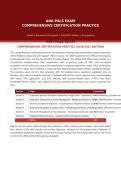
AHA PALS EXAM
COMPREHENSIVE CERTIFICATION PRACTICE
Pediatric Advanced Life Support • 2026/2027 Edition • 50 Questions
AHA PALS EXAM
COMPREHENSIVE CERTIFICATION PRACTICE (2026/2027 EDITION)
This comprehensive certification practice examination is aligned with the American Heart Association
(AHA) Pediatric Advanced Life Support (PALS) course, the 2025 Guidelines for CPR and Emergency
Cardiovascular Care, and the current PALS Provider Manual. The official AHA PALS exam consists of a
50-question multiple-choice final examination with a passing score of 84%, and successful
completion of the online pre-course self-assessment is required before the course. PALS certification
is valid for 2 years and is offered in instructor-led, blended (HeartCode® PALS), and RQI® formats.
This practice exam mirrors that structure with 50 multiple-choice questions organized into six
sections, each with a complete rationale. Coverage reflects the course cognitive mix: approximately
30% recall, 50% application, and 20% analysis, with scenario-based items (≈75%) and direct
knowledge items (≈25%). Four options (A–D) are provided with exactly one correct response per
item.
Section Topic Questions
Section 1 Systematic Approach & Pediatric Assessment Triangle (PAT) – Appearance, Work
10 of Breathing, Circulation to S
Section 2 Respiratory Emergencies & Airway Management – Respiratory Distress vs. Failure,
10 BVM Ventilation, Grunting/R
Section 3 Shock & Circulatory Emergencies – Compensated vs. Hypotensive Shock, Early
10Interventions, Fluid Resuscitat
Section 4 Arrhythmia Recognition & Cardiac Arrest – Tachy/Bradyarrhythmias, Unstable10
vs. Stable, CPR within 10 Secon
Section 5 Post-Arrest Management & Team Dynamics – Post-Cardiac Arrest Care, High-Performance
5 Team Roles
Section 6 Integrated Clinical Scenarios – Complex Pediatric Emergency Scenarios 5
TOTAL 50
How to use this exam: Work through the sections in order, marking your answers. Each item shows
four options (A–D) with exactly one correct response, followed by the answer and a rationale. A
consolidated answer key appears at the end for quick scoring. Aim for at least 84% correct (42 of 50)
to mirror the official AHA PALS passing standard.
, AHA PALS EXAM Comprehensive Certification Practice (2026/2027)
Section 1: Systematic Approach & Pediatric Assessment Triangle (PAT) – Appearance,
Work of Breathing, Circulation to Skin, TICLS Mnemonic
Q1: The Pediatric Assessment Triangle (PAT) is composed of which three components?
A. Appearance, Work of Breathing, and Circulation to the skin [CORRECT]
B. Airway, Breathing, and Circulation
C. Alertness, Blood pressure, and Capillary refill
D. Tone, Interactiveness, and Consolability
Correct Answer: A
Rationale: The PAT is a rapid visual assessment using Appearance, Work of Breathing, and Circulation to the
skin.
Q2: The 'Appearance' component of the PAT is rapidly assessed using which mnemonic?
A. TICLS (Tone, Interactiveness, Consolability, Look/Gaze, Speech/Cry) [CORRECT]
B. SAMPLE
C. ABCDE
D. PQRST
Correct Answer: A
Rationale: TICLS - Tone, Interactiveness, Consolability, Look/Gaze, and Speech/Cry - quickly assesses
neurologic status.
Q3: Which PAT component does the TICLS mnemonic evaluate?
A. Appearance [CORRECT]
B. Work of breathing
C. Circulation to the skin
D. Blood pressure
Correct Answer: A
Rationale: TICLS evaluates the Appearance arm of the PAT, reflecting brain perfusion and neurologic status.
Q4: Mottling, pallor, and cyanosis are abnormal findings assessed under which PAT component?
A. Circulation to the skin [CORRECT]
B. Appearance
C. Work of breathing
D. Respiratory rate
Correct Answer: A
Rationale: Skin color and perfusion (mottling, pallor, cyanosis) are assessed under Circulation to the skin.
Q5: A 3-year-old has nasal flaring and intercostal retractions but is alert, interacting, and has an SpO2 of
94% on room air. This presentation is most consistent with:
A. Respiratory distress [CORRECT]
B. Respiratory failure
C. Cardiac arrest
D. Hypotensive shock
Correct Answer: A
Rationale: Increased work of breathing with maintained mental status and oxygenation indicates distress, not
failure.
Page 2 of 11
COMPREHENSIVE CERTIFICATION PRACTICE
Pediatric Advanced Life Support • 2026/2027 Edition • 50 Questions
AHA PALS EXAM
COMPREHENSIVE CERTIFICATION PRACTICE (2026/2027 EDITION)
This comprehensive certification practice examination is aligned with the American Heart Association
(AHA) Pediatric Advanced Life Support (PALS) course, the 2025 Guidelines for CPR and Emergency
Cardiovascular Care, and the current PALS Provider Manual. The official AHA PALS exam consists of a
50-question multiple-choice final examination with a passing score of 84%, and successful
completion of the online pre-course self-assessment is required before the course. PALS certification
is valid for 2 years and is offered in instructor-led, blended (HeartCode® PALS), and RQI® formats.
This practice exam mirrors that structure with 50 multiple-choice questions organized into six
sections, each with a complete rationale. Coverage reflects the course cognitive mix: approximately
30% recall, 50% application, and 20% analysis, with scenario-based items (≈75%) and direct
knowledge items (≈25%). Four options (A–D) are provided with exactly one correct response per
item.
Section Topic Questions
Section 1 Systematic Approach & Pediatric Assessment Triangle (PAT) – Appearance, Work
10 of Breathing, Circulation to S
Section 2 Respiratory Emergencies & Airway Management – Respiratory Distress vs. Failure,
10 BVM Ventilation, Grunting/R
Section 3 Shock & Circulatory Emergencies – Compensated vs. Hypotensive Shock, Early
10Interventions, Fluid Resuscitat
Section 4 Arrhythmia Recognition & Cardiac Arrest – Tachy/Bradyarrhythmias, Unstable10
vs. Stable, CPR within 10 Secon
Section 5 Post-Arrest Management & Team Dynamics – Post-Cardiac Arrest Care, High-Performance
5 Team Roles
Section 6 Integrated Clinical Scenarios – Complex Pediatric Emergency Scenarios 5
TOTAL 50
How to use this exam: Work through the sections in order, marking your answers. Each item shows
four options (A–D) with exactly one correct response, followed by the answer and a rationale. A
consolidated answer key appears at the end for quick scoring. Aim for at least 84% correct (42 of 50)
to mirror the official AHA PALS passing standard.
, AHA PALS EXAM Comprehensive Certification Practice (2026/2027)
Section 1: Systematic Approach & Pediatric Assessment Triangle (PAT) – Appearance,
Work of Breathing, Circulation to Skin, TICLS Mnemonic
Q1: The Pediatric Assessment Triangle (PAT) is composed of which three components?
A. Appearance, Work of Breathing, and Circulation to the skin [CORRECT]
B. Airway, Breathing, and Circulation
C. Alertness, Blood pressure, and Capillary refill
D. Tone, Interactiveness, and Consolability
Correct Answer: A
Rationale: The PAT is a rapid visual assessment using Appearance, Work of Breathing, and Circulation to the
skin.
Q2: The 'Appearance' component of the PAT is rapidly assessed using which mnemonic?
A. TICLS (Tone, Interactiveness, Consolability, Look/Gaze, Speech/Cry) [CORRECT]
B. SAMPLE
C. ABCDE
D. PQRST
Correct Answer: A
Rationale: TICLS - Tone, Interactiveness, Consolability, Look/Gaze, and Speech/Cry - quickly assesses
neurologic status.
Q3: Which PAT component does the TICLS mnemonic evaluate?
A. Appearance [CORRECT]
B. Work of breathing
C. Circulation to the skin
D. Blood pressure
Correct Answer: A
Rationale: TICLS evaluates the Appearance arm of the PAT, reflecting brain perfusion and neurologic status.
Q4: Mottling, pallor, and cyanosis are abnormal findings assessed under which PAT component?
A. Circulation to the skin [CORRECT]
B. Appearance
C. Work of breathing
D. Respiratory rate
Correct Answer: A
Rationale: Skin color and perfusion (mottling, pallor, cyanosis) are assessed under Circulation to the skin.
Q5: A 3-year-old has nasal flaring and intercostal retractions but is alert, interacting, and has an SpO2 of
94% on room air. This presentation is most consistent with:
A. Respiratory distress [CORRECT]
B. Respiratory failure
C. Cardiac arrest
D. Hypotensive shock
Correct Answer: A
Rationale: Increased work of breathing with maintained mental status and oxygenation indicates distress, not
failure.
Page 2 of 11


