

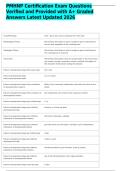
PMHNP Certification Exam Questions
Verified and Provided with A+ Graded
Answers Latest Updated 2026
Tarasoff Principle 1976 - duty to warn victims of potential harm from client
Deontological Theory Ethical theory that states an action is judged as good or bad based on
the act itself regardless of the consequences
Teleological Theory Ethical theory that states an action is judged as good or bad based on
the consequence or outcome
Virtue ethics ethical theory that states actions are chosen based on the moral virtues
(eg. honesty, courage, compassion, wisdom, gratitude, self-respect) or
the character of the person making the decision
Erikson's developmental stage infancy age range birth-1 year
Erikson's developmental stage trust vs. mistrust
infancy developmental tasks
Erikson's developmental stage infancy indications Ability to form meaningful relationships, hope about the future trust in
of developmental mastery others
Erikson's developmental stage infancy indication of poor relationships, lack of future hope, suspicious of others
developmental failure
Erikson's developmental stage early childhood age 1-3 yo
Erikson's developmental stage early childhood autonomy vs. shame and doubt
developmental task
Erikson's developmental stage early childhood self-control, self-esteem, willpower
indications of developmental mastery
Erikson's developmental stage early childhood poor self-control, low self esteem, self-doubt, lack of independence
indications of developmental failure
Erikson's developmental stage late childhood age 3-6yo
Erikson's developmental stage late childhood initiative vs guilt
developmental task
Erikson's developmental stage late childhood self-directed behavior, goal formation, sense of purpose
indications of developmental mastery
Erikson's developmental stage late childhood lack of self-initiated behavior, lack of goal orientation
indications of developmental failure
Erikson's developmental stage school-age ages 6-12yo
, Erikson's developmental stage school-age industry vs. inferiority
developmental task
Erikson's developmental stage school-age ability to work; sense of competency and achievement
indications of developmental mastery
Erikson's developmental stage school-age sense of inferiority, difficulty with working, learning
indications of developmental failure
Erikson's developmental stage adolescence ages 12-20yo
Erikson's developmental stage adolescence identity vs role confusion
developmental task
Erikson's developmental stage adolescence personal sense of identity
indications of developmental mastery
Erikson's developmental stage adolescence identity confusion, poor self-identification in group settings
indications of developmental failure
Erikson's developmental stage early adulthood 20-35 years
ages
Erikson's developmental stage early adulthood intimacy vs isolation
developmental task
Erikson's developmental stage early adulthood committed relationships, capacity to love
indications of developmental mastery
Erikson's developmental stage early adulthood emotional isolation, egocentrism
indications of developmental failure
Erikson's developmental stage middle adulthood 35-65 yo
ages
Erikson's developmental stage middle adulthood generativity vs. self-absorption or stagnation
developmental task
Erikson's developmental stage middle adulthood ability to give time and talents to others, ability to care for others
indications of developmental mastery
Erikson's developmental stage middle adulthood self-absorption, inability to row and change as a person, inability to care
indications of developmental failure for others
Erikson's developmental stage late adulthood age >65yo
Erikson's developmental stage late adulthood integrity vs despair
developmental task
Erikson's developmental stage late adulthood fulfilment and comfort with life, willingness to face death, insight and
indications of developmental mastery balanced perspective on life's events
Erikson's developmental stage late adulthood bitterness, sense of dissatisfaction with life, despair over
indications of developmental failure impending death
Verified and Provided with A+ Graded
Answers Latest Updated 2026
Tarasoff Principle 1976 - duty to warn victims of potential harm from client
Deontological Theory Ethical theory that states an action is judged as good or bad based on
the act itself regardless of the consequences
Teleological Theory Ethical theory that states an action is judged as good or bad based on
the consequence or outcome
Virtue ethics ethical theory that states actions are chosen based on the moral virtues
(eg. honesty, courage, compassion, wisdom, gratitude, self-respect) or
the character of the person making the decision
Erikson's developmental stage infancy age range birth-1 year
Erikson's developmental stage trust vs. mistrust
infancy developmental tasks
Erikson's developmental stage infancy indications Ability to form meaningful relationships, hope about the future trust in
of developmental mastery others
Erikson's developmental stage infancy indication of poor relationships, lack of future hope, suspicious of others
developmental failure
Erikson's developmental stage early childhood age 1-3 yo
Erikson's developmental stage early childhood autonomy vs. shame and doubt
developmental task
Erikson's developmental stage early childhood self-control, self-esteem, willpower
indications of developmental mastery
Erikson's developmental stage early childhood poor self-control, low self esteem, self-doubt, lack of independence
indications of developmental failure
Erikson's developmental stage late childhood age 3-6yo
Erikson's developmental stage late childhood initiative vs guilt
developmental task
Erikson's developmental stage late childhood self-directed behavior, goal formation, sense of purpose
indications of developmental mastery
Erikson's developmental stage late childhood lack of self-initiated behavior, lack of goal orientation
indications of developmental failure
Erikson's developmental stage school-age ages 6-12yo
, Erikson's developmental stage school-age industry vs. inferiority
developmental task
Erikson's developmental stage school-age ability to work; sense of competency and achievement
indications of developmental mastery
Erikson's developmental stage school-age sense of inferiority, difficulty with working, learning
indications of developmental failure
Erikson's developmental stage adolescence ages 12-20yo
Erikson's developmental stage adolescence identity vs role confusion
developmental task
Erikson's developmental stage adolescence personal sense of identity
indications of developmental mastery
Erikson's developmental stage adolescence identity confusion, poor self-identification in group settings
indications of developmental failure
Erikson's developmental stage early adulthood 20-35 years
ages
Erikson's developmental stage early adulthood intimacy vs isolation
developmental task
Erikson's developmental stage early adulthood committed relationships, capacity to love
indications of developmental mastery
Erikson's developmental stage early adulthood emotional isolation, egocentrism
indications of developmental failure
Erikson's developmental stage middle adulthood 35-65 yo
ages
Erikson's developmental stage middle adulthood generativity vs. self-absorption or stagnation
developmental task
Erikson's developmental stage middle adulthood ability to give time and talents to others, ability to care for others
indications of developmental mastery
Erikson's developmental stage middle adulthood self-absorption, inability to row and change as a person, inability to care
indications of developmental failure for others
Erikson's developmental stage late adulthood age >65yo
Erikson's developmental stage late adulthood integrity vs despair
developmental task
Erikson's developmental stage late adulthood fulfilment and comfort with life, willingness to face death, insight and
indications of developmental mastery balanced perspective on life's events
Erikson's developmental stage late adulthood bitterness, sense of dissatisfaction with life, despair over
indications of developmental failure impending death


