
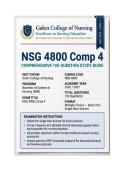
,NSG 4800 Comp 4 | Transition to Prof Nursing
Practice (2026/2027) PDF | Nursing | Galen
1. A nurse manager is implementing a new evidence-based protocol for pressure
ulcer prevention. Which leadership style is most effective for inspiring staff to
embrace this change and pursue a shared vision?
A) Transformational
B) Transactional
C) Laissez-faire
D) Bureaucratic
Correct Answer: A) Transformational
Rationale: Transformational leadership inspires and motivates followers to
achieve extraordinary outcomes and is effective during change. It builds
relationships and a shared vision. Transactional uses rewards, laissez-faire is
hands-off, and bureaucratic relies on rigid rules.
2. A nurse manager is implementing shared governance on a medical-surgical
unit. Which action best reflects this leadership model?
A) The manager makes all decisions independently.
B) Staff nurses have authority over clinical practice standards and quality
improvement.
C) Physicians vote on all nursing unit policies.
D) The CEO selects all committee members.
,Correct Answer: B) Staff nurses have authority over clinical practice standards
and quality improvement.
Rationale: Shared governance empowers direct-care nurses to control practice,
policy, and quality improvement, fostering autonomy and accountability.
Centralized decisions, physician voting, or CEO selection do not reflect shared
governance.
3. A registered nurse is planning daily assignments. Which task is most
appropriate to delegate to a licensed practical nurse?
A) Performing an initial admission assessment for a client with heart failure
B) Developing a plan of care for a client with a new stage III pressure injury
C) Administering a scheduled dose of subcutaneous heparin to a stable client
D) Evaluating the effectiveness of intravenous pain medication given 30 minutes
ago
Correct Answer: C) Administering a scheduled dose of subcutaneous heparin to
a stable client
Rationale: LPNs can administer routine medications to stable clients under RN
supervision. Initial assessments, care planning, and evaluation require RN-level
clinical judgment. The task must be within LPN scope and competency.
4. A charge nurse notes an increase in medication errors on the night shift.
Using a just culture approach, which action should the nurse take first?
A) Terminate the nurse who made the most recent error.
B) Review systems and processes that may contribute to errors.
, C) Mandate re-education for all night shift staff.
D) Write a formal warning for all nurses involved.
Correct Answer: D) Review systems and processes that may contribute to errors.
Rationale: Just culture first analyzes systems and processes contributing to
errors rather than blaming individuals. This focuses on improving safety.
Termination, re-education, and warnings are punitive and not the initial just
culture step.
5. Which statement best describes the primary purpose of a nurse's
documentation in the medical record?
A) To communicate with the healthcare team and ensure continuity of care
B) To provide evidence of care for legal purposes only
C) To inform the patient's family about the plan of care
D) To meet hospital billing and reimbursement requirements
Correct Answer: A) To communicate with the healthcare team and ensure
continuity of care
Rationale: Documentation primarily ensures communication and continuity
among healthcare professionals. It also provides legal evidence and supports
billing, but communication is the core purpose. Informing family is not the
primary role of the record.
6. A nurse is participating in a quality improvement project to reduce catheter-
associated urinary tract infections. Which intervention is most evidence-based?
Practice (2026/2027) PDF | Nursing | Galen
1. A nurse manager is implementing a new evidence-based protocol for pressure
ulcer prevention. Which leadership style is most effective for inspiring staff to
embrace this change and pursue a shared vision?
A) Transformational
B) Transactional
C) Laissez-faire
D) Bureaucratic
Correct Answer: A) Transformational
Rationale: Transformational leadership inspires and motivates followers to
achieve extraordinary outcomes and is effective during change. It builds
relationships and a shared vision. Transactional uses rewards, laissez-faire is
hands-off, and bureaucratic relies on rigid rules.
2. A nurse manager is implementing shared governance on a medical-surgical
unit. Which action best reflects this leadership model?
A) The manager makes all decisions independently.
B) Staff nurses have authority over clinical practice standards and quality
improvement.
C) Physicians vote on all nursing unit policies.
D) The CEO selects all committee members.
,Correct Answer: B) Staff nurses have authority over clinical practice standards
and quality improvement.
Rationale: Shared governance empowers direct-care nurses to control practice,
policy, and quality improvement, fostering autonomy and accountability.
Centralized decisions, physician voting, or CEO selection do not reflect shared
governance.
3. A registered nurse is planning daily assignments. Which task is most
appropriate to delegate to a licensed practical nurse?
A) Performing an initial admission assessment for a client with heart failure
B) Developing a plan of care for a client with a new stage III pressure injury
C) Administering a scheduled dose of subcutaneous heparin to a stable client
D) Evaluating the effectiveness of intravenous pain medication given 30 minutes
ago
Correct Answer: C) Administering a scheduled dose of subcutaneous heparin to
a stable client
Rationale: LPNs can administer routine medications to stable clients under RN
supervision. Initial assessments, care planning, and evaluation require RN-level
clinical judgment. The task must be within LPN scope and competency.
4. A charge nurse notes an increase in medication errors on the night shift.
Using a just culture approach, which action should the nurse take first?
A) Terminate the nurse who made the most recent error.
B) Review systems and processes that may contribute to errors.
, C) Mandate re-education for all night shift staff.
D) Write a formal warning for all nurses involved.
Correct Answer: D) Review systems and processes that may contribute to errors.
Rationale: Just culture first analyzes systems and processes contributing to
errors rather than blaming individuals. This focuses on improving safety.
Termination, re-education, and warnings are punitive and not the initial just
culture step.
5. Which statement best describes the primary purpose of a nurse's
documentation in the medical record?
A) To communicate with the healthcare team and ensure continuity of care
B) To provide evidence of care for legal purposes only
C) To inform the patient's family about the plan of care
D) To meet hospital billing and reimbursement requirements
Correct Answer: A) To communicate with the healthcare team and ensure
continuity of care
Rationale: Documentation primarily ensures communication and continuity
among healthcare professionals. It also provides legal evidence and supports
billing, but communication is the core purpose. Informing family is not the
primary role of the record.
6. A nurse is participating in a quality improvement project to reduce catheter-
associated urinary tract infections. Which intervention is most evidence-based?


