
AZ ROC R-37 Plumbing Contractor
Examination (Residential Plumbing) Questions
and Correct Answers (Verified Answers) Plus
Rationale 2027 Q&A| Instant Download Pdf
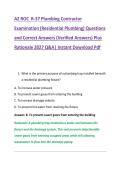
1. What is the primary purpose of a plumbing trap installed beneath
a residential plumbing fixture?
A. To increase water pressure
B. To prevent sewer gases from entering the building
C. To increase drainage velocity
D. To prevent hot water from reaching the fixture
Answer: B. To prevent sewer gases from entering the building
Rationale: A plumbing trap maintains a water seal between the
fixture and the drainage system. This seal prevents objectionable
sewer gases from entering occupied areas while still allowing
wastewater to flow into the drainage piping.
, 2. Which fitting is generally used to change the direction of a
drainage pipe by 90 degrees while maintaining proper drainage
flow?
A. Sanitary tee
B. Straight coupling
C. Long-sweep elbow
D. Bushing
Answer: C. Long-sweep elbow
Rationale: A long-sweep elbow provides a gradual change in direction
that promotes smoother drainage flow and reduces the likelihood of
blockages. Sharp directional changes are generally undesirable in
drainage systems.
3. What is the primary function of a plumbing vent system?
A. To increase water temperature
B. To supply potable water to fixtures
C. To protect trap seals and allow proper drainage-system airflow
D. To increase water pressure
Answer: C. To protect trap seals and allow proper drainage-system
airflow
,Rationale: Vent piping allows air to enter and leave the drainage
system as needed. Proper venting helps prevent siphonage or
excessive pressure fluctuations that could remove water from fixture
traps.
4. Which type of pipe is commonly used for residential cold-water
distribution systems?
A. PVC or CPVC
B. Cast iron only
C. Clay tile
D. Concrete pipe
Answer: A. PVC or CPVC
Rationale: PVC is commonly used for cold-water distribution, while
CPVC is suitable for both hot- and cold-water applications when
permitted by the applicable code and manufacturer. Material
selection must always comply with the applicable residential
plumbing requirements.
5. What does the term “potable water” mean?
, A. Water intended only for irrigation
B. Water that is safe for human consumption
C. Wastewater treated for discharge
D. Water used exclusively for fire protection
Answer: B. Water that is safe for human consumption
Rationale: Potable water is water suitable for drinking, cooking, food
preparation, and other uses involving human consumption. Plumbing
systems supplying potable water must protect that supply from
contamination.
6. What is the purpose of a water shutoff valve at a plumbing
fixture?
A. To increase drainage capacity
B. To regulate sewer gases
C. To allow the fixture supply to be isolated for maintenance
D. To increase water temperature
Answer: C. To allow the fixture supply to be isolated for maintenance
Rationale: A fixture shutoff valve allows water to the individual
fixture to be turned off without shutting down the entire building's
Examination (Residential Plumbing) Questions
and Correct Answers (Verified Answers) Plus
Rationale 2027 Q&A| Instant Download Pdf
1. What is the primary purpose of a plumbing trap installed beneath
a residential plumbing fixture?
A. To increase water pressure
B. To prevent sewer gases from entering the building
C. To increase drainage velocity
D. To prevent hot water from reaching the fixture
Answer: B. To prevent sewer gases from entering the building
Rationale: A plumbing trap maintains a water seal between the
fixture and the drainage system. This seal prevents objectionable
sewer gases from entering occupied areas while still allowing
wastewater to flow into the drainage piping.
, 2. Which fitting is generally used to change the direction of a
drainage pipe by 90 degrees while maintaining proper drainage
flow?
A. Sanitary tee
B. Straight coupling
C. Long-sweep elbow
D. Bushing
Answer: C. Long-sweep elbow
Rationale: A long-sweep elbow provides a gradual change in direction
that promotes smoother drainage flow and reduces the likelihood of
blockages. Sharp directional changes are generally undesirable in
drainage systems.
3. What is the primary function of a plumbing vent system?
A. To increase water temperature
B. To supply potable water to fixtures
C. To protect trap seals and allow proper drainage-system airflow
D. To increase water pressure
Answer: C. To protect trap seals and allow proper drainage-system
airflow
,Rationale: Vent piping allows air to enter and leave the drainage
system as needed. Proper venting helps prevent siphonage or
excessive pressure fluctuations that could remove water from fixture
traps.
4. Which type of pipe is commonly used for residential cold-water
distribution systems?
A. PVC or CPVC
B. Cast iron only
C. Clay tile
D. Concrete pipe
Answer: A. PVC or CPVC
Rationale: PVC is commonly used for cold-water distribution, while
CPVC is suitable for both hot- and cold-water applications when
permitted by the applicable code and manufacturer. Material
selection must always comply with the applicable residential
plumbing requirements.
5. What does the term “potable water” mean?
, A. Water intended only for irrigation
B. Water that is safe for human consumption
C. Wastewater treated for discharge
D. Water used exclusively for fire protection
Answer: B. Water that is safe for human consumption
Rationale: Potable water is water suitable for drinking, cooking, food
preparation, and other uses involving human consumption. Plumbing
systems supplying potable water must protect that supply from
contamination.
6. What is the purpose of a water shutoff valve at a plumbing
fixture?
A. To increase drainage capacity
B. To regulate sewer gases
C. To allow the fixture supply to be isolated for maintenance
D. To increase water temperature
Answer: C. To allow the fixture supply to be isolated for maintenance
Rationale: A fixture shutoff valve allows water to the individual
fixture to be turned off without shutting down the entire building's


