

FBLA Organizational Leadership
Study online at https://quizlet.com/_339sr5
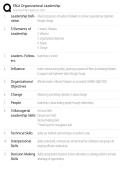
1. Leadership Defi- influencing process of leaders & followers to achieve organizational objectives
nition through change
2. 5 Elements of 1. leaders, followers
Leadership 2. influence
3. organizational objectives
4. People
5. Change
3. Leaders- Follow- leadership is shared
ers
4. Influence leader communicating ideas, granting acceptance of them, & motivating followers
to support and implement ideas through change
5. Organizational effective leaders influence followers to accomplish SHARED OBJECTIVES
Objectives
6. Change influencing and setting objectives is about change
7. People leadership is about leading people through relationships
8. 3 Managerial Technical Skills
Leadership Skills Interpersonal Skills
Decision Making Skills
**Need based on managment level
9. Technical Skills ability use methods and techniques to perform a task
10. Interpersonal ability understand, communicate, and work well w/ individuals and groups de-
Skills veloping effective realtionships
11. Decision Making ability conceptualize situations & select alternatives to solving problems and take
Skills advantage of opportunities
, FBLA Organizational Leadership
Study online at https://quizlet.com/_339sr5
12. Managerial Role Interpersonal
Categories Informational
Decisional
13. Interpersonal leader, figurehead, liaison (close relationship w/ others)
Leadership Roles
14. Informational Monitor Spokesperson Desseminator (gathering info before spreading it)
Leadership Roles
15. Decisional Lead- Entrepreneur Negotiator Disturbance-handler Resource-allocator
ership Roles
16. Levels of Analy- Individual Level
sis of Leadership Group Level
Theory Organizational Level
17. Individual Level aka Dyadic Process ; group and organizational performances based on INDIVID-
Analysis UAL PERFORMANCE
18. Group Level aka Group Process ; productive groups means productive individuals and orga-
Analysis nizations
19. Organizational aka Organizational Process ; focus on organization; working for winning organi-
Level Analysis zations motivates individuals to perform at their best to stay on top
20. Leadership Theo- explanation of aspect of leadership; theories have practical value bc used to better
ry understand, predict, and control successful leadership
21. Leadership Theo- Trait, behavioral, contingency, integrative
ry Classifications
22.
, FBLA Organizational Leadership
Study online at https://quizlet.com/_339sr5
Leadership Para- shared mindset that represents fundamental way of thinking about, perceiving,
digm (model) studying, researching, and understanding leadership
23. Leadership Trait explain distinctive characteristics accounting for leadership effectiveness
Theories
24. Behavioral Lead- explain distinctive styles used by effective leaders or to define the nature of their
ership Theories work
25. Contingency explain appropriate leadership style based on leader, followers, & situation
Leadership
Theories
26. Management to shift from autocratic management style to newer participative leadership style of
Leadership the- managment
ory paradigm
(model)
27. EMB - decisions and organizational practices based on best available SCIENTIFIC EVI-
Evidence-Based DENCE
Management
28. Traits distinguishing personal characteristics
29. Personality combination of traits that classifies an individual's behavior
-help explain and predict others behavior or job performance
30. Personality Pro- identify individuals' stronger and weaker traits
files -use increase self awareness
31. Big 5 Model of categorizes traits into dimensions of
Personality 1. surgency,
2. agreeableness,
3. adjustment,
Study online at https://quizlet.com/_339sr5
1. Leadership Defi- influencing process of leaders & followers to achieve organizational objectives
nition through change
2. 5 Elements of 1. leaders, followers
Leadership 2. influence
3. organizational objectives
4. People
5. Change
3. Leaders- Follow- leadership is shared
ers
4. Influence leader communicating ideas, granting acceptance of them, & motivating followers
to support and implement ideas through change
5. Organizational effective leaders influence followers to accomplish SHARED OBJECTIVES
Objectives
6. Change influencing and setting objectives is about change
7. People leadership is about leading people through relationships
8. 3 Managerial Technical Skills
Leadership Skills Interpersonal Skills
Decision Making Skills
**Need based on managment level
9. Technical Skills ability use methods and techniques to perform a task
10. Interpersonal ability understand, communicate, and work well w/ individuals and groups de-
Skills veloping effective realtionships
11. Decision Making ability conceptualize situations & select alternatives to solving problems and take
Skills advantage of opportunities
, FBLA Organizational Leadership
Study online at https://quizlet.com/_339sr5
12. Managerial Role Interpersonal
Categories Informational
Decisional
13. Interpersonal leader, figurehead, liaison (close relationship w/ others)
Leadership Roles
14. Informational Monitor Spokesperson Desseminator (gathering info before spreading it)
Leadership Roles
15. Decisional Lead- Entrepreneur Negotiator Disturbance-handler Resource-allocator
ership Roles
16. Levels of Analy- Individual Level
sis of Leadership Group Level
Theory Organizational Level
17. Individual Level aka Dyadic Process ; group and organizational performances based on INDIVID-
Analysis UAL PERFORMANCE
18. Group Level aka Group Process ; productive groups means productive individuals and orga-
Analysis nizations
19. Organizational aka Organizational Process ; focus on organization; working for winning organi-
Level Analysis zations motivates individuals to perform at their best to stay on top
20. Leadership Theo- explanation of aspect of leadership; theories have practical value bc used to better
ry understand, predict, and control successful leadership
21. Leadership Theo- Trait, behavioral, contingency, integrative
ry Classifications
22.
, FBLA Organizational Leadership
Study online at https://quizlet.com/_339sr5
Leadership Para- shared mindset that represents fundamental way of thinking about, perceiving,
digm (model) studying, researching, and understanding leadership
23. Leadership Trait explain distinctive characteristics accounting for leadership effectiveness
Theories
24. Behavioral Lead- explain distinctive styles used by effective leaders or to define the nature of their
ership Theories work
25. Contingency explain appropriate leadership style based on leader, followers, & situation
Leadership
Theories
26. Management to shift from autocratic management style to newer participative leadership style of
Leadership the- managment
ory paradigm
(model)
27. EMB - decisions and organizational practices based on best available SCIENTIFIC EVI-
Evidence-Based DENCE
Management
28. Traits distinguishing personal characteristics
29. Personality combination of traits that classifies an individual's behavior
-help explain and predict others behavior or job performance
30. Personality Pro- identify individuals' stronger and weaker traits
files -use increase self awareness
31. Big 5 Model of categorizes traits into dimensions of
Personality 1. surgency,
2. agreeableness,
3. adjustment,


