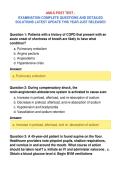
AMLS POST TEST -
EXAMINATION COMPLETE QUESTIONS AND DETAILED
SOLUTIONS LATEST UPDATE THIS YEAR JUST RELEASED
Question 1: Patients with a history of COPD that present with an
acute onset of shortness of breath are likely to have what
condition?
a. Pulmonary embolism
b. Angina pectoris
c. Angioedema
d. Hypertensive crisis
Answer:
a. Pulmonary embolism
Question 2: During compensatory shock, the
renin-angiotensin-aldosterone system is activated to cause a/an:
a. Increase in preload, afterload, and re-absorption of sodium
b. Decrease in preload, afterload, and re-absorption of sodium
c. Hypotension and bradycardia
d. Vasodilation and sodium retention
Answer:
a. Increase in preload, afterload, and re- absorption of sodium
Question 3: A 45-year-old patient is found supine on the floor.
Healthcare providers note pinpoint pupils, shallow respirations,
and vomitus in and around the mouth. What course of action
should be taken next? a. Initiate an IV and administer naloxone . c.
Obtain a blood glucose level d. Begin BVM ventilations
,Answer:
b. Supplemental oxygen and suction
Question 4: 4. What clinical findings are most commonly
associated with a pulmonary embolus?
a. Clear breath sounds with tachypnea
b. Supplemental oxygen and suction b. Rhonchi auscultated
bilaterally with hypercarbia
c. Crackles heard in the bases with bradycardia
d. Fever, tachycardia, and tachypnea with increased work of
breathing
Answer:
a. Clear breath sounds with tachypnea
Question 5: What condition is most likely to cause respiratory
acidosis?
a. Anxiety/panic attack
b. Narcotic overdose
c. Methanol ingestion
d. Diabetic ketoacidosis
Answer:
b. Narcotic overdose
Question 6: A 55-year-old complains of an 'aching' chest
discomfort that persists over several days. The patient has a
temperature of 101F (38.3C). Which finding will help narrow the
diagnosis to pericarditis?
a. Pain is relieved when supine
, b. Pulsus alternans is present
c. S3 gallop is auscultated
d. ST-segment elevation in all leads
Answer:
d. ST-segment elevation in all leads
Question 7: Anaphylaxis is most associated with which
physiological event?
a. Hemorrhage
b. Vasodilation
c. Bradycardia
d. Hypertension
Answer:
b. Vasodilation
Question 8: Acute Respiratory Distress Syndrome (ARDS) is
characterized by what pathological change?
a. Excessive mucous production
b. Inflammation of the visceral pleura
c. Breakdown of the alveolar-capillary membrane
d. Accumulation of fluid between the pleural layers
Answer:
c. Breakdown of the alveolar- capillary membrane
Question 9: Continuous positive airway pressure would be most
beneficial in treating which patient?
a. A 43yo with a decreased LOC with respiratory difficulty
EXAMINATION COMPLETE QUESTIONS AND DETAILED
SOLUTIONS LATEST UPDATE THIS YEAR JUST RELEASED
Question 1: Patients with a history of COPD that present with an
acute onset of shortness of breath are likely to have what
condition?
a. Pulmonary embolism
b. Angina pectoris
c. Angioedema
d. Hypertensive crisis
Answer:
a. Pulmonary embolism
Question 2: During compensatory shock, the
renin-angiotensin-aldosterone system is activated to cause a/an:
a. Increase in preload, afterload, and re-absorption of sodium
b. Decrease in preload, afterload, and re-absorption of sodium
c. Hypotension and bradycardia
d. Vasodilation and sodium retention
Answer:
a. Increase in preload, afterload, and re- absorption of sodium
Question 3: A 45-year-old patient is found supine on the floor.
Healthcare providers note pinpoint pupils, shallow respirations,
and vomitus in and around the mouth. What course of action
should be taken next? a. Initiate an IV and administer naloxone . c.
Obtain a blood glucose level d. Begin BVM ventilations
,Answer:
b. Supplemental oxygen and suction
Question 4: 4. What clinical findings are most commonly
associated with a pulmonary embolus?
a. Clear breath sounds with tachypnea
b. Supplemental oxygen and suction b. Rhonchi auscultated
bilaterally with hypercarbia
c. Crackles heard in the bases with bradycardia
d. Fever, tachycardia, and tachypnea with increased work of
breathing
Answer:
a. Clear breath sounds with tachypnea
Question 5: What condition is most likely to cause respiratory
acidosis?
a. Anxiety/panic attack
b. Narcotic overdose
c. Methanol ingestion
d. Diabetic ketoacidosis
Answer:
b. Narcotic overdose
Question 6: A 55-year-old complains of an 'aching' chest
discomfort that persists over several days. The patient has a
temperature of 101F (38.3C). Which finding will help narrow the
diagnosis to pericarditis?
a. Pain is relieved when supine
, b. Pulsus alternans is present
c. S3 gallop is auscultated
d. ST-segment elevation in all leads
Answer:
d. ST-segment elevation in all leads
Question 7: Anaphylaxis is most associated with which
physiological event?
a. Hemorrhage
b. Vasodilation
c. Bradycardia
d. Hypertension
Answer:
b. Vasodilation
Question 8: Acute Respiratory Distress Syndrome (ARDS) is
characterized by what pathological change?
a. Excessive mucous production
b. Inflammation of the visceral pleura
c. Breakdown of the alveolar-capillary membrane
d. Accumulation of fluid between the pleural layers
Answer:
c. Breakdown of the alveolar- capillary membrane
Question 9: Continuous positive airway pressure would be most
beneficial in treating which patient?
a. A 43yo with a decreased LOC with respiratory difficulty