
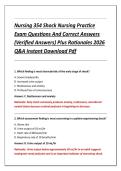
Nursing 354 Shock Nursing Practice
Exam Questions And Correct Answers
(Verified Answers) Plus Rationales 2026
Q&A Instant Download Pdf
1. Which finding is most characteristic of the early stage of shock?
A. Severe bradycardia
B. Increased urine output
C. Restlessness and anxiety
D. Profound loss of consciousness
Answer: C. Restlessness and anxiety
Rationale: Early shock commonly produces anxiety, restlessness, and altered
mental status because cerebral perfusion is beginning to decrease.
2. Which assessment finding is most concerning in a patient experiencing shock?
A. Warm skin
B. Urine output of 10 mL/hr
C. Heart rate of 88 beats/min
D. Respiratory rate of 18 breaths/min
Answer: B. Urine output of 10 mL/hr
Rationale: Urine output below approximately 30 mL/hr in an adult suggests
inadequate renal perfusion and is an important indicator of worsening shock.
,3. A patient has significant blood loss following trauma. Which type of shock
should the nurse suspect?
A. Cardiogenic shock
B. Neurogenic shock
C. Septic shock
D. Hypovolemic shock
Answer: D. Hypovolemic shock
Rationale: Hypovolemic shock occurs when circulating blood or fluid volume is
insufficient to maintain adequate tissue perfusion.
4. Which physiological response occurs initially during hypovolemic shock?
A. Decreased sympathetic activity
B. Increased sympathetic activity
C. Increased urine production
D. Decreased heart rate
Answer: B. Increased sympathetic activity
Rationale: The sympathetic nervous system responds to decreased circulating
volume by increasing heart rate and vasoconstriction to preserve perfusion of
vital organs.
5. Which patient is at greatest risk for hypovolemic shock?
A. A patient with controlled hypertension
B. A patient with severe gastrointestinal bleeding
C. A patient with stable angina
D. A patient with chronic arthritis
Answer: B. A patient with severe gastrointestinal bleeding
,Rationale: Significant gastrointestinal hemorrhage can rapidly reduce
intravascular volume and cause hypovolemic shock.
6. Which assessment finding is expected in hypovolemic shock?
A. Bounding peripheral pulses
B. Hypertension
C. Cool, clammy skin
D. Increased urine output
Answer: C. Cool, clammy skin
Rationale: Peripheral vasoconstriction redirects blood toward vital organs,
producing cool, pale, and clammy skin.
7. Which vital-sign pattern is most consistent with progressive hypovolemic
shock?
A. Bradycardia and hypertension
B. Tachycardia and hypotension
C. Bradycardia and hypotension
D. Hypertension and slow respirations
Answer: B. Tachycardia and hypotension
Rationale: Tachycardia is an early compensatory response, while hypotension
develops as circulating volume and cardiac output decline further.
8. A patient with shock has a urine output of 15 mL/hr. What should the nurse
recognize?
A. Adequate renal perfusion
B. Excessive fluid elimination
, C. Decreased renal perfusion
D. Normal kidney function
Answer: C. Decreased renal perfusion
Rationale: Oliguria is a significant indicator of reduced renal blood flow and
inadequate systemic perfusion.
9. Which laboratory finding may indicate inadequate tissue oxygenation in
shock?
A. Decreased lactate level
B. Increased serum lactate level
C. Decreased blood glucose
D. Increased platelet count
Answer: B. Increased serum lactate level
Rationale: Elevated lactate can occur when tissues rely more heavily on
anaerobic metabolism because oxygen delivery is inadequate.
10. Which intervention is a priority for a patient with suspected shock?
A. Restrict oxygen
B. Maintain adequate oxygenation
C. Encourage ambulation
D. Place the patient in a warm bath
Answer: B. Maintain adequate oxygenation
Rationale: Supporting oxygenation is essential because shock results in
inadequate oxygen delivery to tissues.
11. Cardiogenic shock most commonly results from which condition?
Exam Questions And Correct Answers
(Verified Answers) Plus Rationales 2026
Q&A Instant Download Pdf
1. Which finding is most characteristic of the early stage of shock?
A. Severe bradycardia
B. Increased urine output
C. Restlessness and anxiety
D. Profound loss of consciousness
Answer: C. Restlessness and anxiety
Rationale: Early shock commonly produces anxiety, restlessness, and altered
mental status because cerebral perfusion is beginning to decrease.
2. Which assessment finding is most concerning in a patient experiencing shock?
A. Warm skin
B. Urine output of 10 mL/hr
C. Heart rate of 88 beats/min
D. Respiratory rate of 18 breaths/min
Answer: B. Urine output of 10 mL/hr
Rationale: Urine output below approximately 30 mL/hr in an adult suggests
inadequate renal perfusion and is an important indicator of worsening shock.
,3. A patient has significant blood loss following trauma. Which type of shock
should the nurse suspect?
A. Cardiogenic shock
B. Neurogenic shock
C. Septic shock
D. Hypovolemic shock
Answer: D. Hypovolemic shock
Rationale: Hypovolemic shock occurs when circulating blood or fluid volume is
insufficient to maintain adequate tissue perfusion.
4. Which physiological response occurs initially during hypovolemic shock?
A. Decreased sympathetic activity
B. Increased sympathetic activity
C. Increased urine production
D. Decreased heart rate
Answer: B. Increased sympathetic activity
Rationale: The sympathetic nervous system responds to decreased circulating
volume by increasing heart rate and vasoconstriction to preserve perfusion of
vital organs.
5. Which patient is at greatest risk for hypovolemic shock?
A. A patient with controlled hypertension
B. A patient with severe gastrointestinal bleeding
C. A patient with stable angina
D. A patient with chronic arthritis
Answer: B. A patient with severe gastrointestinal bleeding
,Rationale: Significant gastrointestinal hemorrhage can rapidly reduce
intravascular volume and cause hypovolemic shock.
6. Which assessment finding is expected in hypovolemic shock?
A. Bounding peripheral pulses
B. Hypertension
C. Cool, clammy skin
D. Increased urine output
Answer: C. Cool, clammy skin
Rationale: Peripheral vasoconstriction redirects blood toward vital organs,
producing cool, pale, and clammy skin.
7. Which vital-sign pattern is most consistent with progressive hypovolemic
shock?
A. Bradycardia and hypertension
B. Tachycardia and hypotension
C. Bradycardia and hypotension
D. Hypertension and slow respirations
Answer: B. Tachycardia and hypotension
Rationale: Tachycardia is an early compensatory response, while hypotension
develops as circulating volume and cardiac output decline further.
8. A patient with shock has a urine output of 15 mL/hr. What should the nurse
recognize?
A. Adequate renal perfusion
B. Excessive fluid elimination
, C. Decreased renal perfusion
D. Normal kidney function
Answer: C. Decreased renal perfusion
Rationale: Oliguria is a significant indicator of reduced renal blood flow and
inadequate systemic perfusion.
9. Which laboratory finding may indicate inadequate tissue oxygenation in
shock?
A. Decreased lactate level
B. Increased serum lactate level
C. Decreased blood glucose
D. Increased platelet count
Answer: B. Increased serum lactate level
Rationale: Elevated lactate can occur when tissues rely more heavily on
anaerobic metabolism because oxygen delivery is inadequate.
10. Which intervention is a priority for a patient with suspected shock?
A. Restrict oxygen
B. Maintain adequate oxygenation
C. Encourage ambulation
D. Place the patient in a warm bath
Answer: B. Maintain adequate oxygenation
Rationale: Supporting oxygenation is essential because shock results in
inadequate oxygen delivery to tissues.
11. Cardiogenic shock most commonly results from which condition?


