
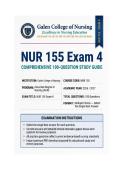
,NUR 155 Exam 4 | Foundations of Nursing
(2026/2027) PDF | Nursing | Galen
1. A nurse is preparing to administer a medication to a client. Which action
demonstrates the right patient principle?
A) Checking the client's name and date of birth on the wristband
B) Using the room number and bed label
C) Asking a family member to identify the client
D) Confirming the diagnosis with the provider
Correct Answer: A) Checking the client's name and date of birth on the
wristband
Rationale: The Joint Commission requires at least two unique identifiers, such as
name and date of birth, to verify the right patient. Room numbers and bed
labels are not acceptable. Family identification and diagnosis confirmation do
not meet patient identification standards.
2. Which component is included in the six rights of medication administration?
A) Right room
B) Right documentation
C) Right diagnosis
D) Right provider
Correct Answer: B) Right documentation
,Rationale: The six rights are right drug, dose, time, route, patient, and
documentation. Right documentation ensures accurate recording after
administration. Room, diagnosis, and provider are not part of the six rights.
3. The nurse is preparing oral medications. How many times should the
medication label be read?
A) Once when removing from the dispensing system
B) Twice before and after administration
C) Three times: removing, preparing, and at the bedside
D) Only at the bedside before giving the drug
Correct Answer: C) Three times: removing, preparing, and at the bedside
Rationale: Reading the label three times reduces medication errors: when
removing from storage, when preparing, and at the bedside before
administration. This safety check ensures the right drug and dose are given to
the right patient.
4. A nurse is writing an actual nursing diagnosis for a client with acute pain.
Which component is essential?
A) Medical diagnosis
B) Provider name
C) Unit location
D) Defining characteristics
Correct Answer: D) Defining characteristics
, Rationale: An actual nursing diagnosis includes the problem, etiology, and
defining characteristics (signs and symptoms). Medical diagnosis, provider
name, and unit location are not part of the nursing diagnosis statement.
5. What is the correct angle for an intradermal injection?
A) 5 to 15 degrees
B) 30 degrees
C) 45 degrees
D) 90 degrees
Correct Answer: A) 5 to 15 degrees
Rationale: Intradermal injections are given at a shallow 5 to 15 degree angle to
deposit medication just below the epidermis. Subcutaneous uses 45 or 90
degrees, and intramuscular uses 90 degrees.
6. A client has a nasogastric tube. Which medication should the nurse question
before administering via the tube?
A) Immediate-release tablet
B) Enteric-coated tablet
C) Scored tablet
D) Capsule that can be opened
Correct Answer: B) Enteric-coated tablet
(2026/2027) PDF | Nursing | Galen
1. A nurse is preparing to administer a medication to a client. Which action
demonstrates the right patient principle?
A) Checking the client's name and date of birth on the wristband
B) Using the room number and bed label
C) Asking a family member to identify the client
D) Confirming the diagnosis with the provider
Correct Answer: A) Checking the client's name and date of birth on the
wristband
Rationale: The Joint Commission requires at least two unique identifiers, such as
name and date of birth, to verify the right patient. Room numbers and bed
labels are not acceptable. Family identification and diagnosis confirmation do
not meet patient identification standards.
2. Which component is included in the six rights of medication administration?
A) Right room
B) Right documentation
C) Right diagnosis
D) Right provider
Correct Answer: B) Right documentation
,Rationale: The six rights are right drug, dose, time, route, patient, and
documentation. Right documentation ensures accurate recording after
administration. Room, diagnosis, and provider are not part of the six rights.
3. The nurse is preparing oral medications. How many times should the
medication label be read?
A) Once when removing from the dispensing system
B) Twice before and after administration
C) Three times: removing, preparing, and at the bedside
D) Only at the bedside before giving the drug
Correct Answer: C) Three times: removing, preparing, and at the bedside
Rationale: Reading the label three times reduces medication errors: when
removing from storage, when preparing, and at the bedside before
administration. This safety check ensures the right drug and dose are given to
the right patient.
4. A nurse is writing an actual nursing diagnosis for a client with acute pain.
Which component is essential?
A) Medical diagnosis
B) Provider name
C) Unit location
D) Defining characteristics
Correct Answer: D) Defining characteristics
, Rationale: An actual nursing diagnosis includes the problem, etiology, and
defining characteristics (signs and symptoms). Medical diagnosis, provider
name, and unit location are not part of the nursing diagnosis statement.
5. What is the correct angle for an intradermal injection?
A) 5 to 15 degrees
B) 30 degrees
C) 45 degrees
D) 90 degrees
Correct Answer: A) 5 to 15 degrees
Rationale: Intradermal injections are given at a shallow 5 to 15 degree angle to
deposit medication just below the epidermis. Subcutaneous uses 45 or 90
degrees, and intramuscular uses 90 degrees.
6. A client has a nasogastric tube. Which medication should the nurse question
before administering via the tube?
A) Immediate-release tablet
B) Enteric-coated tablet
C) Scored tablet
D) Capsule that can be opened
Correct Answer: B) Enteric-coated tablet


