
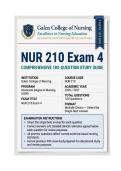
,NUR 210 Exam 4 | Pharmacology (2026/2027) PDF
| Nursing | Galen
1. A nurse is preparing to administer an oral antibiotic. Which action is part of
the six rights of medication administration?
A) Verifying the right route
B) Checking the room number
C) Confirming the diagnosis
D) Reviewing the provider's notes
Correct Answer: A) Verifying the right route
Rationale: The six rights include right patient, drug, dose, route, time, and
documentation. Verifying the route ensures the drug is given as prescribed.
Room number and diagnosis are not part of the six rights.
2. Which finding in a client receiving azithromycin should the nurse report
immediately?
A) Mild headache
B) Tinnitus
C) Fatigue
D) Nausea
Correct Answer: B) Tinnitus
,Rationale: Tinnitus suggests ototoxicity, a serious adverse effect of macrolides.
Headache, fatigue, and nausea are common but less urgent. The nurse should
report tinnitus to the provider.
3. A client receiving intravenous doxycycline develops a red rash on the face,
neck, and chest with hypotension. Which condition is most likely?
A) Anaphylaxis
B) Stevens-Johnson syndrome
C) Red-man syndrome
D) Superinfection
Correct Answer: C) Red-man syndrome
Rationale: Red-man syndrome results from rapid infusion of tetracyclines and
causes flushing, rash, hypotension, and tachycardia. Anaphylaxis and Stevens-
Johnson are different, and superinfection is a secondary infection.
4. Which instruction should the nurse include when teaching a client prescribed
a cephalosporin?
A) Stop the drug when symptoms improve
B) Take the drug for only 5 days
C) Avoid all food while taking it
D) Report signs of superinfection such as oral thrush
Correct Answer: D) Report signs of superinfection such as oral thrush
, Rationale: Cephalosporins can cause superinfection. Clients should report oral
thrush, vaginal discharge, or diarrhea. They should complete the full prescribed
course, usually 10 days, and not stop early.
5. A client with heart failure is prescribed digoxin. Which finding indicates the
medication is effective?
A) Improved cardiac contractility
B) Increased heart rate
C) Increased peripheral edema
D) Decreased urine output
Correct Answer: A) Improved cardiac contractility
Rationale: Digoxin is a positive inotrope that strengthens myocardial
contraction, improving cardiac output and reducing heart failure symptoms.
Increased heart rate, edema, or decreased urine output suggest worsening.
6. Which cardiac biomarker is most specific for myocardial infarction?
A) Creatine kinase-MB only
B) Troponin
C) Myoglobin
D) Lactate dehydrogenase
Correct Answer: B) Troponin
| Nursing | Galen
1. A nurse is preparing to administer an oral antibiotic. Which action is part of
the six rights of medication administration?
A) Verifying the right route
B) Checking the room number
C) Confirming the diagnosis
D) Reviewing the provider's notes
Correct Answer: A) Verifying the right route
Rationale: The six rights include right patient, drug, dose, route, time, and
documentation. Verifying the route ensures the drug is given as prescribed.
Room number and diagnosis are not part of the six rights.
2. Which finding in a client receiving azithromycin should the nurse report
immediately?
A) Mild headache
B) Tinnitus
C) Fatigue
D) Nausea
Correct Answer: B) Tinnitus
,Rationale: Tinnitus suggests ototoxicity, a serious adverse effect of macrolides.
Headache, fatigue, and nausea are common but less urgent. The nurse should
report tinnitus to the provider.
3. A client receiving intravenous doxycycline develops a red rash on the face,
neck, and chest with hypotension. Which condition is most likely?
A) Anaphylaxis
B) Stevens-Johnson syndrome
C) Red-man syndrome
D) Superinfection
Correct Answer: C) Red-man syndrome
Rationale: Red-man syndrome results from rapid infusion of tetracyclines and
causes flushing, rash, hypotension, and tachycardia. Anaphylaxis and Stevens-
Johnson are different, and superinfection is a secondary infection.
4. Which instruction should the nurse include when teaching a client prescribed
a cephalosporin?
A) Stop the drug when symptoms improve
B) Take the drug for only 5 days
C) Avoid all food while taking it
D) Report signs of superinfection such as oral thrush
Correct Answer: D) Report signs of superinfection such as oral thrush
, Rationale: Cephalosporins can cause superinfection. Clients should report oral
thrush, vaginal discharge, or diarrhea. They should complete the full prescribed
course, usually 10 days, and not stop early.
5. A client with heart failure is prescribed digoxin. Which finding indicates the
medication is effective?
A) Improved cardiac contractility
B) Increased heart rate
C) Increased peripheral edema
D) Decreased urine output
Correct Answer: A) Improved cardiac contractility
Rationale: Digoxin is a positive inotrope that strengthens myocardial
contraction, improving cardiac output and reducing heart failure symptoms.
Increased heart rate, edema, or decreased urine output suggest worsening.
6. Which cardiac biomarker is most specific for myocardial infarction?
A) Creatine kinase-MB only
B) Troponin
C) Myoglobin
D) Lactate dehydrogenase
Correct Answer: B) Troponin


