NU553 Unit 2 Comprehensive Resource To Help You Ace 2026-2027 Exams Includes
Frequently Tested Questions With ELABORATED 100% Correct COMPLETE SOLUTIONS
Guaranteed Pass First Attempt!! Current Update!!
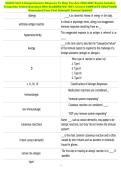
allergy is an abnormal release of energy in the body.
In clinical or physiologic terms, allergy is an exaggerated
antibody-antigen reaction
immune response resulting from an .
This exaggerated response to an antigen is referred to as
hypersensitivity
.
is the term used to describe the *?unexpected failure*
Anergy of the immune system to respond to the challenge of a
foreign substance (antigen or allergen).
What type of reaction is poison ivy?
A. Type I
D B. Type II
C. Type III
D. Type IV
I, II, III, IV Classifications of Allergen Responses:
Medication reactions are considered .
immunologic
*Immune system responding*
Cutaneous reactions are considered .
non-immunologic
*NOT your immune system responding*
Some , such as contact dermatitis, may appear to be
cutaneous reactions allergic reactions, but they *do not involve the immune
system*.
is the most common cutaneous reaction and is often
Irritant contact dermatitis caused by skin irritants such as powders or chemicals
found in gloves.
The first step in treating an allergic reaction is to , if
remove the allergen
possible.
type I
, NU553 Unit 2 Comprehensive Resource To Help You Ace 2026-2027 Exams Includes
Frequently Tested Questions With ELABORATED 100% Correct COMPLETE SOLUTIONS
Guaranteed Pass First Attempt!! Current Update!!
Anaphylaxis is a hypersensitivity reaction involving
IgE-mediated release of histamine, leukotrienes, and oth-
er mediators from already sensitized mast cells and ba-
sophils.
Anaphylaxis is a *type I* hypersensitivity reaction involving
IgE-mediated release of histamine, leukotrienes, and other mediators from
already sensitized mast cells and basophils.
The release of these mediators initiates a systemic chain
histamine, leukotrienes, and other mediators from al- of events that includes symptoms such as angioedema,
ready sensitized mast cells and basophils flushing, pruritus, urticaria, nausea, vomiting, and wheez-
ing.
The onset of the reaction is quick, generally within 1 to 30
Anaphylaxis
minutes.
1-30 anaphylaxis occurs within minutes
reactions are similar in appearance to anaphylaxis but
Anaphylactoid may occur after the first injection of certain drugs and
contrast media.
(1) remove allergen
(2) drug therapy i.e., antihistamines, etc.
Treatment of allergies/allergic reactions:
(3) prophylaxis i.e., prevention, immunotherapy desensi-
tization
is a medical procedure used to temporarily trick your
immune system into tolerating penicillin when no other
suitable antibiotic alternatives exist. It involves starting
Penicillin desensitization
with a minuscule dose of the medication and progressively
increasing it every 15 to 30 minutes until a full therapeutic
dose is successfully delivered. [1, 2, 3]
(1) Alleviate the symptoms with little to no adverse ettects
from medications.
, NU553 Unit 2 Comprehensive Resource To Help You Ace 2026-2027 Exams Includes
Frequently Tested Questions With ELABORATED 100% Correct COMPLETE SOLUTIONS
Guaranteed Pass First Attempt!! Current Update!!
(2) Decreasing the release or inhibiting the ettect of hist-
amine.
Goals of Drug Therapy in allergies/allergic reactions?
(3) Or other mediators of inflammation released from
mast cells.
anaphylaxis Type I hypersensitivity?
Anaphylaxis an mediated response?
IgE
*TYPE I*
elevated means your body is hypersensitive to some-
thing?
eosinophils (IgE)
Eg., eczema, asthma, etc.
*allergies*
A histamine agonist?
epinephrine
*strongest*
First generation (pills e.g., benadryl)
Intranasal Types of Antihistamines:
Topical
Oral
Topical
Intranasal Types of Corticosteroids:
IV
IM
Immediate hypersensitivity
Type I Immunoglobulin IgE attached to mast cells binds with an
antigen, inducing degranulation and release of histamine
and other mediators of inflammation.
Frequently Tested Questions With ELABORATED 100% Correct COMPLETE SOLUTIONS
Guaranteed Pass First Attempt!! Current Update!!
allergy is an abnormal release of energy in the body.
In clinical or physiologic terms, allergy is an exaggerated
antibody-antigen reaction
immune response resulting from an .
This exaggerated response to an antigen is referred to as
hypersensitivity
.
is the term used to describe the *?unexpected failure*
Anergy of the immune system to respond to the challenge of a
foreign substance (antigen or allergen).
What type of reaction is poison ivy?
A. Type I
D B. Type II
C. Type III
D. Type IV
I, II, III, IV Classifications of Allergen Responses:
Medication reactions are considered .
immunologic
*Immune system responding*
Cutaneous reactions are considered .
non-immunologic
*NOT your immune system responding*
Some , such as contact dermatitis, may appear to be
cutaneous reactions allergic reactions, but they *do not involve the immune
system*.
is the most common cutaneous reaction and is often
Irritant contact dermatitis caused by skin irritants such as powders or chemicals
found in gloves.
The first step in treating an allergic reaction is to , if
remove the allergen
possible.
type I
, NU553 Unit 2 Comprehensive Resource To Help You Ace 2026-2027 Exams Includes
Frequently Tested Questions With ELABORATED 100% Correct COMPLETE SOLUTIONS
Guaranteed Pass First Attempt!! Current Update!!
Anaphylaxis is a hypersensitivity reaction involving
IgE-mediated release of histamine, leukotrienes, and oth-
er mediators from already sensitized mast cells and ba-
sophils.
Anaphylaxis is a *type I* hypersensitivity reaction involving
IgE-mediated release of histamine, leukotrienes, and other mediators from
already sensitized mast cells and basophils.
The release of these mediators initiates a systemic chain
histamine, leukotrienes, and other mediators from al- of events that includes symptoms such as angioedema,
ready sensitized mast cells and basophils flushing, pruritus, urticaria, nausea, vomiting, and wheez-
ing.
The onset of the reaction is quick, generally within 1 to 30
Anaphylaxis
minutes.
1-30 anaphylaxis occurs within minutes
reactions are similar in appearance to anaphylaxis but
Anaphylactoid may occur after the first injection of certain drugs and
contrast media.
(1) remove allergen
(2) drug therapy i.e., antihistamines, etc.
Treatment of allergies/allergic reactions:
(3) prophylaxis i.e., prevention, immunotherapy desensi-
tization
is a medical procedure used to temporarily trick your
immune system into tolerating penicillin when no other
suitable antibiotic alternatives exist. It involves starting
Penicillin desensitization
with a minuscule dose of the medication and progressively
increasing it every 15 to 30 minutes until a full therapeutic
dose is successfully delivered. [1, 2, 3]
(1) Alleviate the symptoms with little to no adverse ettects
from medications.
, NU553 Unit 2 Comprehensive Resource To Help You Ace 2026-2027 Exams Includes
Frequently Tested Questions With ELABORATED 100% Correct COMPLETE SOLUTIONS
Guaranteed Pass First Attempt!! Current Update!!
(2) Decreasing the release or inhibiting the ettect of hist-
amine.
Goals of Drug Therapy in allergies/allergic reactions?
(3) Or other mediators of inflammation released from
mast cells.
anaphylaxis Type I hypersensitivity?
Anaphylaxis an mediated response?
IgE
*TYPE I*
elevated means your body is hypersensitive to some-
thing?
eosinophils (IgE)
Eg., eczema, asthma, etc.
*allergies*
A histamine agonist?
epinephrine
*strongest*
First generation (pills e.g., benadryl)
Intranasal Types of Antihistamines:
Topical
Oral
Topical
Intranasal Types of Corticosteroids:
IV
IM
Immediate hypersensitivity
Type I Immunoglobulin IgE attached to mast cells binds with an
antigen, inducing degranulation and release of histamine
and other mediators of inflammation.