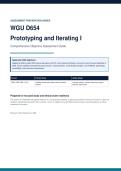
ASSESSMENT PREPARATION SERIES
WGU D654
Prototyping and Iterating I
Comprehensive Objective Assessment Guide
September 2026 alignment
Mapped to WGU's public D654 course description and B.S. User Experience Design curriculum current through September 2,
2026. Covers usability-study planning and execution, mockup iteration, visual-design principles, user feedback, psychology,
accessibility, and continuous improvement.
Course Primary focus Guide design
D654 / DES CUs Usability testing and evidence-driven mockup Concept mastery, scenario reasoning, original
iteration practice, rapid review
Prepared for focused study and ethical exam readiness
This guide is an independent educational resource. It is not produced, endorsed, or approved by Western Governors University. It does not
reproduce confidential assessment items, promise a score, or replace the current WGU Course of Study, instructor guidance, or official
assessment information.
Research cutoff: September 2, 2026
,WGU D654 - PROTOTYPING AND ITERATING I SEPTEMBER 2026 STUDY GUIDE
How to Use This Guide
D654 is best learned as a decision system rather than a vocabulary list. The exam-preparation goal is to
recognize a design or research situation, identify what the team must learn, select the most defensible
method, and choose an evidence-based next step. Read the chapters in sequence once, then use the
decision tables, scenario walkthrough, mastery check, and final cram sheets for retrieval practice.
Pass What to do Output
1 - Build the Read Chapters 1-7. Explain every diagram aloud without looking at the A coherent view of prototype-test-iterate.
model text.
2 - Apply the Read Chapters 8-14. Work every scenario by naming the research goal Scenario judgment rather than memorized
model before choosing a method. slogans.
3 - Diagnose Complete the 52-question original mastery check without notes, then A targeted revision list.
gaps score by domain.
4 - Final review Use the glossary, comparison tables, and two-page cram framework Fast recall of distinctions and decision rules.
during the last review session.
Alignment boundary
WGU's public materials describe D654's scope but do not publish a public item-by-item OA blueprint, exact weighting, cut
score, or live question bank. This guide therefore covers the complete public competency space and established UX practice
without inventing official weights or calling seller-generated questions 'real OA' items.
Independent competency-aligned preparation resource Page 2
,WGU D654 - PROTOTYPING AND ITERATING I SEPTEMBER 2026 STUDY GUIDE
Table of Contents
How to Use This Guide . . . . . . . . . . . . . . . . . . . . . . . . . . . . . . . . . . . . . . . . . . . . . . . . . . . 2
Table of Contents . . . . . . . . . . . . . . . . . . . . . . . . . . . . . . . . . . . . . . . . . . . . . . . . . . . . . . 3
Official Scope-to-Guide Map . . . . . . . . . . . . . . . . . . . . . . . . . . . . . . . . . . . . . . . . . . . . . . . . 7
The D654 Mental Model: Prototype, Test, Learn, Repeat . . . . . . . . . . . . . . . . . . . . . . . . . . . . . . . . . 8
1.1 User-centered design is evidence-driven . . . . . . . . . . . . . . . . . . . . . . . . . . . . . . . . . . . . . . . . . . . . . . . . 8
1.2 The difference between feedback and evidence . . . . . . . . . . . . . . . . . . . . . . . . . . . . . . . . . . . . . . . . . . . . 9
1.3 Divergence, convergence, and iteration . . . . . . . . . . . . . . . . . . . . . . . . . . . . . . . . . . . . . . . . . . . . . . . . . 9
1.4 Core distinctions to memorize . . . . . . . . . . . . . . . . . . . . . . . . . . . . . . . . . . . . . . . . . . . . . . . . . . . . . . 9
Design Artifacts and Fidelity . . . . . . . . . . . . . . . . . . . . . . . . . . . . . . . . . . . . . . . . . . . . . . . . 10
2.1 Sketch, wireframe, mockup, prototype, and MVP . . . . . . . . . . . . . . . . . . . . . . . . . . . . . . . . . . . . . . . . . . . 10
2.2 Fidelity has several dimensions . . . . . . . . . . . . . . . . . . . . . . . . . . . . . . . . . . . . . . . . . . . . . . . . . . . . 10
2.3 Choosing fidelity from the risk . . . . . . . . . . . . . . . . . . . . . . . . . . . . . . . . . . . . . . . . . . . . . . . . . . . . . 11
2.4 Prototype scope and test integrity . . . . . . . . . . . . . . . . . . . . . . . . . . . . . . . . . . . . . . . . . . . . . . . . . . . 11
Usability Foundations and Evaluation Methods . . . . . . . . . . . . . . . . . . . . . . . . . . . . . . . . . . . . . 12
3.1 The three core outcomes . . . . . . . . . . . . . . . . . . . . . . . . . . . . . . . . . . . . . . . . . . . . . . . . . . . . . . . 12
3.2 Usability versus utility, desirability, and accessibility . . . . . . . . . . . . . . . . . . . . . . . . . . . . . . . . . . . . . . . . . . 13
3.3 Evaluation methods are not interchangeable . . . . . . . . . . . . . . . . . . . . . . . . . . . . . . . . . . . . . . . . . . . . . 13
3.4 Formative and summative testing . . . . . . . . . . . . . . . . . . . . . . . . . . . . . . . . . . . . . . . . . . . . . . . . . . . 14
Planning a Defensible Usability Study . . . . . . . . . . . . . . . . . . . . . . . . . . . . . . . . . . . . . . . . . . 15
4.1 Start with the decision . . . . . . . . . . . . . . . . . . . . . . . . . . . . . . . . . . . . . . . . . . . . . . . . . . . . . . . . . 15
4.2 Complete study-plan anatomy . . . . . . . . . . . . . . . . . . . . . . . . . . . . . . . . . . . . . . . . . . . . . . . . . . . . . 16
4.3 Research questions, tasks, and measures must align . . . . . . . . . . . . . . . . . . . . . . . . . . . . . . . . . . . . . . . . . 16
4.4 Method-selection matrix . . . . . . . . . . . . . . . . . . . . . . . . . . . . . . . . . . . . . . . . . . . . . . . . . . . . . . . . 17
4.5 Pilot before the study . . . . . . . . . . . . . . . . . . . . . . . . . . . . . . . . . . . . . . . . . . . . . . . . . . . . . . . . . 17
Participants, Sampling, Ethics, and Bias . . . . . . . . . . . . . . . . . . . . . . . . . . . . . . . . . . . . . . . . . 18
Independent competency-aligned preparation resource Page 3
, WGU D654 - PROTOTYPING AND ITERATING I SEPTEMBER 2026 STUDY GUIDE
5.1 Recruit actual or likely users . . . . . . . . . . . . . . . . . . . . . . . . . . . . . . . . . . . . . . . . . . . . . . . . . . . . . . 18
5.2 How many participants? . . . . . . . . . . . . . . . . . . . . . . . . . . . . . . . . . . . . . . . . . . . . . . . . . . . . . . . . 18
5.3 Informed consent . . . . . . . . . . . . . . . . . . . . . . . . . . . . . . . . . . . . . . . . . . . . . . . . . . . . . . . . . . . 19
5.4 Common biases and controls . . . . . . . . . . . . . . . . . . . . . . . . . . . . . . . . . . . . . . . . . . . . . . . . . . . . . 19
Writing Tasks and Facilitating Sessions . . . . . . . . . . . . . . . . . . . . . . . . . . . . . . . . . . . . . . . . . 20
6.1 Anatomy of a strong task . . . . . . . . . . . . . . . . . . . . . . . . . . . . . . . . . . . . . . . . . . . . . . . . . . . . . . . 20
6.2 Session sequence . . . . . . . . . . . . . . . . . . . . . . . . . . . . . . . . . . . . . . . . . . . . . . . . . . . . . . . . . . . 21
6.3 Think-aloud protocol . . . . . . . . . . . . . . . . . . . . . . . . . . . . . . . . . . . . . . . . . . . . . . . . . . . . . . . . . . 21
6.4 When a participant asks for help . . . . . . . . . . . . . . . . . . . . . . . . . . . . . . . . . . . . . . . . . . . . . . . . . . . . 21
6.5 Observer and note-taker protocol . . . . . . . . . . . . . . . . . . . . . . . . . . . . . . . . . . . . . . . . . . . . . . . . . . . 21
Usability Measures and Data Quality . . . . . . . . . . . . . . . . . . . . . . . . . . . . . . . . . . . . . . . . . . . 22
7.1 Core behavioral and attitudinal measures . . . . . . . . . . . . . . . . . . . . . . . . . . . . . . . . . . . . . . . . . . . . . . . 22
7.2 System Usability Scale scoring . . . . . . . . . . . . . . . . . . . . . . . . . . . . . . . . . . . . . . . . . . . . . . . . . . . . 22
7.3 Operational definitions . . . . . . . . . . . . . . . . . . . . . . . . . . . . . . . . . . . . . . . . . . . . . . . . . . . . . . . . . 23
7.4 Data quality and validity . . . . . . . . . . . . . . . . . . . . . . . . . . . . . . . . . . . . . . . . . . . . . . . . . . . . . . . . 23
Synthesis: From Notes to Findings . . . . . . . . . . . . . . . . . . . . . . . . . . . . . . . . . . . . . . . . . . . . 24
8.1 Atomic evidence . . . . . . . . . . . . . . . . . . . . . . . . . . . . . . . . . . . . . . . . . . . . . . . . . . . . . . . . . . . . 24
8.2 Thematic analysis . . . . . . . . . . . . . . . . . . . . . . . . . . . . . . . . . . . . . . . . . . . . . . . . . . . . . . . . . . . 24
8.3 Affinity mapping . . . . . . . . . . . . . . . . . . . . . . . . . . . . . . . . . . . . . . . . . . . . . . . . . . . . . . . . . . . . 24
8.4 Finding quality . . . . . . . . . . . . . . . . . . . . . . . . . . . . . . . . . . . . . . . . . . . . . . . . . . . . . . . . . . . . . 25
8.5 Negative cases and contradictions . . . . . . . . . . . . . . . . . . . . . . . . . . . . . . . . . . . . . . . . . . . . . . . . . . 25
Prioritizing Findings and Planning Iterations . . . . . . . . . . . . . . . . . . . . . . . . . . . . . . . . . . . . . . . 26
9.1 Severity is more than frequency . . . . . . . . . . . . . . . . . . . . . . . . . . . . . . . . . . . . . . . . . . . . . . . . . . . . 26
9.2 A practical severity scale . . . . . . . . . . . . . . . . . . . . . . . . . . . . . . . . . . . . . . . . . . . . . . . . . . . . . . . . 26
9.3 Prioritization frameworks . . . . . . . . . . . . . . . . . . . . . . . . . . . . . . . . . . . . . . . . . . . . . . . . . . . . . . . . 27
9.4 Translating a finding into a design change . . . . . . . . . . . . . . . . . . . . . . . . . . . . . . . . . . . . . . . . . . . . . . . 27
9.5 Change logs and traceability . . . . . . . . . . . . . . . . . . . . . . . . . . . . . . . . . . . . . . . . . . . . . . . . . . . . . . 27
Independent competency-aligned preparation resource Page 4
WGU D654
Prototyping and Iterating I
Comprehensive Objective Assessment Guide
September 2026 alignment
Mapped to WGU's public D654 course description and B.S. User Experience Design curriculum current through September 2,
2026. Covers usability-study planning and execution, mockup iteration, visual-design principles, user feedback, psychology,
accessibility, and continuous improvement.
Course Primary focus Guide design
D654 / DES CUs Usability testing and evidence-driven mockup Concept mastery, scenario reasoning, original
iteration practice, rapid review
Prepared for focused study and ethical exam readiness
This guide is an independent educational resource. It is not produced, endorsed, or approved by Western Governors University. It does not
reproduce confidential assessment items, promise a score, or replace the current WGU Course of Study, instructor guidance, or official
assessment information.
Research cutoff: September 2, 2026
,WGU D654 - PROTOTYPING AND ITERATING I SEPTEMBER 2026 STUDY GUIDE
How to Use This Guide
D654 is best learned as a decision system rather than a vocabulary list. The exam-preparation goal is to
recognize a design or research situation, identify what the team must learn, select the most defensible
method, and choose an evidence-based next step. Read the chapters in sequence once, then use the
decision tables, scenario walkthrough, mastery check, and final cram sheets for retrieval practice.
Pass What to do Output
1 - Build the Read Chapters 1-7. Explain every diagram aloud without looking at the A coherent view of prototype-test-iterate.
model text.
2 - Apply the Read Chapters 8-14. Work every scenario by naming the research goal Scenario judgment rather than memorized
model before choosing a method. slogans.
3 - Diagnose Complete the 52-question original mastery check without notes, then A targeted revision list.
gaps score by domain.
4 - Final review Use the glossary, comparison tables, and two-page cram framework Fast recall of distinctions and decision rules.
during the last review session.
Alignment boundary
WGU's public materials describe D654's scope but do not publish a public item-by-item OA blueprint, exact weighting, cut
score, or live question bank. This guide therefore covers the complete public competency space and established UX practice
without inventing official weights or calling seller-generated questions 'real OA' items.
Independent competency-aligned preparation resource Page 2
,WGU D654 - PROTOTYPING AND ITERATING I SEPTEMBER 2026 STUDY GUIDE
Table of Contents
How to Use This Guide . . . . . . . . . . . . . . . . . . . . . . . . . . . . . . . . . . . . . . . . . . . . . . . . . . . 2
Table of Contents . . . . . . . . . . . . . . . . . . . . . . . . . . . . . . . . . . . . . . . . . . . . . . . . . . . . . . 3
Official Scope-to-Guide Map . . . . . . . . . . . . . . . . . . . . . . . . . . . . . . . . . . . . . . . . . . . . . . . . 7
The D654 Mental Model: Prototype, Test, Learn, Repeat . . . . . . . . . . . . . . . . . . . . . . . . . . . . . . . . . 8
1.1 User-centered design is evidence-driven . . . . . . . . . . . . . . . . . . . . . . . . . . . . . . . . . . . . . . . . . . . . . . . . 8
1.2 The difference between feedback and evidence . . . . . . . . . . . . . . . . . . . . . . . . . . . . . . . . . . . . . . . . . . . . 9
1.3 Divergence, convergence, and iteration . . . . . . . . . . . . . . . . . . . . . . . . . . . . . . . . . . . . . . . . . . . . . . . . . 9
1.4 Core distinctions to memorize . . . . . . . . . . . . . . . . . . . . . . . . . . . . . . . . . . . . . . . . . . . . . . . . . . . . . . 9
Design Artifacts and Fidelity . . . . . . . . . . . . . . . . . . . . . . . . . . . . . . . . . . . . . . . . . . . . . . . . 10
2.1 Sketch, wireframe, mockup, prototype, and MVP . . . . . . . . . . . . . . . . . . . . . . . . . . . . . . . . . . . . . . . . . . . 10
2.2 Fidelity has several dimensions . . . . . . . . . . . . . . . . . . . . . . . . . . . . . . . . . . . . . . . . . . . . . . . . . . . . 10
2.3 Choosing fidelity from the risk . . . . . . . . . . . . . . . . . . . . . . . . . . . . . . . . . . . . . . . . . . . . . . . . . . . . . 11
2.4 Prototype scope and test integrity . . . . . . . . . . . . . . . . . . . . . . . . . . . . . . . . . . . . . . . . . . . . . . . . . . . 11
Usability Foundations and Evaluation Methods . . . . . . . . . . . . . . . . . . . . . . . . . . . . . . . . . . . . . 12
3.1 The three core outcomes . . . . . . . . . . . . . . . . . . . . . . . . . . . . . . . . . . . . . . . . . . . . . . . . . . . . . . . 12
3.2 Usability versus utility, desirability, and accessibility . . . . . . . . . . . . . . . . . . . . . . . . . . . . . . . . . . . . . . . . . . 13
3.3 Evaluation methods are not interchangeable . . . . . . . . . . . . . . . . . . . . . . . . . . . . . . . . . . . . . . . . . . . . . 13
3.4 Formative and summative testing . . . . . . . . . . . . . . . . . . . . . . . . . . . . . . . . . . . . . . . . . . . . . . . . . . . 14
Planning a Defensible Usability Study . . . . . . . . . . . . . . . . . . . . . . . . . . . . . . . . . . . . . . . . . . 15
4.1 Start with the decision . . . . . . . . . . . . . . . . . . . . . . . . . . . . . . . . . . . . . . . . . . . . . . . . . . . . . . . . . 15
4.2 Complete study-plan anatomy . . . . . . . . . . . . . . . . . . . . . . . . . . . . . . . . . . . . . . . . . . . . . . . . . . . . . 16
4.3 Research questions, tasks, and measures must align . . . . . . . . . . . . . . . . . . . . . . . . . . . . . . . . . . . . . . . . . 16
4.4 Method-selection matrix . . . . . . . . . . . . . . . . . . . . . . . . . . . . . . . . . . . . . . . . . . . . . . . . . . . . . . . . 17
4.5 Pilot before the study . . . . . . . . . . . . . . . . . . . . . . . . . . . . . . . . . . . . . . . . . . . . . . . . . . . . . . . . . 17
Participants, Sampling, Ethics, and Bias . . . . . . . . . . . . . . . . . . . . . . . . . . . . . . . . . . . . . . . . . 18
Independent competency-aligned preparation resource Page 3
, WGU D654 - PROTOTYPING AND ITERATING I SEPTEMBER 2026 STUDY GUIDE
5.1 Recruit actual or likely users . . . . . . . . . . . . . . . . . . . . . . . . . . . . . . . . . . . . . . . . . . . . . . . . . . . . . . 18
5.2 How many participants? . . . . . . . . . . . . . . . . . . . . . . . . . . . . . . . . . . . . . . . . . . . . . . . . . . . . . . . . 18
5.3 Informed consent . . . . . . . . . . . . . . . . . . . . . . . . . . . . . . . . . . . . . . . . . . . . . . . . . . . . . . . . . . . 19
5.4 Common biases and controls . . . . . . . . . . . . . . . . . . . . . . . . . . . . . . . . . . . . . . . . . . . . . . . . . . . . . 19
Writing Tasks and Facilitating Sessions . . . . . . . . . . . . . . . . . . . . . . . . . . . . . . . . . . . . . . . . . 20
6.1 Anatomy of a strong task . . . . . . . . . . . . . . . . . . . . . . . . . . . . . . . . . . . . . . . . . . . . . . . . . . . . . . . 20
6.2 Session sequence . . . . . . . . . . . . . . . . . . . . . . . . . . . . . . . . . . . . . . . . . . . . . . . . . . . . . . . . . . . 21
6.3 Think-aloud protocol . . . . . . . . . . . . . . . . . . . . . . . . . . . . . . . . . . . . . . . . . . . . . . . . . . . . . . . . . . 21
6.4 When a participant asks for help . . . . . . . . . . . . . . . . . . . . . . . . . . . . . . . . . . . . . . . . . . . . . . . . . . . . 21
6.5 Observer and note-taker protocol . . . . . . . . . . . . . . . . . . . . . . . . . . . . . . . . . . . . . . . . . . . . . . . . . . . 21
Usability Measures and Data Quality . . . . . . . . . . . . . . . . . . . . . . . . . . . . . . . . . . . . . . . . . . . 22
7.1 Core behavioral and attitudinal measures . . . . . . . . . . . . . . . . . . . . . . . . . . . . . . . . . . . . . . . . . . . . . . . 22
7.2 System Usability Scale scoring . . . . . . . . . . . . . . . . . . . . . . . . . . . . . . . . . . . . . . . . . . . . . . . . . . . . 22
7.3 Operational definitions . . . . . . . . . . . . . . . . . . . . . . . . . . . . . . . . . . . . . . . . . . . . . . . . . . . . . . . . . 23
7.4 Data quality and validity . . . . . . . . . . . . . . . . . . . . . . . . . . . . . . . . . . . . . . . . . . . . . . . . . . . . . . . . 23
Synthesis: From Notes to Findings . . . . . . . . . . . . . . . . . . . . . . . . . . . . . . . . . . . . . . . . . . . . 24
8.1 Atomic evidence . . . . . . . . . . . . . . . . . . . . . . . . . . . . . . . . . . . . . . . . . . . . . . . . . . . . . . . . . . . . 24
8.2 Thematic analysis . . . . . . . . . . . . . . . . . . . . . . . . . . . . . . . . . . . . . . . . . . . . . . . . . . . . . . . . . . . 24
8.3 Affinity mapping . . . . . . . . . . . . . . . . . . . . . . . . . . . . . . . . . . . . . . . . . . . . . . . . . . . . . . . . . . . . 24
8.4 Finding quality . . . . . . . . . . . . . . . . . . . . . . . . . . . . . . . . . . . . . . . . . . . . . . . . . . . . . . . . . . . . . 25
8.5 Negative cases and contradictions . . . . . . . . . . . . . . . . . . . . . . . . . . . . . . . . . . . . . . . . . . . . . . . . . . 25
Prioritizing Findings and Planning Iterations . . . . . . . . . . . . . . . . . . . . . . . . . . . . . . . . . . . . . . . 26
9.1 Severity is more than frequency . . . . . . . . . . . . . . . . . . . . . . . . . . . . . . . . . . . . . . . . . . . . . . . . . . . . 26
9.2 A practical severity scale . . . . . . . . . . . . . . . . . . . . . . . . . . . . . . . . . . . . . . . . . . . . . . . . . . . . . . . . 26
9.3 Prioritization frameworks . . . . . . . . . . . . . . . . . . . . . . . . . . . . . . . . . . . . . . . . . . . . . . . . . . . . . . . . 27
9.4 Translating a finding into a design change . . . . . . . . . . . . . . . . . . . . . . . . . . . . . . . . . . . . . . . . . . . . . . . 27
9.5 Change logs and traceability . . . . . . . . . . . . . . . . . . . . . . . . . . . . . . . . . . . . . . . . . . . . . . . . . . . . . . 27
Independent competency-aligned preparation resource Page 4