
RN COMMUNITY HEALTH NURSING EDITION 9.0
FLASHCARDS AND HIGH-YIELD TOPICS 2026
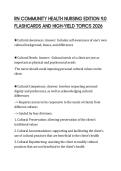
◉ Cultural Awareness. Answer: Includes self-awareness of one's own
cultural background, biases, and differences
◉ Cultural Needs. Answer: -Cultural needs of a client are just as
important as physical and psychosocial needs
-The nurse should avoid imposing personal cultural values on the
client
◉ Cultural Competence. Answer: Involves respecting personal
dignity and preferences, as well as acknowledging cultural
differences
--> Requires nurses to be responsive to the needs of clients from
different cultures
--> Guided by four divisions:
1. Cultural Preservation: allowing preservation of the client's
traditional values
2. Cultural Accommodation: supporting and facilitating the client's
use of cultural practices that are beneficial to the client's health
3. Cultural Repatterning: assisting the client to modify cultural
practices that are not beneficial to the client's health
,4. Cultural Brokering: advocating, mediating, negotiating, and
intervening between the client's culture and health care culture on
behalf of the client
◉ Cultural Assessment. Answer: Provides information to the HCP
about the effect of culture on communication, space and physical
contact, time, social organization, and environmental control factors
--> Environmental control: indicates the belief in how the
environment affects the individual
EX: harmony with the environment = more likely to use alternative
medicine and spirituality to promote balance in health status
--> Time orientation: describes whether an individual places more
value on the past, the present, or the future
EX: little interest in health promotion behaviors
--> Social organization: describes the significance of individual
members of a family or the family as a whole
EX: single family member that is not the client might be the decision
maker in the family; an individual might forgo her own health care
needs for the sake of the good of the family
--> Health beliefs and practices: whatever an individual believes is
the cause of impaired health will affect actions the individual will
take to treat or prevent disease
- Biomedical belief: Focus on identifying the cause for every effect on
the body; That the body functions like a machine
,-Naturalistic belief: Relate the individual as a part of nature or
creation; An imbalance in nature is believed to cause disease;
Eastern or Chinese medicine; Mexican culture follow the hot-cold
theory of balance
-Magico-religious belief: Link health to supernatural forces, or good
and evil; Belief in faith healing used by some christian religions;
Voodoo and whichcraft practices used in Caribbean nations
◉ Biological variations in health. Answer: Linked to genetic ties from
biological relatives
◉ Using an Interpreter. Answer: -Use an interpreter when it is
difficult for a nurse or client to understand the others language
-Interpreters should have knowledge of health-related terminology
-The use of family members as interpreters is not advisable because
clients might need privacy, family members can lack objectivity, and
family members can have difficulty understanding medical
terminology
-Nurse should consider the clients preferences when selecting the
age and gender of an interpreter
-Interpreters should not be from the same community as the client
◉ Conveying Cultural Sensitivity. Answer: -Address clients by their
last name unless the client gives permission to use other names
-Introduce yourself by name and position
, -Be authentic and honest
-Use culturally sensitive language
-Find out what the client knows about their health problems and
treatment
-Incorporate clients' preferences and practices
-Do not make assumptions about clients
-Encourage clients to ask about anything they are unsure about
-Respect clients' values, beliefs, and practices
-Show respect for clients' support systems
-Provide health teaching materials in the client's primary language
◉ Environmental Health. Answer: Relates to the quality of the air,
lans, water, and other surroundings to which people come into
contact with
--> Nurses identify environmental health risk, participate in
research, and use advocacy to improve environmental quality
--> Nurses engage in environmentally friendly practices and use of
material as well as providing information to the public about
environmental health
--> Nurse use toxicological information to understand the specific
effects that environmental hazards have on populations at risk or
following an exposure (Toxicology considers how exposure to
chemicals can have negative effects on health)
FLASHCARDS AND HIGH-YIELD TOPICS 2026
◉ Cultural Awareness. Answer: Includes self-awareness of one's own
cultural background, biases, and differences
◉ Cultural Needs. Answer: -Cultural needs of a client are just as
important as physical and psychosocial needs
-The nurse should avoid imposing personal cultural values on the
client
◉ Cultural Competence. Answer: Involves respecting personal
dignity and preferences, as well as acknowledging cultural
differences
--> Requires nurses to be responsive to the needs of clients from
different cultures
--> Guided by four divisions:
1. Cultural Preservation: allowing preservation of the client's
traditional values
2. Cultural Accommodation: supporting and facilitating the client's
use of cultural practices that are beneficial to the client's health
3. Cultural Repatterning: assisting the client to modify cultural
practices that are not beneficial to the client's health
,4. Cultural Brokering: advocating, mediating, negotiating, and
intervening between the client's culture and health care culture on
behalf of the client
◉ Cultural Assessment. Answer: Provides information to the HCP
about the effect of culture on communication, space and physical
contact, time, social organization, and environmental control factors
--> Environmental control: indicates the belief in how the
environment affects the individual
EX: harmony with the environment = more likely to use alternative
medicine and spirituality to promote balance in health status
--> Time orientation: describes whether an individual places more
value on the past, the present, or the future
EX: little interest in health promotion behaviors
--> Social organization: describes the significance of individual
members of a family or the family as a whole
EX: single family member that is not the client might be the decision
maker in the family; an individual might forgo her own health care
needs for the sake of the good of the family
--> Health beliefs and practices: whatever an individual believes is
the cause of impaired health will affect actions the individual will
take to treat or prevent disease
- Biomedical belief: Focus on identifying the cause for every effect on
the body; That the body functions like a machine
,-Naturalistic belief: Relate the individual as a part of nature or
creation; An imbalance in nature is believed to cause disease;
Eastern or Chinese medicine; Mexican culture follow the hot-cold
theory of balance
-Magico-religious belief: Link health to supernatural forces, or good
and evil; Belief in faith healing used by some christian religions;
Voodoo and whichcraft practices used in Caribbean nations
◉ Biological variations in health. Answer: Linked to genetic ties from
biological relatives
◉ Using an Interpreter. Answer: -Use an interpreter when it is
difficult for a nurse or client to understand the others language
-Interpreters should have knowledge of health-related terminology
-The use of family members as interpreters is not advisable because
clients might need privacy, family members can lack objectivity, and
family members can have difficulty understanding medical
terminology
-Nurse should consider the clients preferences when selecting the
age and gender of an interpreter
-Interpreters should not be from the same community as the client
◉ Conveying Cultural Sensitivity. Answer: -Address clients by their
last name unless the client gives permission to use other names
-Introduce yourself by name and position
, -Be authentic and honest
-Use culturally sensitive language
-Find out what the client knows about their health problems and
treatment
-Incorporate clients' preferences and practices
-Do not make assumptions about clients
-Encourage clients to ask about anything they are unsure about
-Respect clients' values, beliefs, and practices
-Show respect for clients' support systems
-Provide health teaching materials in the client's primary language
◉ Environmental Health. Answer: Relates to the quality of the air,
lans, water, and other surroundings to which people come into
contact with
--> Nurses identify environmental health risk, participate in
research, and use advocacy to improve environmental quality
--> Nurses engage in environmentally friendly practices and use of
material as well as providing information to the public about
environmental health
--> Nurse use toxicological information to understand the specific
effects that environmental hazards have on populations at risk or
following an exposure (Toxicology considers how exposure to
chemicals can have negative effects on health)


