

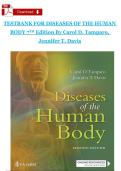
TESTBANK FOR DISEASES OF THE HUMAN
BODY 7TH Edition By Carol D. Tamparo,
Jennifer T. Davis
, Table of Contents hr hr
Chapter 1. The Disease Process ............................................................ 1
hr hr hr hr
Chapter 2. Integrative Medicine and Complementary Therapies .................. 9
hr hr hr hr hr hr
Chapter 3. Pain and Its Management .................................................... 17
hr hr hr hr hr
Chapter 4. Infectious and Communicable Diseases ................................. 24
hr hr hr hr hr
Chapter 5. Cancer ........................................................................... 31
hr hr
Chapter 6. Congenital Diseases and Disorders ....................................... 40
hr hr hr hr hr
Chapter 7. Mental Health Diseases and Disorders ................................... 51
hr hr hr hr hr hr
Chapter 8. Skin Diseases and Disorders................................................ 61
hr hr hr hr hr
Chapter 9. Musculoskeletal Diseases and Disorders ................................ 68
hr hr hr hr hr
Chapter 10. Nervous System Diseases and Disorders .............................. 76
hr hr hr hr hr hr
Chapter 11. Endocrine System Diseases and Disorders ............................ 87
hr hr hr hr hr hr
Chapter 12. Cardiovascular and Lymphatic System Diseases and Disorders.. 95
hr hr hr hr hr hr hr hr
Chapter 13. Respiratory System Diseases and Disorders........................ 109
hr hr hr hr hr hr
Chapter 14. Digestive System Diseases and Disorders ........................... 120
hr hr hr hr hr hr
Chapter 15. Urinary System Diseases and Disorders ............................. 130
hr hr hr hr hr hr
Chapter 16. Reproductive System Diseases and Disorders...................... 138
hr hr hr hr hr hr
Chapter 17. Eye and Ear Diseases and Disorders ................................... 145
hr hr hr hr hr hr hr
, Chapter 1. The Disease Process
hr hr hr hr
MULTIPLE CHOICE hr
1. Which of the following best describes an illnes
hr hr hr hr hr hr hr
s
A. It is identified by the distinguishing features.
hr hr hr hr hr hr
B. It can be prevented by normal body structures.
hr hr hr hr hr hr hr
C. It is easier to treat than disease.
hr hr hr hr hr hr
D. It describes the condition of the person experiencing disease.
hr hr hr hr hr hr hr hr
ANSWER : D PTS: hr h r h r h r 1 DIF: Easy OBJ: h r h r 1.3
MSC: Understanding
h r
2. What is the difference between phenotype and genotype?
hr hr hr hr hr hr hr
A. Phenotype refers to all of the genes inherited from parents, whereas genhr hr hr hr hr hr hr hr hr hr hr
otype refers to an X-linked inherited disease.
hr hr hr hr hr hr
B. Phenotype refers to physical appearance influenced by genetics and environment, whe
hr hr hr hr hr hr hr hr hr hr
reas
genotype refers to all of the genes inherited from parents. hr hr hr hr hr hr hr hr hr
C. Phenotype refers to a defective gene contributed by both parents, whereas genotype
hr hr hr hr hr hr hr hr hr hr hr
refers to a defective gene contributed by one parent.
hr hr hr hr hr hr hr hr
D. Phenotype refers to the full set of inherited genes, whereas genoty hr hr hr hr hr hr hr hr hr hr
pe refers to monogenic alterations and chromosome aberrations.
hr hr hr hr hr hr hr
ANSWER : B PTS: hr h r h r h r 1 DIF: Moderate OBJ: h r h r 1.7
MSC: Analyzing h r
3. Gregory is 11. He has a specific genetic disorder. He is very active
hr hr hr hr hr hr hr hr hr hr hr hr
but must be extremely careful to avoid any injury that would ca
hr hr hr hr hr hr hr hr hr hr hr hr
use bleeding. Which disorder does Gregory most likely have?
hr hr hr hr hr hr hr hr
A. Sickle cell anemia hr hr
B. Rett syndrome hr
C. Hemophilia
D. Trisomy 21 hr
ANSWER : C hr h r PTS: h r h r 1 DIF: Moderate OBJ: h r h r 1.9
MSC: Applying h r
4. The pediatrician called to say that Sheyna’s throat culture was b
hr hr hr hr hr hr hr hr hr hr
ack. The test revealed a coccus, or dot-
hr hr hr hr hr hr hr
shaped bacterium. What does Sheyna have?
hr hr hr hr hr hr
A. Strep throat hr
B. Whooping cough hr
C. Mumps
D. Tinea corporis hr
ANSWER : A hr h r PTS: h r h r 1 DIF: Moderate OBJ: h r h r 1.13
MSC: Applying h r
5. Molly is overweight and smokes a pack of cigarettes a day. She lives
hr hr hr hr hr hr hr hr hr hr hr hr
with her husband and five children in a densely populated urban are
hr hr hr hr hr hr hr hr hr hr hr hr
a.
, 6. What are the factors that predispose Molly to developing a disease?
hr hr hr hr hr hr hr hr hr hr hr
A. Lack of an inflammatory response hr hr hr hr
B. Sex, environment, and lifestyle hr hr hr
C. Having a husband and five children hr hr hr hr hr
D. Lack of homeostasis hr hr
ANSWER : B hr h r PTS: h r h r 1 DIF: Moderate OBJ: h r h r 1.4
MSC: Applying h r
7. Which of the following is a brief description of hereditary diseases?
hr hr hr hr hr hr hr hr hr hr
A. Always appear at birth hr hr hr
B. Not influenced by environmental factors
hr hr hr hr
C. Caused by a person’s genetic makeup hr hr hr hr hr
D. The result of mutations in gene structure
hr hr hr hr hr hr
ANSWER : C PTS: hr h r h r h r 1 DIF: Easy OBJ: h r h r 1.5
MSC: Remembering h r
8. What is anaphylactic shock?
hr hr hr
A. Considered by some to be an allergic reaction hr hr hr hr hr hr hr
B. A result of autoimmunity
hr hr hr
C. A chronic reaction to stimuli
hr hr hr hr
D. The result of impaired T-cell function
hr hr hr hr hr
ANSWER : A PTS: hr h r h r h r 1 DIF: Easy OBJ: h r h r 1.21
MSC: Remembering h r
9. Malakai appears to be in good shape. During a recent physical, hi
hr hr hr hr hr hr hr hr hr hr hr
s BMI was measured at 15% above his ideal body weight. Should
hr hr hr hr hr hr hr hr hr hr hr hr
Malakai be described as obese? Why or why not? hr hr hr hr hr hr hr hr
A. Yes, because his BMI is less than 25
hr hr hr hr hr hr hr
B. No, because he has impressive muscle mass in his body
hr hr hr hr hr hr hr hr hr
C. No, because he has little or no abdominal fat
hr hr hr hr hr hr hr hr
D. Yes, because his BMI is 10% to 20% above his ideal body weight
hr hr hr hr hr hr hr hr hr hr hr hr
ANSWER : D PTS: hr h r h r h r 1 DIF: Moderate OBJ: h r h r 1.23
MSC: Analyzing h r
10. The conventional method of classifying hereditary disease
hr hr hr hr hr hr
s is to group them into which of the following categories?
hr hr hr hr hr hr hr hr hr hr
A. Congenital, mutational, and infectious hr hr hr
B. Chromosomal, multifactorial, and monogenic hr hr hr
C. Monogenic, chromosomal, and congenital hr hr hr
D. Chromosomal, mutational, and autoimmune hr hr hr
ANSWER : B PTS: hr h r h r h r 1 DIF: Easy OBJ: h r h r 1.7
MSC: Remembering h r
11. Alice’s annual mammogram showed three suspicious neopla
hr hr hr hr hr hr
sms. Needle biopsies revealed that two were benign. What i
hr hr hr hr hr hr hr hr hr
s the likely disease demonstrated by the third neoplasm?
hr hr hr hr hr hr hr hr
A. Cancer
B. Leukemia
C. Cysts
D. Inflammation
ANSWER : A hr h r PTS: h r h r 1 DIF: Moderate OBJ: h r h r 1.4
MSC: Applying h r
BODY 7TH Edition By Carol D. Tamparo,
Jennifer T. Davis
, Table of Contents hr hr
Chapter 1. The Disease Process ............................................................ 1
hr hr hr hr
Chapter 2. Integrative Medicine and Complementary Therapies .................. 9
hr hr hr hr hr hr
Chapter 3. Pain and Its Management .................................................... 17
hr hr hr hr hr
Chapter 4. Infectious and Communicable Diseases ................................. 24
hr hr hr hr hr
Chapter 5. Cancer ........................................................................... 31
hr hr
Chapter 6. Congenital Diseases and Disorders ....................................... 40
hr hr hr hr hr
Chapter 7. Mental Health Diseases and Disorders ................................... 51
hr hr hr hr hr hr
Chapter 8. Skin Diseases and Disorders................................................ 61
hr hr hr hr hr
Chapter 9. Musculoskeletal Diseases and Disorders ................................ 68
hr hr hr hr hr
Chapter 10. Nervous System Diseases and Disorders .............................. 76
hr hr hr hr hr hr
Chapter 11. Endocrine System Diseases and Disorders ............................ 87
hr hr hr hr hr hr
Chapter 12. Cardiovascular and Lymphatic System Diseases and Disorders.. 95
hr hr hr hr hr hr hr hr
Chapter 13. Respiratory System Diseases and Disorders........................ 109
hr hr hr hr hr hr
Chapter 14. Digestive System Diseases and Disorders ........................... 120
hr hr hr hr hr hr
Chapter 15. Urinary System Diseases and Disorders ............................. 130
hr hr hr hr hr hr
Chapter 16. Reproductive System Diseases and Disorders...................... 138
hr hr hr hr hr hr
Chapter 17. Eye and Ear Diseases and Disorders ................................... 145
hr hr hr hr hr hr hr
, Chapter 1. The Disease Process
hr hr hr hr
MULTIPLE CHOICE hr
1. Which of the following best describes an illnes
hr hr hr hr hr hr hr
s
A. It is identified by the distinguishing features.
hr hr hr hr hr hr
B. It can be prevented by normal body structures.
hr hr hr hr hr hr hr
C. It is easier to treat than disease.
hr hr hr hr hr hr
D. It describes the condition of the person experiencing disease.
hr hr hr hr hr hr hr hr
ANSWER : D PTS: hr h r h r h r 1 DIF: Easy OBJ: h r h r 1.3
MSC: Understanding
h r
2. What is the difference between phenotype and genotype?
hr hr hr hr hr hr hr
A. Phenotype refers to all of the genes inherited from parents, whereas genhr hr hr hr hr hr hr hr hr hr hr
otype refers to an X-linked inherited disease.
hr hr hr hr hr hr
B. Phenotype refers to physical appearance influenced by genetics and environment, whe
hr hr hr hr hr hr hr hr hr hr
reas
genotype refers to all of the genes inherited from parents. hr hr hr hr hr hr hr hr hr
C. Phenotype refers to a defective gene contributed by both parents, whereas genotype
hr hr hr hr hr hr hr hr hr hr hr
refers to a defective gene contributed by one parent.
hr hr hr hr hr hr hr hr
D. Phenotype refers to the full set of inherited genes, whereas genoty hr hr hr hr hr hr hr hr hr hr
pe refers to monogenic alterations and chromosome aberrations.
hr hr hr hr hr hr hr
ANSWER : B PTS: hr h r h r h r 1 DIF: Moderate OBJ: h r h r 1.7
MSC: Analyzing h r
3. Gregory is 11. He has a specific genetic disorder. He is very active
hr hr hr hr hr hr hr hr hr hr hr hr
but must be extremely careful to avoid any injury that would ca
hr hr hr hr hr hr hr hr hr hr hr hr
use bleeding. Which disorder does Gregory most likely have?
hr hr hr hr hr hr hr hr
A. Sickle cell anemia hr hr
B. Rett syndrome hr
C. Hemophilia
D. Trisomy 21 hr
ANSWER : C hr h r PTS: h r h r 1 DIF: Moderate OBJ: h r h r 1.9
MSC: Applying h r
4. The pediatrician called to say that Sheyna’s throat culture was b
hr hr hr hr hr hr hr hr hr hr
ack. The test revealed a coccus, or dot-
hr hr hr hr hr hr hr
shaped bacterium. What does Sheyna have?
hr hr hr hr hr hr
A. Strep throat hr
B. Whooping cough hr
C. Mumps
D. Tinea corporis hr
ANSWER : A hr h r PTS: h r h r 1 DIF: Moderate OBJ: h r h r 1.13
MSC: Applying h r
5. Molly is overweight and smokes a pack of cigarettes a day. She lives
hr hr hr hr hr hr hr hr hr hr hr hr
with her husband and five children in a densely populated urban are
hr hr hr hr hr hr hr hr hr hr hr hr
a.
, 6. What are the factors that predispose Molly to developing a disease?
hr hr hr hr hr hr hr hr hr hr hr
A. Lack of an inflammatory response hr hr hr hr
B. Sex, environment, and lifestyle hr hr hr
C. Having a husband and five children hr hr hr hr hr
D. Lack of homeostasis hr hr
ANSWER : B hr h r PTS: h r h r 1 DIF: Moderate OBJ: h r h r 1.4
MSC: Applying h r
7. Which of the following is a brief description of hereditary diseases?
hr hr hr hr hr hr hr hr hr hr
A. Always appear at birth hr hr hr
B. Not influenced by environmental factors
hr hr hr hr
C. Caused by a person’s genetic makeup hr hr hr hr hr
D. The result of mutations in gene structure
hr hr hr hr hr hr
ANSWER : C PTS: hr h r h r h r 1 DIF: Easy OBJ: h r h r 1.5
MSC: Remembering h r
8. What is anaphylactic shock?
hr hr hr
A. Considered by some to be an allergic reaction hr hr hr hr hr hr hr
B. A result of autoimmunity
hr hr hr
C. A chronic reaction to stimuli
hr hr hr hr
D. The result of impaired T-cell function
hr hr hr hr hr
ANSWER : A PTS: hr h r h r h r 1 DIF: Easy OBJ: h r h r 1.21
MSC: Remembering h r
9. Malakai appears to be in good shape. During a recent physical, hi
hr hr hr hr hr hr hr hr hr hr hr
s BMI was measured at 15% above his ideal body weight. Should
hr hr hr hr hr hr hr hr hr hr hr hr
Malakai be described as obese? Why or why not? hr hr hr hr hr hr hr hr
A. Yes, because his BMI is less than 25
hr hr hr hr hr hr hr
B. No, because he has impressive muscle mass in his body
hr hr hr hr hr hr hr hr hr
C. No, because he has little or no abdominal fat
hr hr hr hr hr hr hr hr
D. Yes, because his BMI is 10% to 20% above his ideal body weight
hr hr hr hr hr hr hr hr hr hr hr hr
ANSWER : D PTS: hr h r h r h r 1 DIF: Moderate OBJ: h r h r 1.23
MSC: Analyzing h r
10. The conventional method of classifying hereditary disease
hr hr hr hr hr hr
s is to group them into which of the following categories?
hr hr hr hr hr hr hr hr hr hr
A. Congenital, mutational, and infectious hr hr hr
B. Chromosomal, multifactorial, and monogenic hr hr hr
C. Monogenic, chromosomal, and congenital hr hr hr
D. Chromosomal, mutational, and autoimmune hr hr hr
ANSWER : B PTS: hr h r h r h r 1 DIF: Easy OBJ: h r h r 1.7
MSC: Remembering h r
11. Alice’s annual mammogram showed three suspicious neopla
hr hr hr hr hr hr
sms. Needle biopsies revealed that two were benign. What i
hr hr hr hr hr hr hr hr hr
s the likely disease demonstrated by the third neoplasm?
hr hr hr hr hr hr hr hr
A. Cancer
B. Leukemia
C. Cysts
D. Inflammation
ANSWER : A hr h r PTS: h r h r 1 DIF: Moderate OBJ: h r h r 1.4
MSC: Applying h r


