Exam 3:NUR 155 Foundations of nursing Exam 3 :Study Guide: Latest Updated A+ Score Guide
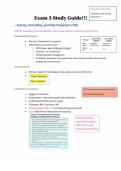
Musculoskeletal System: • Normal – Framework for movement • Altered Structure and Function o ROM helps – push to the point of pain! o Footdrop – w/ muscle loss o Arthritis and pain management o Immobility, weakness, low muscle tone, loss of bone/muscle mass, muscle atrophy, and contractures Nervous System: • Normal – Signal to move (drugs, stroke, spinal cord injury affect this) • Cardiopulmonary System: • Oxygen and nutrients • Rotate q2hrs – helps with lung and skin breakdown • COPD cannot do ADLs due to oxygen • Orthostatic BP= 20 pt drop, ↑HR • IS to help breath 10X / hr = 5-10 times during commercials • SCD – puffy boots to keep blood from pooling Paresis = Weakness Plegia = paralyzed SCD= Sequential compression device IS= Incentive Spirometer Pooled blood and weak calf muscles → DVT= Pain in calf, redness, and swelling *Feature Passive ROM (PROM) Active ROM (AROM) Who Moves Therapist or external force The person themselves Muscle Use No Yes Know from class = pink Outlined for the test she went over = *Nutrition: • BMR low • Negative nitrogen balance • Continued immobility may lead to anorexia and nausea (offer lean protein and smaller more frequent meals) Elimination: • Fiber, Fluid, Movement • Urinary stasis →UTI, Renal Calculi • Toileting program Skin: • Pressure Injuries Braden Scale = Predicting Pressure Injury • Sensory perception, Moisture, Activity, Mobility, Nutrition, Friction & Shear • Score 1- 4 (lower # = More risk) • 19 – 23 = NO RISK • ≤ 9 = VERY HIGH RISK Nursing Diagnosis Examples: • Impaired mobility • Risk for fall • Activity intolerance (COPD, Post-op after anesthesia)
Document information
- Uploaded on
- September 1, 2026
- Number of pages
- 18
- Written in
- 2026/2027
- Type
- Exam (elaborations)
- Contains
- Questions & answers