NURS 6660: PMHNP ROLE I: CHILD & ADOLESCENT FINAL EXAM 2026-2027 UPDATED EDITION
REVIEWED TEST: QUESTIONS AND
ANSWERS(2022_2023) NURS 6660 FINAL.DOCX
2026–2027 UPDATED EXAM 100% (VERIFIED
ANSWERS) | A+ GRADE BRAND NEW
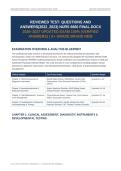
EXAMINATION OVERVIEW & ANALYSIS BLUEPRINT
This professional study resource is developed directly from the official Reviewed test Questions and
Answers(2022_2023) nurs 6660 final.docx resource. It is meticulously designed for Psychiatric-Mental Health
Nurse Practitioner (PMHNP) students preparing for board certification and comprehensive exams in Child and
Adolescent Psychiatric-Mental Health. The exam focuses on core competencies including pediatric clinical
assessment, diagnostic instruments, neurodevelopmental disorders, child abuse, and psychopharmacologic
management.
Clinical Chapter Core Focus Areas Question Range
Chapter 1: Clinical Assessment & Mental Status Exams, Affect/Mood, Parent-Child Questions 1–13
Diagnostic Instruments Observations, Semi-Structured Interviews (CAPA,
ChIPS)
Chapter 2: Neurodevelopmental & Autism Spectrum Disorder, ADHD Rating Scales, Questions 14–26
Behavioral Disorders Selective Mutism, Neurological Hard Signs
Chapter 3: Child Maltreatment, Trauma & Physical/Sexual Abuse, Trauma Care, Post-Violence Questions 27–39
Crisis Management Safety, Dissociative Disorders
Chapter 4: Preadolescent & Adolescent Suicide Assessment, Hostile Adolescents, Brief Questions 40–52
Psychopathology & Therapy Psychotic Disorder, CBT, Pediatric Somatic Disorders
CHAPTER 1: CLINICAL ASSESSMENT, DIAGNOSTIC INSTRUMENTS &
DEVELOPMENTAL TESTING
Exam 100% (VERIFIED ANSWERS) | A+ GRADE BRAND NEW
Page 1
,NURS 6660: PMHNP ROLE I: CHILD & ADOLESCENT FINAL EXAM 2026-2027 UPDATED EDITION
Question 1: The PMHNP is evaluating a 15-year-old male patient who has been referred by his
court-appointed guardian. He has been in foster care for the last 6 years and maintained a
steady pattern of low-level behavior problems such as skipping school and ignoring curfew. He
is not openly defiant and has always been described as a "loner." He just does not follow most
rules. During the mental status examination, the PMHNP notes that his expressions are
sometimes inconsistent with the topic of conversation, and he does not seem to be able to
transition effectively among levels of emotion. This represents an abnormality in:
A. Mood
B. Affect
C. Thought process and content
D. Judgment and insight
ANSWER : B. Affect
Explanation: Affect refers to the objective, observable expression of emotion on a patient's face or through their
body language. Abnormalities in affect include flatness, blunting, or incongruence/inconsistency with the topic of
conversation, and an inability to transition effectively among levels of emotion. Mood, by contrast, is the subjective,
sustained emotional state reported by the patient. Thought process and content refer to how thoughts are
organized and what is being thought, and judgment and insight refer to decision-making and awareness of illness.
Question 2: A variety of diagnostic instruments are available to assist the PMHNP with
comprehensive data collection. Which of the following tools is considered an
"interviewer-based" tool designed as a guide to clinicians to help clarify answers to questions?
A. The Children's Interview for Psychiatric Symptoms (ChIPS)
B. The Diagnostic Interview for Children and Adolescents (DICA)
C. The Pictorial Instrument for Children and Adolescents (PICA-III-R)
D. The Child and Adolescent Psychiatric Assessment (CAPA)
ANSWER : D. The Child and Adolescent Psychiatric Assessment (CAPA)
Explanation: The Child and Adolescent Psychiatric Assessment (CAPA) is a semi-structured, interviewer-based
diagnostic interview designed for use with children and their parents. It is interviewer-based because the
interviewer has the flexibility to probe and clarify answers to questions, rather than simply reading questions
exactly as written. ChIPS and DICA are respondent-based structured interviews, where the interviewer reads
questions exactly as written and does not probe or clarify. PICA-III-R is a pictorial instrument designed for younger
children.
Exam 100% (VERIFIED ANSWERS) | A+ GRADE BRAND NEW
Page 2
, NURS 6660: PMHNP ROLE I: CHILD & ADOLESCENT FINAL EXAM 2026-2027 UPDATED EDITION
Question 3: Kevin is a 15-year-old male who presents for a court-ordered psychiatric
assessment. Kevin comes to his first appointment with both of his parents. He is sitting in the
chair with his arms crossed and responds with "yes" and "no" answers to direct questions;
otherwise, he volunteers no information. The parents are clearly upset and indicate they just
"don't know what to do with him anymore." The most appropriate action for the PMHNP would
be to:
A. Ask the parents to step out and interview Kevin privately
B. Have Kevin complete the standardized-testing assessment
C. Schedule session two after reviewing court documentation
D. Arrange for three sessions with a family therapist then reevaluate Kevin
ANSWER : A. Ask the parents to step out and interview Kevin privately
Explanation: In adolescent psychiatric assessments, particularly when the patient is hostile, defensive, or
non-communicative in front of their parents, interviewing the adolescent privately is essential. This allows the
PMHNP to establish rapport, ensure confidentiality within appropriate limits, and reduce the pressure or conflict
between the adolescent and their parents, which often causes the adolescent to shut down.
Question 4: The PMHNP observes separation from and reunion with the parent as part of the
mental status exam of a 25-month-old toddler. Extremes of emotion during separation or
reunion are most consistent with:
A. Normal developmental progression at that age
B. Cognitive dysfunction
C. Neurologic dysfunction
D. Problems with the parent-child relationship
ANSWER : D. Problems with the parent-child relationship
Explanation: Observations of separation and reunion during the mental status exam of a toddler (such as a
25-month-old) provide critical information about attachment and the quality of the parent-child relationship.
Extremes of emotion (such as intense, inconsolable distress upon separation or refusal to seek comfort/hostility
upon reunion) are key indicators of insecure attachment or problems in the parent-child relationship, rather than
normal development or cognitive/neurological dysfunction.
Exam 100% (VERIFIED ANSWERS) | A+ GRADE BRAND NEW
Page 3
REVIEWED TEST: QUESTIONS AND
ANSWERS(2022_2023) NURS 6660 FINAL.DOCX
2026–2027 UPDATED EXAM 100% (VERIFIED
ANSWERS) | A+ GRADE BRAND NEW
EXAMINATION OVERVIEW & ANALYSIS BLUEPRINT
This professional study resource is developed directly from the official Reviewed test Questions and
Answers(2022_2023) nurs 6660 final.docx resource. It is meticulously designed for Psychiatric-Mental Health
Nurse Practitioner (PMHNP) students preparing for board certification and comprehensive exams in Child and
Adolescent Psychiatric-Mental Health. The exam focuses on core competencies including pediatric clinical
assessment, diagnostic instruments, neurodevelopmental disorders, child abuse, and psychopharmacologic
management.
Clinical Chapter Core Focus Areas Question Range
Chapter 1: Clinical Assessment & Mental Status Exams, Affect/Mood, Parent-Child Questions 1–13
Diagnostic Instruments Observations, Semi-Structured Interviews (CAPA,
ChIPS)
Chapter 2: Neurodevelopmental & Autism Spectrum Disorder, ADHD Rating Scales, Questions 14–26
Behavioral Disorders Selective Mutism, Neurological Hard Signs
Chapter 3: Child Maltreatment, Trauma & Physical/Sexual Abuse, Trauma Care, Post-Violence Questions 27–39
Crisis Management Safety, Dissociative Disorders
Chapter 4: Preadolescent & Adolescent Suicide Assessment, Hostile Adolescents, Brief Questions 40–52
Psychopathology & Therapy Psychotic Disorder, CBT, Pediatric Somatic Disorders
CHAPTER 1: CLINICAL ASSESSMENT, DIAGNOSTIC INSTRUMENTS &
DEVELOPMENTAL TESTING
Exam 100% (VERIFIED ANSWERS) | A+ GRADE BRAND NEW
Page 1
,NURS 6660: PMHNP ROLE I: CHILD & ADOLESCENT FINAL EXAM 2026-2027 UPDATED EDITION
Question 1: The PMHNP is evaluating a 15-year-old male patient who has been referred by his
court-appointed guardian. He has been in foster care for the last 6 years and maintained a
steady pattern of low-level behavior problems such as skipping school and ignoring curfew. He
is not openly defiant and has always been described as a "loner." He just does not follow most
rules. During the mental status examination, the PMHNP notes that his expressions are
sometimes inconsistent with the topic of conversation, and he does not seem to be able to
transition effectively among levels of emotion. This represents an abnormality in:
A. Mood
B. Affect
C. Thought process and content
D. Judgment and insight
ANSWER : B. Affect
Explanation: Affect refers to the objective, observable expression of emotion on a patient's face or through their
body language. Abnormalities in affect include flatness, blunting, or incongruence/inconsistency with the topic of
conversation, and an inability to transition effectively among levels of emotion. Mood, by contrast, is the subjective,
sustained emotional state reported by the patient. Thought process and content refer to how thoughts are
organized and what is being thought, and judgment and insight refer to decision-making and awareness of illness.
Question 2: A variety of diagnostic instruments are available to assist the PMHNP with
comprehensive data collection. Which of the following tools is considered an
"interviewer-based" tool designed as a guide to clinicians to help clarify answers to questions?
A. The Children's Interview for Psychiatric Symptoms (ChIPS)
B. The Diagnostic Interview for Children and Adolescents (DICA)
C. The Pictorial Instrument for Children and Adolescents (PICA-III-R)
D. The Child and Adolescent Psychiatric Assessment (CAPA)
ANSWER : D. The Child and Adolescent Psychiatric Assessment (CAPA)
Explanation: The Child and Adolescent Psychiatric Assessment (CAPA) is a semi-structured, interviewer-based
diagnostic interview designed for use with children and their parents. It is interviewer-based because the
interviewer has the flexibility to probe and clarify answers to questions, rather than simply reading questions
exactly as written. ChIPS and DICA are respondent-based structured interviews, where the interviewer reads
questions exactly as written and does not probe or clarify. PICA-III-R is a pictorial instrument designed for younger
children.
Exam 100% (VERIFIED ANSWERS) | A+ GRADE BRAND NEW
Page 2
, NURS 6660: PMHNP ROLE I: CHILD & ADOLESCENT FINAL EXAM 2026-2027 UPDATED EDITION
Question 3: Kevin is a 15-year-old male who presents for a court-ordered psychiatric
assessment. Kevin comes to his first appointment with both of his parents. He is sitting in the
chair with his arms crossed and responds with "yes" and "no" answers to direct questions;
otherwise, he volunteers no information. The parents are clearly upset and indicate they just
"don't know what to do with him anymore." The most appropriate action for the PMHNP would
be to:
A. Ask the parents to step out and interview Kevin privately
B. Have Kevin complete the standardized-testing assessment
C. Schedule session two after reviewing court documentation
D. Arrange for three sessions with a family therapist then reevaluate Kevin
ANSWER : A. Ask the parents to step out and interview Kevin privately
Explanation: In adolescent psychiatric assessments, particularly when the patient is hostile, defensive, or
non-communicative in front of their parents, interviewing the adolescent privately is essential. This allows the
PMHNP to establish rapport, ensure confidentiality within appropriate limits, and reduce the pressure or conflict
between the adolescent and their parents, which often causes the adolescent to shut down.
Question 4: The PMHNP observes separation from and reunion with the parent as part of the
mental status exam of a 25-month-old toddler. Extremes of emotion during separation or
reunion are most consistent with:
A. Normal developmental progression at that age
B. Cognitive dysfunction
C. Neurologic dysfunction
D. Problems with the parent-child relationship
ANSWER : D. Problems with the parent-child relationship
Explanation: Observations of separation and reunion during the mental status exam of a toddler (such as a
25-month-old) provide critical information about attachment and the quality of the parent-child relationship.
Extremes of emotion (such as intense, inconsolable distress upon separation or refusal to seek comfort/hostility
upon reunion) are key indicators of insecure attachment or problems in the parent-child relationship, rather than
normal development or cognitive/neurological dysfunction.
Exam 100% (VERIFIED ANSWERS) | A+ GRADE BRAND NEW
Page 3