

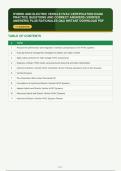
HYBRID AND ELECTRIC VEHICLE HVAC CERTIFICATION EXAM
PRACTICE QUESTIONS AND CORRECT ANSWERS (VERIFIED
ANSWERS) PLUS RATIONALES Q&A INSTANT DOWNLOAD PDF
118 QUESTIONS
TABLE OF CONTENTS
# TOPIC
1 Analyze the performance and integration of electric compressors in EV HVAC systems
2 Evaluate thermal management strategies for battery and cabin comfort
3 Apply safety protocols for high-voltage HVAC components
4 Diagnose complex HVAC faults using advanced reasoning and data interpretation
5 Hybrid and Electric Vehicle HVAC Certification Exam Practice Questions And Correct Answers
6 Verified Answers
7 Plus Rationales Q&A Instant Download Pdf
8 Foundations of Hybrid and Electric Vehicle HVAC Systems
9 Applied Hybrid and Electric Vehicle HVAC Systems
10 Advanced Hybrid and Electric Vehicle HVAC Systems
11 Hybrid and Electric Vehicle HVAC Systems Review
Page 1
,Q1 ANALYZE THE PERFORMANCE AND INTEGRATION OF ELECTRIC COMPRESSORS IN EV
HVAC SYSTEMS
In a direct expansion (DX) EV HVAC system, the electric compressor is controlled
by an inverter. During a high ambient temperature pull-down, the inverter limits
compressor speed to 6000 RPM despite a demand for 8000 RPM. Which parameter
is MOST likely the limiting factor?
A. Refrigerant superheat at evaporator outlet
B. Battery pack state of charge
C. Inverter junction temperature CORRECT
D. Evaporator coil surface temperature
RATIONALE: Inverters have thermal limits; junction temperature derating prevents overheating.
Superheat and evaporator temperature are controlled variables, not primary limits. Battery SOC
affects available power but not directly inverter speed limit.
Q2 ANALYZE THE PERFORMANCE AND INTEGRATION OF ELECTRIC COMPRESSORS IN EV
HVAC SYSTEMS
A technician is retrofitting an R134a system to R1234yf. Which action is mandatory
for safety and performance?
A. Flush the system with mineral oil
B. Replace all O-rings with HNBR type CORRECT
C. Increase the orifice tube diameter
D. Install a high-pressure cutoff at 300 psi
RATIONALE: R1234yf requires compatible seals; HNBR resists permeation. Flushing with
mineral oil is wrong-POE oil is used. Orifice tube changes are not standard. R1234yf
high-pressure cutoff is typically lower (~377 psi), not 300.
Page 2
,Q3 ANALYZE THE PERFORMANCE AND INTEGRATION OF ELECTRIC COMPRESSORS IN EV
HVAC SYSTEMS
In a heat pump system for an EV, the reversing valve switches to heating mode.
Which statement about the accumulator and receiver-drier is correct?
A. The accumulator is placed on the low-pressure side before the compressor; the receiver-drier
is on the high-pressure side after the condenser. CORRECT
B. The accumulator is placed on the high-pressure side after the condenser; the receiver-drier is
on the low-pressure side before the compressor.
C. Both are placed on the low-pressure side to ensure liquid refrigerant returns to the
compressor.
D. The receiver-drier is used only in cooling mode; the accumulator is used only in heating
mode.
RATIONALE: In heat pump systems, the accumulator protects the compressor from liquid
slugging in both modes, placed on the suction line. The receiver-drier stores liquid on the
high-pressure side. Option B reverses roles, C is incorrect, D is false as both are used in both
modes.
Q4 ANALYZE THE PERFORMANCE AND INTEGRATION OF ELECTRIC COMPRESSORS IN EV
HVAC SYSTEMS
An EV with a heat pump reports poor cabin heating when ambient is -10°C. The
refrigerant high-side pressure is 25 bar, low-side is 2 bar, and compressor speed
is maximum. Which is the MOST likely cause?
A. Low refrigerant charge
B. Faulty expansion valve stuck open
C. Blocked cabin air filter CORRECT
D. Malfunctioning positive temperature coefficient (PTC) heater
RATIONALE: Blocked cabin air filter reduces airflow over the condenser (in heating mode, indoor
coil), causing high high-side pressure and poor heat transfer. Low charge would give low
pressures. Expansion valve stuck open would cause low pressure differential. PTC heater is
separate and not related to refrigerant pressures.
Page 3
, Q5 ANALYZE THE PERFORMANCE AND INTEGRATION OF ELECTRIC COMPRESSORS IN EV
HVAC SYSTEMS
In a thermal management system, the battery chiller is integrated with the HVAC
refrigerant loop. During fast charging in summer, the chiller is active. Which
condition could cause the chiller to be bypassed?
A. Refrigerant low-pressure < 1.5 bar
B. Battery coolant temperature < 25°C CORRECT
C. HVAC compressor speed at maximum
D. Ambient temperature > 35°C
RATIONALE: If battery coolant is already cool (<25°C), the chiller may be bypassed to prevent
over-cooling and save energy. Low refrigerant pressure would be a fault, not a bypass condition.
Maximum compressor speed and high ambient would increase cooling demand, not bypass.
Q6 ANALYZE THE PERFORMANCE AND INTEGRATION OF ELECTRIC COMPRESSORS IN EV
HVAC SYSTEMS
A technician is diagnosing an HVAC system that blows warm air in cooling mode.
The high-side pressure is 10 bar (low), low-side is 1.5 bar (low). Which is the MOST
likely cause?
A. Restricted expansion valve
B. Compressor internal leak CORRECT
C. Overcharged system
D. Condenser fan not running
RATIONALE: Compressor internal leak (worn piston rings or reed valves) reduces pumping
efficiency, leading to low pressures and poor cooling. Restricted expansion valve would cause
high high-side and low low-side. Overcharge would give high pressures. Condenser fan failure
would raise high-side pressure.
Page 4
PRACTICE QUESTIONS AND CORRECT ANSWERS (VERIFIED
ANSWERS) PLUS RATIONALES Q&A INSTANT DOWNLOAD PDF
118 QUESTIONS
TABLE OF CONTENTS
# TOPIC
1 Analyze the performance and integration of electric compressors in EV HVAC systems
2 Evaluate thermal management strategies for battery and cabin comfort
3 Apply safety protocols for high-voltage HVAC components
4 Diagnose complex HVAC faults using advanced reasoning and data interpretation
5 Hybrid and Electric Vehicle HVAC Certification Exam Practice Questions And Correct Answers
6 Verified Answers
7 Plus Rationales Q&A Instant Download Pdf
8 Foundations of Hybrid and Electric Vehicle HVAC Systems
9 Applied Hybrid and Electric Vehicle HVAC Systems
10 Advanced Hybrid and Electric Vehicle HVAC Systems
11 Hybrid and Electric Vehicle HVAC Systems Review
Page 1
,Q1 ANALYZE THE PERFORMANCE AND INTEGRATION OF ELECTRIC COMPRESSORS IN EV
HVAC SYSTEMS
In a direct expansion (DX) EV HVAC system, the electric compressor is controlled
by an inverter. During a high ambient temperature pull-down, the inverter limits
compressor speed to 6000 RPM despite a demand for 8000 RPM. Which parameter
is MOST likely the limiting factor?
A. Refrigerant superheat at evaporator outlet
B. Battery pack state of charge
C. Inverter junction temperature CORRECT
D. Evaporator coil surface temperature
RATIONALE: Inverters have thermal limits; junction temperature derating prevents overheating.
Superheat and evaporator temperature are controlled variables, not primary limits. Battery SOC
affects available power but not directly inverter speed limit.
Q2 ANALYZE THE PERFORMANCE AND INTEGRATION OF ELECTRIC COMPRESSORS IN EV
HVAC SYSTEMS
A technician is retrofitting an R134a system to R1234yf. Which action is mandatory
for safety and performance?
A. Flush the system with mineral oil
B. Replace all O-rings with HNBR type CORRECT
C. Increase the orifice tube diameter
D. Install a high-pressure cutoff at 300 psi
RATIONALE: R1234yf requires compatible seals; HNBR resists permeation. Flushing with
mineral oil is wrong-POE oil is used. Orifice tube changes are not standard. R1234yf
high-pressure cutoff is typically lower (~377 psi), not 300.
Page 2
,Q3 ANALYZE THE PERFORMANCE AND INTEGRATION OF ELECTRIC COMPRESSORS IN EV
HVAC SYSTEMS
In a heat pump system for an EV, the reversing valve switches to heating mode.
Which statement about the accumulator and receiver-drier is correct?
A. The accumulator is placed on the low-pressure side before the compressor; the receiver-drier
is on the high-pressure side after the condenser. CORRECT
B. The accumulator is placed on the high-pressure side after the condenser; the receiver-drier is
on the low-pressure side before the compressor.
C. Both are placed on the low-pressure side to ensure liquid refrigerant returns to the
compressor.
D. The receiver-drier is used only in cooling mode; the accumulator is used only in heating
mode.
RATIONALE: In heat pump systems, the accumulator protects the compressor from liquid
slugging in both modes, placed on the suction line. The receiver-drier stores liquid on the
high-pressure side. Option B reverses roles, C is incorrect, D is false as both are used in both
modes.
Q4 ANALYZE THE PERFORMANCE AND INTEGRATION OF ELECTRIC COMPRESSORS IN EV
HVAC SYSTEMS
An EV with a heat pump reports poor cabin heating when ambient is -10°C. The
refrigerant high-side pressure is 25 bar, low-side is 2 bar, and compressor speed
is maximum. Which is the MOST likely cause?
A. Low refrigerant charge
B. Faulty expansion valve stuck open
C. Blocked cabin air filter CORRECT
D. Malfunctioning positive temperature coefficient (PTC) heater
RATIONALE: Blocked cabin air filter reduces airflow over the condenser (in heating mode, indoor
coil), causing high high-side pressure and poor heat transfer. Low charge would give low
pressures. Expansion valve stuck open would cause low pressure differential. PTC heater is
separate and not related to refrigerant pressures.
Page 3
, Q5 ANALYZE THE PERFORMANCE AND INTEGRATION OF ELECTRIC COMPRESSORS IN EV
HVAC SYSTEMS
In a thermal management system, the battery chiller is integrated with the HVAC
refrigerant loop. During fast charging in summer, the chiller is active. Which
condition could cause the chiller to be bypassed?
A. Refrigerant low-pressure < 1.5 bar
B. Battery coolant temperature < 25°C CORRECT
C. HVAC compressor speed at maximum
D. Ambient temperature > 35°C
RATIONALE: If battery coolant is already cool (<25°C), the chiller may be bypassed to prevent
over-cooling and save energy. Low refrigerant pressure would be a fault, not a bypass condition.
Maximum compressor speed and high ambient would increase cooling demand, not bypass.
Q6 ANALYZE THE PERFORMANCE AND INTEGRATION OF ELECTRIC COMPRESSORS IN EV
HVAC SYSTEMS
A technician is diagnosing an HVAC system that blows warm air in cooling mode.
The high-side pressure is 10 bar (low), low-side is 1.5 bar (low). Which is the MOST
likely cause?
A. Restricted expansion valve
B. Compressor internal leak CORRECT
C. Overcharged system
D. Condenser fan not running
RATIONALE: Compressor internal leak (worn piston rings or reed valves) reduces pumping
efficiency, leading to low pressures and poor cooling. Restricted expansion valve would cause
high high-side and low low-side. Overcharge would give high pressures. Condenser fan failure
would raise high-side pressure.
Page 4


