

al_Trauma_and_Orthopedic_Surgery.docx.pdf~~~~~~~~~~~~~~~~~~~~~~~~~!!!!!!!!!!!!!!!!!!!!@(&*#########################(@)@)@~~~~~~~~~~~~)))))))))))))))
62__Musculoskeletal_Trauma_and_Orthopedic_Surgery.docx.pdf~~~~~~~~~~~~~~~~~~~~~~~~~!!!!!!!!!!!!!!!!!!!!@(&*#########################(@)@)@~~~~~~~~~~~~)
_Chapter_62__Musculoskeletal_Trauma_and_Orthopedic_Surgery.docx.pdf~~~~~~~~~~~~~~~~~~~~~~~~~!!!!!!!!!!!!!!!!!!!!@(&*#########################(@)@
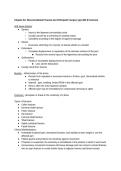
Chapter 62: Musculoskeletal Trauma and Orthopedic Surgery pg.1462 (Fractures)
Soft tissue injuries
● Sprains
○ Injury to the ligament surrounding a joint
○ Usually caused by a wrenching or twisting motion
○ Classified according to the degree of ligament damage
● Strains
○ Excessive stretching of a muscle, its fascial sheath or a tendon
● Dislocation
○ Complete displacement or separation of the articular surfaces of the joint
■ Results from severe injury of the ligaments surrounding the joint
● Subluxations
○ Partial or incomplete displacement of the joint surface
■ Less severe dislocation
● Usually result from trauma
Bursitis - inflammation of the bursa
● Results from repeated or excessive trauma or friction, gout, rheumatoid arthritis
or infection
● Warmth , pain, swelling, limited ROM in the affected part
● Rest is often the only treatment needed
● Affected part may be immobilized in compression dressing or splint
Fractures - disruption or break in the continuity of a bone
Types of fractures
● Colles fracture
● Humeral shaft fracture
● Pelvic fracture
● Hip fracture
● Femoral shaft fracture
● Tibial fracture
● Stable vertebral fracture
● Facial fracture
Clinical Manifestations
● Immediate localized pain, decreased function, and inability to bear weight or use the
affected part
● Patient guards and protects the extremity against movement
● If fracture is suspected, the extremity is immobilized in the position in which it was found
● Unnecessary movement increases soft tissue damage and can convert a closed fracture
into an open fracture or create further injury to adjacent nerves and blood vessels
al_Trauma_and_Orthopedic_Surgery.docx.pdf~~~~~~~~~~~~~~~~~~~~~~~~~!!!!!!!!!!!!!!!!!!!!@(&*#########################(@)@)@~~~~~~~~~~~~)))))))))))))))
62__Musculoskeletal_Trauma_and_Orthopedic_Surgery.docx.pdf~~~~~~~~~~~~~~~~~~~~~~~~~!!!!!!!!!!!!!!!!!!!!@(&*#########################(@)@)@~~~~~~~~~~~~)
_Chapter_62__Musculoskeletal_Trauma_and_Orthopedic_Surgery.docx.pdf~~~~~~~~~~~~~~~~~~~~~~~~~!!!!!!!!!!!!!!!!!!!!@(&*#########################(@)@
,al_Trauma_and_Orthopedic_Surgery.docx.pdf~~~~~~~~~~~~~~~~~~~~~~~~~!!!!!!!!!!!!!!!!!!!!@(&*#########################(@)@)@~~~~~~~~~~~~)))))))))))))))
62__Musculoskeletal_Trauma_and_Orthopedic_Surgery.docx.pdf~~~~~~~~~~~~~~~~~~~~~~~~~!!!!!!!!!!!!!!!!!!!!@(&*#########################(@)@)@~~~~~~~~~~~~)
_Chapter_62__Musculoskeletal_Trauma_and_Orthopedic_Surgery.docx.pdf~~~~~~~~~~~~~~~~~~~~~~~~~!!!!!!!!!!!!!!!!!!!!@(&*#########################(@)@
Classified as
● Complete - the break goes completely through the bone
● Incomplete - fracture occurs partly across a bone shaft, but the bone is still intact
● Displaced - two ends of the broken bone are separated from one another and out of their
normal positions
● Nondisplaced - periosteum is intact across the fracture and the bone fragments are still
in alignment
Types
● Open - skin is broken and bone exposed causing soft tissue injury
● Closed - skin remain intact
● Pathological (spontaneous)
● Fatigue or Stress
● Compression
Identified according to the direction of the fracture line
● Linear
● Oblique
● Transverse
● Longitudinal
● Spiral fractures
Presentation
● Pain/Tenderness
● False motion / Muscle Spasm - may displace nondisplaced fracture
● Deformity - cardinal sign of fracture
● Shortening
● Crepitus - can increase chance for nonunion
● Edema - increased risk of compartment syndrome
● Inflammation
● Altered sensation
● Ecchymosis / Contusion - reassure PT this process is normal and will resolve
● Loss of function - must be managed properly to ensure full restoration
● Shock?
*Confirm with X-Ray -- always assume break until it is ruled out!!*
Causes
● Blunt Trauma
○ Direct force
○ Twisting
○ Motor Vehicle Crash
○ Fall
○ Pedestrian event
○ Forced flexion / hyperextension
al_Trauma_and_Orthopedic_Surgery.docx.pdf~~~~~~~~~~~~~~~~~~~~~~~~~!!!!!!!!!!!!!!!!!!!!@(&*#########################(@)@)@~~~~~~~~~~~~)))))))))))))))
62__Musculoskeletal_Trauma_and_Orthopedic_Surgery.docx.pdf~~~~~~~~~~~~~~~~~~~~~~~~~!!!!!!!!!!!!!!!!!!!!@(&*#########################(@)@)@~~~~~~~~~~~~)
_Chapter_62__Musculoskeletal_Trauma_and_Orthopedic_Surgery.docx.pdf~~~~~~~~~~~~~~~~~~~~~~~~~!!!!!!!!!!!!!!!!!!!!@(&*#########################(@)@
62__Musculoskeletal_Trauma_and_Orthopedic_Surgery.docx.pdf~~~~~~~~~~~~~~~~~~~~~~~~~!!!!!!!!!!!!!!!!!!!!@(&*#########################(@)@)@~~~~~~~~~~~~)
_Chapter_62__Musculoskeletal_Trauma_and_Orthopedic_Surgery.docx.pdf~~~~~~~~~~~~~~~~~~~~~~~~~!!!!!!!!!!!!!!!!!!!!@(&*#########################(@)@
Chapter 62: Musculoskeletal Trauma and Orthopedic Surgery pg.1462 (Fractures)
Soft tissue injuries
● Sprains
○ Injury to the ligament surrounding a joint
○ Usually caused by a wrenching or twisting motion
○ Classified according to the degree of ligament damage
● Strains
○ Excessive stretching of a muscle, its fascial sheath or a tendon
● Dislocation
○ Complete displacement or separation of the articular surfaces of the joint
■ Results from severe injury of the ligaments surrounding the joint
● Subluxations
○ Partial or incomplete displacement of the joint surface
■ Less severe dislocation
● Usually result from trauma
Bursitis - inflammation of the bursa
● Results from repeated or excessive trauma or friction, gout, rheumatoid arthritis
or infection
● Warmth , pain, swelling, limited ROM in the affected part
● Rest is often the only treatment needed
● Affected part may be immobilized in compression dressing or splint
Fractures - disruption or break in the continuity of a bone
Types of fractures
● Colles fracture
● Humeral shaft fracture
● Pelvic fracture
● Hip fracture
● Femoral shaft fracture
● Tibial fracture
● Stable vertebral fracture
● Facial fracture
Clinical Manifestations
● Immediate localized pain, decreased function, and inability to bear weight or use the
affected part
● Patient guards and protects the extremity against movement
● If fracture is suspected, the extremity is immobilized in the position in which it was found
● Unnecessary movement increases soft tissue damage and can convert a closed fracture
into an open fracture or create further injury to adjacent nerves and blood vessels
al_Trauma_and_Orthopedic_Surgery.docx.pdf~~~~~~~~~~~~~~~~~~~~~~~~~!!!!!!!!!!!!!!!!!!!!@(&*#########################(@)@)@~~~~~~~~~~~~)))))))))))))))
62__Musculoskeletal_Trauma_and_Orthopedic_Surgery.docx.pdf~~~~~~~~~~~~~~~~~~~~~~~~~!!!!!!!!!!!!!!!!!!!!@(&*#########################(@)@)@~~~~~~~~~~~~)
_Chapter_62__Musculoskeletal_Trauma_and_Orthopedic_Surgery.docx.pdf~~~~~~~~~~~~~~~~~~~~~~~~~!!!!!!!!!!!!!!!!!!!!@(&*#########################(@)@
,al_Trauma_and_Orthopedic_Surgery.docx.pdf~~~~~~~~~~~~~~~~~~~~~~~~~!!!!!!!!!!!!!!!!!!!!@(&*#########################(@)@)@~~~~~~~~~~~~)))))))))))))))
62__Musculoskeletal_Trauma_and_Orthopedic_Surgery.docx.pdf~~~~~~~~~~~~~~~~~~~~~~~~~!!!!!!!!!!!!!!!!!!!!@(&*#########################(@)@)@~~~~~~~~~~~~)
_Chapter_62__Musculoskeletal_Trauma_and_Orthopedic_Surgery.docx.pdf~~~~~~~~~~~~~~~~~~~~~~~~~!!!!!!!!!!!!!!!!!!!!@(&*#########################(@)@
Classified as
● Complete - the break goes completely through the bone
● Incomplete - fracture occurs partly across a bone shaft, but the bone is still intact
● Displaced - two ends of the broken bone are separated from one another and out of their
normal positions
● Nondisplaced - periosteum is intact across the fracture and the bone fragments are still
in alignment
Types
● Open - skin is broken and bone exposed causing soft tissue injury
● Closed - skin remain intact
● Pathological (spontaneous)
● Fatigue or Stress
● Compression
Identified according to the direction of the fracture line
● Linear
● Oblique
● Transverse
● Longitudinal
● Spiral fractures
Presentation
● Pain/Tenderness
● False motion / Muscle Spasm - may displace nondisplaced fracture
● Deformity - cardinal sign of fracture
● Shortening
● Crepitus - can increase chance for nonunion
● Edema - increased risk of compartment syndrome
● Inflammation
● Altered sensation
● Ecchymosis / Contusion - reassure PT this process is normal and will resolve
● Loss of function - must be managed properly to ensure full restoration
● Shock?
*Confirm with X-Ray -- always assume break until it is ruled out!!*
Causes
● Blunt Trauma
○ Direct force
○ Twisting
○ Motor Vehicle Crash
○ Fall
○ Pedestrian event
○ Forced flexion / hyperextension
al_Trauma_and_Orthopedic_Surgery.docx.pdf~~~~~~~~~~~~~~~~~~~~~~~~~!!!!!!!!!!!!!!!!!!!!@(&*#########################(@)@)@~~~~~~~~~~~~)))))))))))))))
62__Musculoskeletal_Trauma_and_Orthopedic_Surgery.docx.pdf~~~~~~~~~~~~~~~~~~~~~~~~~!!!!!!!!!!!!!!!!!!!!@(&*#########################(@)@)@~~~~~~~~~~~~)
_Chapter_62__Musculoskeletal_Trauma_and_Orthopedic_Surgery.docx.pdf~~~~~~~~~~~~~~~~~~~~~~~~~!!!!!!!!!!!!!!!!!!!!@(&*#########################(@)@


