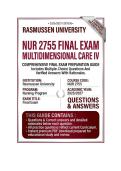
,NUR 2755 FINAL EXAM MULTIDIMENSIONAL CARE IV Questions and
Answers | 2026/2027 | Rasmussen University
Q1.
A client in septic shock remains hypotensive after receiving the
prescribed initial fluid resuscitation. Which medication should the
nurse anticipate?
A) Norepinephrine
B) Furosemide
C) Metoprolol
D) Digoxin
Correct Answer: A) Norepinephrine
Rationale: Norepinephrine is a commonly used first-line vasopressor for
persistent hypotension in septic shock after adequate fluid resuscitation.
Q2.
Which finding is most characteristic of hypovolemic shock?
A) Bounding pulses and warm skin
B) Tachycardia, hypotension, and cool clammy skin
C) Bradycardia and hypertension
D) Pulmonary crackles with hypertension
Correct Answer: B) Tachycardia, hypotension, and cool clammy skin
Rationale: Loss of circulating volume activates sympathetic compensation,
causing tachycardia and peripheral vasoconstriction. Progressive volume loss
produces hypotension and poor perfusion.
Q3.
Which type of shock results primarily from failure of the heart to
pump effectively?
A) Septic shock
B) Neurogenic shock
C) Cardiogenic shock
D) Hypovolemic shock
Correct Answer: C) Cardiogenic shock
Rationale: Cardiogenic shock occurs when impaired cardiac pumping results
in inadequate cardiac output and tissue perfusion.
Q4.
Which condition can cause obstructive shock?
,A) Severe diarrhea
B) Tension pneumothorax
C) Hypothyroidism
D) Anemia
Correct Answer: B) Tension pneumothorax
Rationale: Tension pneumothorax increases intrathoracic pressure and
impairs venous return to the heart, producing obstructive shock.
Q5.
A client with septic shock has a rising serum lactate level. What
does this finding suggest?
A) Improved renal clearance
B) Excess calcium
C) Inadequate tissue perfusion
D) Normal oxygen delivery
Correct Answer: C) Inadequate tissue perfusion
Rationale: Elevated lactate can result from anaerobic metabolism when
tissue oxygen delivery is inadequate.
Q6.
Which finding indicates improving perfusion in a client being treated
for shock?
A) Increasing lactate
B) Urine output of 10 mL/hr
C) Worsening confusion
D) Improving urine output and mental status
Correct Answer: D) Improving urine output and mental status
Rationale: Increasing urine output and improved mentation indicate
improving renal and cerebral perfusion.
Q7.
A client has massive hemorrhage and develops tachycardia,
hypotension, and oliguria. Which problem should the nurse identify?
A) Cardiogenic shock
B) Hypovolemic shock
C) Neurogenic shock
D) Anaphylactic shock
, Correct Answer: B) Hypovolemic shock
Rationale: Acute blood loss reduces intravascular volume and causes
hypovolemic shock.
Q8.
Which assessment finding is associated with cardiogenic shock?
A) Pulmonary edema with hypotension
B) Warm flushed skin and bounding pulses
C) Increased urine output
D) Hypertension with bradycardia
Correct Answer: A) Pulmonary edema with hypotension
Rationale: Cardiogenic shock causes reduced cardiac output and often
produces pulmonary congestion from left ventricular failure.
Q9.
Which finding is typical of neurogenic shock?
A) Severe tachycardia
B) Bradycardia with hypotension
C) Cool clammy skin
D) Increased systemic vascular resistance
Correct Answer: B) Bradycardia with hypotension
Rationale: Loss of sympathetic tone in neurogenic shock can cause
vasodilation, hypotension, and relative bradycardia.
Q10.
A client develops wheezing, facial swelling, and profound
hypotension immediately after receiving a medication. Which
condition should the nurse suspect?
A) Septic shock
B) Cardiogenic shock
C) Anaphylactic shock
D) Hypovolemic shock
Correct Answer: C) Anaphylactic shock
Rationale: Anaphylaxis can cause airway edema, bronchospasm,
vasodilation, and severe hypotension.
Q11.
Which medication is the first-line treatment for life-threatening
anaphylaxis?
A) Epinephrine
Answers | 2026/2027 | Rasmussen University
Q1.
A client in septic shock remains hypotensive after receiving the
prescribed initial fluid resuscitation. Which medication should the
nurse anticipate?
A) Norepinephrine
B) Furosemide
C) Metoprolol
D) Digoxin
Correct Answer: A) Norepinephrine
Rationale: Norepinephrine is a commonly used first-line vasopressor for
persistent hypotension in septic shock after adequate fluid resuscitation.
Q2.
Which finding is most characteristic of hypovolemic shock?
A) Bounding pulses and warm skin
B) Tachycardia, hypotension, and cool clammy skin
C) Bradycardia and hypertension
D) Pulmonary crackles with hypertension
Correct Answer: B) Tachycardia, hypotension, and cool clammy skin
Rationale: Loss of circulating volume activates sympathetic compensation,
causing tachycardia and peripheral vasoconstriction. Progressive volume loss
produces hypotension and poor perfusion.
Q3.
Which type of shock results primarily from failure of the heart to
pump effectively?
A) Septic shock
B) Neurogenic shock
C) Cardiogenic shock
D) Hypovolemic shock
Correct Answer: C) Cardiogenic shock
Rationale: Cardiogenic shock occurs when impaired cardiac pumping results
in inadequate cardiac output and tissue perfusion.
Q4.
Which condition can cause obstructive shock?
,A) Severe diarrhea
B) Tension pneumothorax
C) Hypothyroidism
D) Anemia
Correct Answer: B) Tension pneumothorax
Rationale: Tension pneumothorax increases intrathoracic pressure and
impairs venous return to the heart, producing obstructive shock.
Q5.
A client with septic shock has a rising serum lactate level. What
does this finding suggest?
A) Improved renal clearance
B) Excess calcium
C) Inadequate tissue perfusion
D) Normal oxygen delivery
Correct Answer: C) Inadequate tissue perfusion
Rationale: Elevated lactate can result from anaerobic metabolism when
tissue oxygen delivery is inadequate.
Q6.
Which finding indicates improving perfusion in a client being treated
for shock?
A) Increasing lactate
B) Urine output of 10 mL/hr
C) Worsening confusion
D) Improving urine output and mental status
Correct Answer: D) Improving urine output and mental status
Rationale: Increasing urine output and improved mentation indicate
improving renal and cerebral perfusion.
Q7.
A client has massive hemorrhage and develops tachycardia,
hypotension, and oliguria. Which problem should the nurse identify?
A) Cardiogenic shock
B) Hypovolemic shock
C) Neurogenic shock
D) Anaphylactic shock
, Correct Answer: B) Hypovolemic shock
Rationale: Acute blood loss reduces intravascular volume and causes
hypovolemic shock.
Q8.
Which assessment finding is associated with cardiogenic shock?
A) Pulmonary edema with hypotension
B) Warm flushed skin and bounding pulses
C) Increased urine output
D) Hypertension with bradycardia
Correct Answer: A) Pulmonary edema with hypotension
Rationale: Cardiogenic shock causes reduced cardiac output and often
produces pulmonary congestion from left ventricular failure.
Q9.
Which finding is typical of neurogenic shock?
A) Severe tachycardia
B) Bradycardia with hypotension
C) Cool clammy skin
D) Increased systemic vascular resistance
Correct Answer: B) Bradycardia with hypotension
Rationale: Loss of sympathetic tone in neurogenic shock can cause
vasodilation, hypotension, and relative bradycardia.
Q10.
A client develops wheezing, facial swelling, and profound
hypotension immediately after receiving a medication. Which
condition should the nurse suspect?
A) Septic shock
B) Cardiogenic shock
C) Anaphylactic shock
D) Hypovolemic shock
Correct Answer: C) Anaphylactic shock
Rationale: Anaphylaxis can cause airway edema, bronchospasm,
vasodilation, and severe hypotension.
Q11.
Which medication is the first-line treatment for life-threatening
anaphylaxis?
A) Epinephrine