
TABLE OF CONTENT
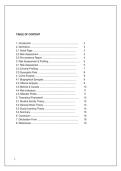
1. Introduction ....................................................................... 2
2. Definitions ........................................................................ 3
2.1 Serial Rape ................................................................. 3
2.2 Risk Assessment ......................................................... 3
2.3 Pre-sentence Report ..................................................... 4
3. Risk Assessment & Profiling ............................................... 5
3.1 Risk Assessment ......................................................... 5
3.2 Criminal Profiling ......................................................... 7
3.3 Synergistic Role ........................................................... 8
4. Crime Analysis .................................................................. 9
4.1 Biographical Synopsis ................................................. 9
4.2 Offence Analysis ......................................................... 9
4.3 Motives & Causes ...................................................... 10
4.4 Risk Indicators ........................................................... 11
4.5 Offender Profile .......................................................... 11
5. Theoretical Framework ...................................................... 12
5.1 Routine Activity Theory .............................................. 12
5.2 General Strain Theory ............................................... 13
5.3 Social Learning Theory .............................................. 14
5.4 Summary ................................................................... 15
6. Conclusion ........................................................................ 16
7. Declaration Form .............................................................. 18
8. References ....................................................................... 19
1
,1. INTRODUCTION
Gender-based violence (GBV) and related violent crimes remain a serious challenge in
the South African criminal justice system. The case of Simphieve Xolani Mkhwanazi,
who was sentenced to two life terms and 105 years’ imprisonment for GBV and related
violent offences, shows the serious nature of these crimes and the need to carefully
consider an offender’s risk and criminal behaviour when determining a sentence.
As a forensic criminologist appointed by the state to prepare a pre-sentence report, the
purpose is to provide a criminological evaluation of the offender to assist the court in
deciding on a fair and appropriate sentence. Terblanche (1999:10) explains that
criminology is the study of crime, criminals, victims, punishment, and the prevention and
control of crime. A criminologist therefore looks at the information surrounding criminal
behaviour and uses it to understand and explain why crime occurs (CMY4804 Study
Guide, 2024:16). Risk assessment and criminal profiling are important in the South
African criminal justice system because they help to identify factors linked to an
offender’s behaviour and the possible risk of future offending. It is also important to
examine the offender’s criminal behaviour and the nature of the offences committed.
Criminological theories can further help to explain the factors that may have influenced
or contributed to the offender’s behaviour.
The focus is on understanding criminal behaviour from a criminological perspective.
Psychological, social work, and legal perspectives are not the main focus. The
information is based on the National Prosecuting Authority (2026) and relevant
criminological literature.
2
, 2. DEFINITIONS OF KEY CONCEPTS
2.1 Serial Rape
Serial rape refers to the repeated commission of rape offences by the same offender
over a period of time. Farrell, Keppel and Titterington (2011) define a serial offender as
an individual who commits two or more offences, with a cooling-off period between the
offences. In the South African context, serial rape is characterised by the offender's
repeated sexual offending behaviour, often escalating in violence over time.
Research on serial sexual offending has identified that the behaviour of the serial rapist
can be classified in terms of the emphasis of the assault, the manner of engaging in the
actual rape, and the interaction between the offender and the victim (Keppel & Birnes,
2009). Serial rape is often linked to other violent crimes such as murder, as perpetrators
demonstrate a pattern of predatory behaviour.
For the purpose of this report, serial rape is operationally defined as: the unlawful and
intentional commission of two or more rape offences by the same offender, with distinct
incidents occurring at different times and locations, often demonstrating a pattern of
escalating violence and victim selection.
2.2 Risk Assessment
Risk assessment in criminology refers to the systematic process of identifying,
analysing and evaluating factors that may predict the likelihood of an offender
reoffending or posing a danger to society. According to Hesselink (2012a:201),
criminological offender assessment entails the analysis, evaluation, profiling,
examination, determination and assessment of crime and criminal behaviour in all its
facets.
3
1. Introduction ....................................................................... 2
2. Definitions ........................................................................ 3
2.1 Serial Rape ................................................................. 3
2.2 Risk Assessment ......................................................... 3
2.3 Pre-sentence Report ..................................................... 4
3. Risk Assessment & Profiling ............................................... 5
3.1 Risk Assessment ......................................................... 5
3.2 Criminal Profiling ......................................................... 7
3.3 Synergistic Role ........................................................... 8
4. Crime Analysis .................................................................. 9
4.1 Biographical Synopsis ................................................. 9
4.2 Offence Analysis ......................................................... 9
4.3 Motives & Causes ...................................................... 10
4.4 Risk Indicators ........................................................... 11
4.5 Offender Profile .......................................................... 11
5. Theoretical Framework ...................................................... 12
5.1 Routine Activity Theory .............................................. 12
5.2 General Strain Theory ............................................... 13
5.3 Social Learning Theory .............................................. 14
5.4 Summary ................................................................... 15
6. Conclusion ........................................................................ 16
7. Declaration Form .............................................................. 18
8. References ....................................................................... 19
1
,1. INTRODUCTION
Gender-based violence (GBV) and related violent crimes remain a serious challenge in
the South African criminal justice system. The case of Simphieve Xolani Mkhwanazi,
who was sentenced to two life terms and 105 years’ imprisonment for GBV and related
violent offences, shows the serious nature of these crimes and the need to carefully
consider an offender’s risk and criminal behaviour when determining a sentence.
As a forensic criminologist appointed by the state to prepare a pre-sentence report, the
purpose is to provide a criminological evaluation of the offender to assist the court in
deciding on a fair and appropriate sentence. Terblanche (1999:10) explains that
criminology is the study of crime, criminals, victims, punishment, and the prevention and
control of crime. A criminologist therefore looks at the information surrounding criminal
behaviour and uses it to understand and explain why crime occurs (CMY4804 Study
Guide, 2024:16). Risk assessment and criminal profiling are important in the South
African criminal justice system because they help to identify factors linked to an
offender’s behaviour and the possible risk of future offending. It is also important to
examine the offender’s criminal behaviour and the nature of the offences committed.
Criminological theories can further help to explain the factors that may have influenced
or contributed to the offender’s behaviour.
The focus is on understanding criminal behaviour from a criminological perspective.
Psychological, social work, and legal perspectives are not the main focus. The
information is based on the National Prosecuting Authority (2026) and relevant
criminological literature.
2
, 2. DEFINITIONS OF KEY CONCEPTS
2.1 Serial Rape
Serial rape refers to the repeated commission of rape offences by the same offender
over a period of time. Farrell, Keppel and Titterington (2011) define a serial offender as
an individual who commits two or more offences, with a cooling-off period between the
offences. In the South African context, serial rape is characterised by the offender's
repeated sexual offending behaviour, often escalating in violence over time.
Research on serial sexual offending has identified that the behaviour of the serial rapist
can be classified in terms of the emphasis of the assault, the manner of engaging in the
actual rape, and the interaction between the offender and the victim (Keppel & Birnes,
2009). Serial rape is often linked to other violent crimes such as murder, as perpetrators
demonstrate a pattern of predatory behaviour.
For the purpose of this report, serial rape is operationally defined as: the unlawful and
intentional commission of two or more rape offences by the same offender, with distinct
incidents occurring at different times and locations, often demonstrating a pattern of
escalating violence and victim selection.
2.2 Risk Assessment
Risk assessment in criminology refers to the systematic process of identifying,
analysing and evaluating factors that may predict the likelihood of an offender
reoffending or posing a danger to society. According to Hesselink (2012a:201),
criminological offender assessment entails the analysis, evaluation, profiling,
examination, determination and assessment of crime and criminal behaviour in all its
facets.
3


