NR 605/NR605 FINAL EXAM 2026/2027 BANK CURRENTLY
TESTING ACTUAL EXAM QUESTIONS WITH DETAILED
ANSWERS WITH STUDY GUIDE EXPERT VERIFIED FOR
GUARANTEED PASS/ALREADY GRADED A+
Terms in this set (60)
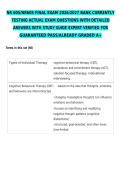
Types of Individual Therapy cognitive-behavioral therapy (CBT),
acceptance and commitment therapy (ACT),
solution-focused therapy, motivational
interviewing
Cognitive Behavioral Therapy (CBT) -based on the idea that thoughts, emotions,
and behaviors are interconnected
-changing maladaptive thoughts can influence
emotions and behaviors
-focuses on identifying and modifying
negative thought patterns (cognitive
distortions)
-structured, goal-oriented, and often times
time-limited
,CBT Relationship to Nursing Theory-aligns with nursing theories that emphasize
holistic care, patient-centered
approaches, and active engagement in the
therapeutic process (Peplau's Theory of
Interpersonal Relations)
-nurses use CBT principles to empower
patients to develop coping skills and
promote mental health resilience
Diagnoses Treated with CBT -anxiety disorders (GAD,
panic disorders, etc.)
-depression
-PTSD
-OCD
-eating disorders
-substance use disorders
-chronic pain
-insomnia
Cognitive Distortions -defined as irrational or biased ways of
thinking that negatively influence
emotions and behaviors
, -all-or-nothing thinking
-catastrophizing
-overgeneralization
-personalization
-mind reading
All-or-nothing Thinking viewing situations in black-and-white terms
Catastrophizing expecting the worse-case scenario to happen
Overgeneralization making sweeping conclusions based on single
incident
Personalization taking responsibility for events outside of one's
control
Mind Reading assuming other's thoughts without evidence
Techniques for Stabilization (in therapy) -
Socratic Dialogue
-decatastrophizing
Socratic Dialogue -a guided questioning technique to help clients
explore their thoughts and beliefs
-open-ended questioning
-promotes self-reflection and insight into
distorted thinking
TESTING ACTUAL EXAM QUESTIONS WITH DETAILED
ANSWERS WITH STUDY GUIDE EXPERT VERIFIED FOR
GUARANTEED PASS/ALREADY GRADED A+
Terms in this set (60)
Types of Individual Therapy cognitive-behavioral therapy (CBT),
acceptance and commitment therapy (ACT),
solution-focused therapy, motivational
interviewing
Cognitive Behavioral Therapy (CBT) -based on the idea that thoughts, emotions,
and behaviors are interconnected
-changing maladaptive thoughts can influence
emotions and behaviors
-focuses on identifying and modifying
negative thought patterns (cognitive
distortions)
-structured, goal-oriented, and often times
time-limited
,CBT Relationship to Nursing Theory-aligns with nursing theories that emphasize
holistic care, patient-centered
approaches, and active engagement in the
therapeutic process (Peplau's Theory of
Interpersonal Relations)
-nurses use CBT principles to empower
patients to develop coping skills and
promote mental health resilience
Diagnoses Treated with CBT -anxiety disorders (GAD,
panic disorders, etc.)
-depression
-PTSD
-OCD
-eating disorders
-substance use disorders
-chronic pain
-insomnia
Cognitive Distortions -defined as irrational or biased ways of
thinking that negatively influence
emotions and behaviors
, -all-or-nothing thinking
-catastrophizing
-overgeneralization
-personalization
-mind reading
All-or-nothing Thinking viewing situations in black-and-white terms
Catastrophizing expecting the worse-case scenario to happen
Overgeneralization making sweeping conclusions based on single
incident
Personalization taking responsibility for events outside of one's
control
Mind Reading assuming other's thoughts without evidence
Techniques for Stabilization (in therapy) -
Socratic Dialogue
-decatastrophizing
Socratic Dialogue -a guided questioning technique to help clients
explore their thoughts and beliefs
-open-ended questioning
-promotes self-reflection and insight into
distorted thinking