

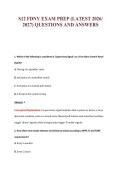
S12 FDNY EXAM PREP (LATEST 2026/
2027) QUESTIONS AND ANSWERS
1. Which of the following is considered a ‘Supervisory Signal’ on a Fire Alarm Control Panel
(FACP)?
A. Closing of a sprinkler valve
B. Activation of a waterflow switch
C. Activation of a manual pull station
D. A break in the system wiring
Answer: A
Conceptual Explanation: A supervisory signal indicates that a system or device is in an
abnormal condition, such as a closed valve. Manual pull stations and waterflow switches
trigger ‘Alarm’ signals, while wiring breaks trigger ‘Trouble’ signals.
2. How often must smoke detector sensitivity be tested according to NFPA 72 and FDNY
requirements?
A. Every 6 months
B. Every 2 years
,C. Annually
D. Every 5 years
Answer: B
Conceptual Explanation: Smoke detector sensitivity must be tested within one year of
installation and every two years thereafter to ensure detectors operate within their listed
sensitivity range.
3. In a Fire Command Center, which color usually represents a ‘Trouble’ signal?
A. Red
B. Yellow or Amber
C. Green
D. Blue
Answer: B
Conceptual Explanation: Red is used for Alarm signals, Green for Power/Normal
conditions, and Yellow or Amber is the standard color for Trouble signals.
4. Who is responsible for maintaining the fire alarm system in good working order at all
times?
A. The Central Station operator
B. The building owner
C. The Fire Department
, D. The FACP manufacturer
Answer: B
Conceptual Explanation: The building owner is legally responsible for the maintenance
and testing of the fire alarm system, though they may delegate tasks to a Certificate of
Fitness (COF) holder.
5. A ‘Trouble Signal’ indicates which of the following conditions?
A. A fault with the system’s wiring or components
B. An immediate fire emergency
C. A sprinkler head has been activated
D. A valve is in the wrong position
Answer: A
Conceptual Explanation: Trouble signals indicate electrical or mechanical problems with
the fire alarm system itself, such as a battery failure or an open circuit.
6. What is the required frequency for the visual inspection of unmonitored lead-acid
batteries?
A. Daily
B. Monthly
C. Weekly
D. Quarterly
2027) QUESTIONS AND ANSWERS
1. Which of the following is considered a ‘Supervisory Signal’ on a Fire Alarm Control Panel
(FACP)?
A. Closing of a sprinkler valve
B. Activation of a waterflow switch
C. Activation of a manual pull station
D. A break in the system wiring
Answer: A
Conceptual Explanation: A supervisory signal indicates that a system or device is in an
abnormal condition, such as a closed valve. Manual pull stations and waterflow switches
trigger ‘Alarm’ signals, while wiring breaks trigger ‘Trouble’ signals.
2. How often must smoke detector sensitivity be tested according to NFPA 72 and FDNY
requirements?
A. Every 6 months
B. Every 2 years
,C. Annually
D. Every 5 years
Answer: B
Conceptual Explanation: Smoke detector sensitivity must be tested within one year of
installation and every two years thereafter to ensure detectors operate within their listed
sensitivity range.
3. In a Fire Command Center, which color usually represents a ‘Trouble’ signal?
A. Red
B. Yellow or Amber
C. Green
D. Blue
Answer: B
Conceptual Explanation: Red is used for Alarm signals, Green for Power/Normal
conditions, and Yellow or Amber is the standard color for Trouble signals.
4. Who is responsible for maintaining the fire alarm system in good working order at all
times?
A. The Central Station operator
B. The building owner
C. The Fire Department
, D. The FACP manufacturer
Answer: B
Conceptual Explanation: The building owner is legally responsible for the maintenance
and testing of the fire alarm system, though they may delegate tasks to a Certificate of
Fitness (COF) holder.
5. A ‘Trouble Signal’ indicates which of the following conditions?
A. A fault with the system’s wiring or components
B. An immediate fire emergency
C. A sprinkler head has been activated
D. A valve is in the wrong position
Answer: A
Conceptual Explanation: Trouble signals indicate electrical or mechanical problems with
the fire alarm system itself, such as a battery failure or an open circuit.
6. What is the required frequency for the visual inspection of unmonitored lead-acid
batteries?
A. Daily
B. Monthly
C. Weekly
D. Quarterly


